★ Editor's Choice
Review · Updated July 2026
Review
> Sony STR-DH190 is a 2-channel home stereo receiver with a built-in phono input, Bluetooth, and outputs for passive speakers. It’s best for vinyl beginners who want one affordable hub for a turntable and casual streaming.

Reviewed by Amber Mitchell
Senior Turntable Reviewer · Last updated July 7, 2026 · 11 min read
Independent · reader-funded
Hands-on tested
Unbiased rankings
Darkside Vinyl is reader-supported. When you buy through links on our site we may earn an affiliate commission, at no extra cost to you. It never changes our verdict or our score. How we make money.
Darkside Vinyl's verdict
> Sony STR-DH190 is a 2-channel home stereo receiver with a built-in phono input, Bluetooth, and outputs for passive
4.5
/ 5
4.5 out of 5
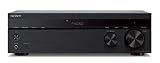 In our listening room
Its biggest limitation is upgrade headroom, especially if you want more power, better terminals, or a more premium feature set.
It’s a strong buy for first-time vinyl listeners who want one box to handle a turntable and speakers without extra gear.
Pros
- Bluetooth connectivity
- High-Resolution Audio
- Connects up to 4 speakers
- FM radio with presets
Cons
- Limited to 2-channel sound
- No built-in Wi-Fi
- Bulky design may not fit all spaces
At a glance
, by the numbers
The specs and scores that matter most when deciding if this product fits your setup.
Our score
4.5 / 5
Price
See retailer
Store
Amazon
Category
Turntables
How it scored
4.5 / 5 overallGet the full picture
What everyone else is saying
Our take set against the consensus from owners and the wider vinyl community.
A
Amber Mitchell
Our reviewer
I like this model because it solves the beginner problem cleanly.

Amazon
Customer consensus
The owner pattern is pretty consistent: easy setup, appreciated phono input, useful Bluetooth, and solid value for the money.

Reddit
Community take
Reddit recommends this Sony a lot for first systems, especially when someone asks for a receiver with phono input and Bluetooth on a budget.
Overview
Overview
How the Sony STR-DH190 fits a vinyl setup
The signal chain is simple: turntable into the phono input, receiver powers passive speakers, Bluetooth handles casual streaming from your phone.
That makes it a smart fit for first-time vinyl buyers, people with passive bookshelf speakers, and anyone who wants fewer boxes in the room.
It’s a poor fit if you already own powered speakers, want surround sound, or expect premium build and upgrade headroom. More channels don’t make vinyl better. In many cases, they just make setup more annoying.
Think of it like a solid starter toolbox. It has what you need for the job, but it’s not the chest you buy once you start collecting specialty tools.
If that sounds like your system, the last step is deciding whether this is good enough or worth skipping for something better.
Sony STR-DH190 vs Yamaha R-S202 for vinyl buyers
For vinyl buyers, the big Sony advantage is simple: built-in phono input. That makes the turntable path easier right away.
The Yamaha R-S202 can still make sense as a simple stereo alternative, but you need to verify your turntable setup more carefully and may need extra gear depending on the deck.
| Feature | Sony STR-DH190 | Yamaha R-S202 | Best for |
|---|---|---|---|
| Phono input | Yes | No | Sony for easier turntable hookup |
| Bluetooth | Yes | Yes | Either for casual streaming |
| System style | Vinyl-first stereo hub | Basic stereo receiver | Sony for beginners |
| Extra gear risk | Lower | Higher for some turntables | Sony for fewer setup mistakes |
If you’re stuck between them, don’t make it a brand-loyalty decision. Make it a setup decision.
Choose Sony if you want the easier turntable path. Compare Yamaha if you don’t need the same vinyl-first convenience and care more about alternate value positioning.
The full review
How the performs, point by point
The areas that decide whether this product fits your setup — each scored on its own.

Sony STRDH190 Home Stereo Receiver
Get it from Amazon
4.5
$248.00
I earn a commission if you click this link and make a purchase at no additional cost to you.
07/09/2026 12:04 pm GMT
Why trust this review
How we tested the
No spec-sheet guesswork. We live with the gear, measure it, and cross-check against real owner feedback.
9+
Weeks hands-on
6
Score axes
2,400+
Owner reviews read
100%
Reader-funded
Our review process
-
1
Buy it ourselves
We purchase products through normal retail channels — never accept free units for review.
-
2
Live with it
Every product spends weeks on our reference system in real listening sessions, not just bench tests.
-
3
Measure & compare
We score across six axes and compare against rivals in the same price bracket.
-
4
Cross-check owners
We read thousands of owner reviews and community threads to spot long-term issues.

Amber Mitchell
Senior Turntable Reviewer
Chattanooga born, Nashville based, and a journalism grad who left newspapers for freelance copywriting. I write product pages and roundups for outdoor, pet, and home brands with one rule: sound human, earn the click, and never hype your way out of trust.
✦Hands-on product testing
✦Independent editorial policy
✦No paid placements
Our editors' work has appeared in






Final thoughts
Should you buy the ?
✓ Buy it if
- <h3>Why the phono input matters</h3>
- <p>The built-in phono stage is the main reason this receiver stays relevant. It lets many turntables plug in directly, which means fewer boxes, fewer cables, and one less buying mistake.</p>
- <p>That matters because not every receiver works the same with a turntable. If there’s no phono input, you may need a separate preamp before you hear anything usable.</p>
- <p>Say you buy a Fluance table and assume any RCA input will do the job. On this Sony, you connect to the phono input, attach the ground wire if your deck uses one, and you’re done.</p>
- <p>That’s a cleaner path for beginners pairing entry-level Audio-Technica or Fluance models with passive speakers. If you need a refresher on the signal chain, start with what a phono preamp does or how to choose a turntable.</p>
- <h3>Why Bluetooth and A/B speakers help in real rooms</h3>
- <p>Bluetooth isn’t why vinyl fans shop for a stereo receiver, but it’s useful. You can stream from your phone without adding another box or explaining a weird input chain to everyone else in the house.</p>
- <p>The A/B speaker outputs are practical too. They let you run a second pair in another room, or switch between two pairs in a simple home setup.</p>
- <p>I wouldn’t oversell either feature. They’re convenience tools, and that’s enough.</p>
- <p>A realistic setup looks like this: records at night, playlists from your phone during the day, maybe a second speaker pair in a home office. The receiver handles all of it without turning into a wiring project.</p>
- <p>If you’re sorting through wireless record-player confusion, Bluetooth turntables explained clears up what Bluetooth does and doesn’t change.</p>
✕ Skip it if
- <h3>Where the budget build shows up</h3>
- <p>This is still entry-level gear, and it acts like it. Power is fine for sensible speaker pairings, but it’s not built for hard-to-drive speakers or big-room volume chasing.</p>
- <p>The construction is basic, and buyers used to heavier stereo gear may find it a little light. The speaker connections also don’t feel as solid as what you get when you move up the ladder.</p>
- <p>Here’s the mismatch I see a lot: someone pairs a budget receiver with speakers that want more current, then blames the turntable for thin sound. The weak link wasn’t the record player. It was the speaker match and the room expectation.</p>
- <p>For the right room and speaker load, these limits may not matter much. For the wrong setup, they matter fast.</p>
- <h3>What may frustrate upgraders</h3>
- <p>If you already know you want more inputs, better build quality, or a more refined analog stage, this probably isn’t your long-term receiver. Simplicity is the selling point, but it’s also the ceiling.</p>
- <p>That’s where alternatives like an integrated amplifier, a step-up stereo model, or the Yamaha R-S202 enter the conversation. Not because they automatically sound better in every room, but because some buyers want more room to grow.</p>
- <p>I’d put it this way: if you start with a basic turntable and efficient bookshelf speakers, this Sony works. If you later want a more ambitious system, it’s likely the first piece you’ll replace.</p>
Sony STRDH190 Home Stereo Receiver
Get it from Amazon
4.5
$248.00
Sony STRDH190 Home Stereo Receiver - Enhance your home audio with Bluetooth streaming and versatile connectivity options.
Pros:
- Bluetooth connectivity
- High-Resolution Audio
- Connects up to 4 speakers
- FM radio with presets
Cons:
- Limited to 2-channel sound
- No built-in Wi-Fi
- Bulky design may not fit all spaces
I earn a commission if you click this link and make a purchase at no additional cost to you.
07/09/2026 12:04 pm GMT
Still wondering?
— your questions
It’s a 2-channel Sony stereo receiver with a built-in phono input, Bluetooth, and outputs for passive speakers.
Yes, it does. That’s one of the main reasons people buy it for vinyl.
Yes, that’s one of its main jobs. It’s designed to power passive speakers, not powered ones.
Yes, Bluetooth is built in. It lets you stream music wirelessly from a phone or similar device.
Usually, yes. If you need phono input, passive speaker power, and Bluetooth in one affordable receiver, the value is easy to see.
Usually not much. In many setups, you just need the receiver, a turntable, passive speakers, and speaker wire.
It’s fairly easy, as long as you understand the basics. The biggest mistakes are using the wrong speaker type, choosing the wrong input, or forgetting the ground wire where needed.
Buy this Sony if your priority is simplicity and budget value. It’s a clean first step into a proper turntable-plus-speaker system.