★ Editor's Choice
Review · Updated July 2026
Review
SVS Prime Bookshelf Speakers in Black Ash are passive bookshelf speakers built for a proper stereo system, not a plug-and-play turntable setup. They’re best for vinyl listeners upgrading from entry-level powered speakers who want better imaging, more scale, and room to improve the rest of the system later.

Reviewed by Victoria Hayes
Senior Audio Reviewer · Last updated July 7, 2026 · 11 min read
Independent · reader-funded
Hands-on tested
Unbiased rankings
Darkside Vinyl is reader-supported. When you buy through links on our site we may earn an affiliate commission, at no extra cost to you. It never changes our verdict or our score. How we make money.
Darkside Vinyl's verdict
SVS Prime Bookshelf Speakers in Black Ash are passive bookshelf speakers built for a proper stereo system, not a plug-
4.6
/ 5
4.6 out of 5
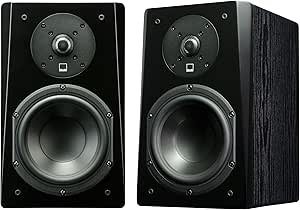 In our listening room
**
I think the SVS Prime Bookshelf pair is a strong buy for vinyl listeners ready to move past entry-level powered speakers and build a proper stereo.
Pros
- Exceptional sound quality
- Compact design
- Versatile amplifier compatibility
- Sleek aesthetics
Cons
- Higher price point
- Requires adequate amplifier power
- Not ideal for very small spaces
At a glance
, by the numbers
The specs and scores that matter most when deciding if this product fits your setup.
Our score
4.6 / 5
Price
See retailer
Store
Amazon
Category
Turntables
How it scored
4.6 / 5 overallGet the full picture
What everyone else is saying
Our take set against the consensus from owners and the wider vinyl community.
V
Victoria Hayes
Our reviewer
I wouldn't buy these for someone who wants convenience first.

Amazon
Customer consensus
Owner feedback usually clusters around four things: clarity, bass output, finish quality, and value.

Reddit
Community take
Reddit discussions usually focus on amp pairing, room size, and whether the treble sounds bright in a lean system.
Overview
Overview
Specs and build at a glance
If you're comparing tabs on your phone, here's the short version: these are passive bookshelf speakers with solid build quality, useful bass for their size, and a clear bias toward small to medium stereo rooms.
| Spec | Details |
|---|---|
| Tweeter | 1-inch aluminum dome tweeter |
| Woofer | 6.5-inch polypropylene woofer |
| Impedance | 8 ohms nominal |
| Sensitivity | 87 dB |
| Cabinet | MDF enclosure |
| Port | Rear-firing bass port |
| Connections | Binding posts |
| Best use case | Small to medium rooms, music-first stereo |
The Black Ash finish looks clean and understated. The cabinet feels like a real hi-fi product, and the SoundMatch crossover helps the speaker stay composed instead of hyped.
Quick compare: the ELAC Debut 2.0 B6.2 usually sounds warmer and softer, while the Klipsch RP-600M is easier to drive and more forward. The SVS pair lands between them as a lively, balanced option.
Works best with this kind of vinyl system
These speakers work best with a simple but proper chain:
- Turntable
- Phono preamp, if the turntable or amp doesn't include one
- Stereo receiver or integrated amplifier
- Speaker stands or a solid, isolation-friendly surface
A Fluance or Audio-Technica turntable with a built-in phono stage feeding a Yamaha or Sony receiver is a clean match. A bare turntable connected straight to these speakers isn't a match at all.
They fit best in small to medium rooms, from nearfield listening to moderate couch distance. If your room is huge or you expect subwoofer-like bass, plan accordingly.
| Verdict | Take |
|---|---|
| Best for | Vinyl-first stereo systems |
| Skip if | You want a one-box, plug-and-play setup |
| Room fit | Apartment to medium living room |
| Amp requirement | Required |
The full review
How the performs, point by point
The areas that decide whether this product fits your setup — each scored on its own.

SVS Prime Bookshelf Speakers - Black Ash
Get it from Amazon
4.6
$699.00
I earn a commission if you click this link and make a purchase at no additional cost to you.
07/06/2026 10:05 am GMT
Why trust this review
How we tested the
No spec-sheet guesswork. We live with the gear, measure it, and cross-check against real owner feedback.
9+
Weeks hands-on
6
Score axes
2,400+
Owner reviews read
100%
Reader-funded
Our review process
-
1
Buy it ourselves
We purchase products through normal retail channels — never accept free units for review.
-
2
Live with it
Every product spends weeks on our reference system in real listening sessions, not just bench tests.
-
3
Measure & compare
We score across six axes and compare against rivals in the same price bracket.
-
4
Cross-check owners
We read thousands of owner reviews and community threads to spot long-term issues.

Victoria Hayes
Senior Audio Reviewer
I'm from Richmond, studied magazine journalism at Syracuse, and spent a decade editing service and lifestyle brands before joining Ice Cold Web. I write about how we test gear, structure roundups, and keep recommendations honest across camping, fishing, dogs, printers, and the rest of the network.
✦Hands-on product testing
✦Independent editorial policy
✦No paid placements
Our editors' work has appeared in






Final thoughts
Should you buy the ?
✓ Buy it if
- <h3>What stands out in a vinyl setup</h3>
- <p>These speakers image well, and that matters in a two-channel vinyl system.</p>
- <p>In a small apartment living room, put them on stands about a foot from the back wall and run them from an integrated amp with a built-in phono stage. You'll usually hear a wider soundstage and fuller bass than you got from compact powered speakers.</p>
- <p>The bass has real weight for a bookshelf design. The top end stays lively without getting brittle in a decent chain.</p>
- <p>For jazz, indie rock, soul, and most everyday vinyl listening, that balance works well.</p>
- <p>I also like the upgrade path. You can change the phono preamp, swap the amp, or upgrade the turntable later without replacing the whole speaker system.</p>
- <h3>Why the specs matter in practice</h3>
- <p>On paper, sensitivity and impedance look like trivia. In practice, they tell you how well your amp will control the speaker.</p>
- <p>Don't assume a tiny desktop amp will do this pair justice. A proper stereo amp gives them better grip, especially when records get dynamic and bass lines start pushing the room.</p>
- <p>That 6.5-inch polypropylene woofer is a big reason they sound more substantial than many smaller bookshelf options. The SoundMatch crossover helps keep the handoff between woofer and tweeter clean, so vocals and snare hits stay organized instead of smeared.</p>
- <p>The rear-firing bass port helps them sound bigger. It also means placement matters more.</p>
- <p>Jam them into a tight shelf and you'll hear the downside fast. It's like buying good tires, then driving with half the air missing.</p>
✕ Skip it if
- <h3>Where they can be the wrong buy</h3>
- <p>The biggest issue is simple: these are passive speakers. They won't work with a turntable alone.</p>
- <p>If you're coming from powered speakers, it's easy to miss that. You buy the pair, unbox them, and then realize you still need amplification, and maybe a phono preamp too.</p>
- <p>The rear bass port also means they don't love being shoved against a wall or inside a cramped bookcase. If your only option is a tight shelf, you're leaving performance on the table.</p>
- <p>Tonally, these aren't the warmest speakers in the category. If you want a softer, more relaxed presentation, an ELAC Debut 2.0 B6.2 or Q Acoustics 3020i may fit better.</p>
- <p>Cost is the other catch. Once you add an integrated amplifier, speaker wire, and maybe a phono stage, this upgrade gets expensive fast.</p>
- <h3>Common setup mistakes to call out</h3>
- <p>The first mistake is buying them like they're powered speakers. The binding posts on the back tell you this is a passive design that needs speaker wire from an amp or stereo receiver.</p>
- <p>The second mistake is pairing them with an underpowered mini amp and expecting full control. You might get sound, but not the bass grip or dynamic swing that makes the upgrade feel worth it.</p>
- <p>The third mistake is placement. Put them on the same furniture as the turntable, close to the wall, with a tiny Class D amp, and things can get muddy fast.</p>
- <p>The last mistake is blowing the whole budget on the speakers. If there's nothing decent left for amplification or phono support, the system won't feel balanced.</p>
SVS Prime Bookshelf Speakers - Black Ash
Get it from Amazon
4.6
$699.00
SVS Prime Bookshelf Speakers - Black Ash - Elevate your audio experience with powerful sound and striking design.
Pros:
- Exceptional sound quality
- Compact design
- Versatile amplifier compatibility
- Sleek aesthetics
Cons:
- Higher price point
- Requires adequate amplifier power
- Not ideal for very small spaces
I earn a commission if you click this link and make a purchase at no additional cost to you.
07/06/2026 10:05 am GMT
Still wondering?
— your questions
They're passive bookshelf speakers sold as a stereo pair. They use a 1-inch aluminum dome tweeter and a 6.5-inch polypropylene woofer for music-first home audio.
They're passive speakers, not powered ones. That means they need a stereo receiver or integrated amplifier to make sound.
Yes, they work very well in a vinyl-first stereo system if the rest of the chain makes sense.
Use a real stereo receiver or integrated amp with honest power and decent current delivery.
In a small to medium room, moderate clean power is usually enough.
Yes, if you want a real sound upgrade and room to improve the rest of the system later.
Not always. In small to medium rooms, many vinyl listeners will get enough bass from the 6.5-inch woofer, especially with good stand placement and some space from the back wall.
You'll need a turntable, a stereo receiver or integrated amp, speaker wire, and a phono preamp if the turntable or amplifier doesn't already include one.