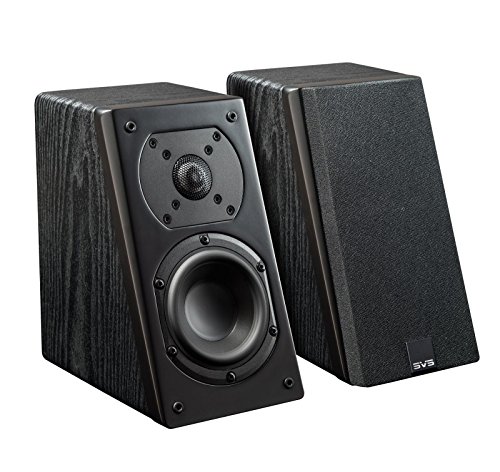
What the speaker is, and what you're actually buying
SVS Prime Elevation is a passive speaker, not a powered one. That means no built-in amplification and no direct turntable hookup.
What you're buying is a flexible cabinet with binding posts, banana plug support, and an angled design that works for wall mounting, surround duty, front channels, or height channels. Premium Black is the finish, not a different acoustic version.
A lot of buyers see the shape and assume it's just an Atmos add-on. I think that's too narrow. It's better understood as a wall-mount-friendly hi-fi speaker that can fill several roles.
Vinyl setup fit, receiver and phono preamp requirements
The signal chain is simple once you lay it out: turntable, phono preamp if needed, stereo receiver or AV receiver, speaker wire, then the speakers. If you're new to that path, our turntable setup guide and phono preamp guide will save you a headache.
If your room is shared with a TV, an AV receiver usually makes the most sense. You get easier switching, room to expand later, and one box handling both movie and record duties.
If you're music-only, a stereo receiver can be the cleaner buy. Just don't forget the extras people skip in the budget: wire, banana plugs, and any mounting hardware.
Use-case table and bookshelf comparison mini-block
| Use case |
Fit |
Why |
| Movies |
Excellent |
Flexible aiming and strong surround or front-channel use |
| Stereo music |
Good |
Works well, but not always the best imaging choice |
| Wall mounting |
Excellent |
This is where the angled cabinet earns its keep |
| Small rooms |
Very good |
Saves space and works where stands won't fit |
| Vinyl-first systems |
Depends |
Great if placement is tricky, less compelling if music is the only priority |
For record players, the comparison is pretty simple. SVS Prime Elevation is better when flexible placement matters more than textbook stereo geometry.
Traditional bookshelf speakers are usually better when pure stereo imaging is your top priority. If you have proper stands and a centered listening chair, a classic pair often has the easier path to better focus.