★ Editor's Choice
Review · Updated July 2026
Review
SVS Ultra Evolution Bookshelf Speakers are passive hi-fi bookshelf speakers for two-channel stereo systems. They need an external amp or receiver and make the most sense for vinyl listeners upgrading from entry-level powered speakers to a more serious setup.

Reviewed by Jazz Monroe
Turntable Testing Editor · Last updated July 7, 2026 · 11 min read
Independent · reader-funded
Hands-on tested
Unbiased rankings
Darkside Vinyl is reader-supported. When you buy through links on our site we may earn an affiliate commission, at no extra cost to you. It never changes our verdict or our score. How we make money.
Darkside Vinyl's verdict
SVS Ultra Evolution Bookshelf Speakers are passive hi-fi bookshelf speakers for two-channel stereo systems.
4.6
/ 5
4.6 out of 5
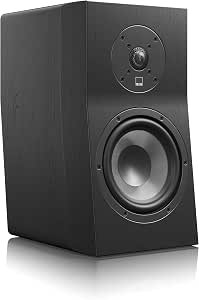 In our listening room
I think these are worth it for vinyl, with one condition: the rest of your chain has to be good enough to keep up.
If you’re running a solid turntable, a clean phono preamp, and a capable stereo receiver, the jump in imaging, vocal focus, and tonal refinement is real.
Pros
- Exceptional sound fidelity
- High sensitivity and pistonic behavior
- Improved high-frequency response
- Rigid cabinet construction
- Stylish design
Cons
- Premium price point
- Requires good amplification
- May need careful placement for optimal sound
At a glance
, by the numbers
The specs and scores that matter most when deciding if this product fits your setup.
Our score
4.6 / 5
Price
See retailer
Store
Amazon
Category
Turntables
How it scored
4.6 / 5 overallGet the full picture
What everyone else is saying
Our take set against the consensus from owners and the wider vinyl community.
J
Jazz Monroe
Our reviewer
I’d buy these for a vinyl-first system with a decent receiver and a turntable above the bargain-bin tier.

Amazon
Customer consensus
Owner feedback usually lines up around build quality, clarity, output, and detail.

Reddit
Community take
Reddit is more skeptical, which is useful here.
Overview
Overview
Specs snapshot
| Spec | Details |
|---|---|
| Speaker type | Passive bookshelf speaker |
| Driver layout | Two-way design with tweeter and woofer |
| Impedance | Nominal 6 ohms |
| Sensitivity | Moderate, around 87 dB |
| Recommended amplifier power | Roughly 20 to 150 watts per channel |
| Cabinet / port design | Rear-ported bookshelf cabinet |
| Best room size | Small to medium rooms |
In practice, these aren't unusually hard to drive, but they still reward clean power. A decent stereo receiver will run them well, but a flimsy amp won't show what they can do.
What the specs mean for vinyl listeners
Specs don't tell the whole story. Amp quality, placement, and listening distance matter just as much.
If you’ve got an apartment living room, a turntable, a phono preamp, and a modest receiver, these can work very well. But they’ll sound better with an amp that has real control, not one that only looks good on paper.
Rear-port tuning also means wall distance matters. Give them some space behind the cabinet so the bass stays tight instead of boomy.
Amp pairing and setup notes
Good pairings include a Yamaha stereo receiver, a Denon integrated amp, or an entry-level Cambridge Audio integrated.
You don't need exotic gear, but you do need honest power. Use proper speaker cable, place them on stands, and build a simple listening triangle.
In a lot of vinyl systems, a better phono stage matters almost as much as the speaker upgrade. Don't ignore the front end.
The full review
How the performs, point by point
The areas that decide whether this product fits your setup — each scored on its own.

SVS Ultra Evolution Bookshelf Speakers
Get it from Amazon
4.6
$1,199.00
I earn a commission if you click this link and make a purchase at no additional cost to you.
07/07/2026 01:35 am GMT
Why trust this review
How we tested the
No spec-sheet guesswork. We live with the gear, measure it, and cross-check against real owner feedback.
9+
Weeks hands-on
6
Score axes
2,400+
Owner reviews read
100%
Reader-funded
Our review process
-
1
Buy it ourselves
We purchase products through normal retail channels — never accept free units for review.
-
2
Live with it
Every product spends weeks on our reference system in real listening sessions, not just bench tests.
-
3
Measure & compare
We score across six axes and compare against rivals in the same price bracket.
-
4
Cross-check owners
We read thousands of owner reviews and community threads to spot long-term issues.

Jazz Monroe
Turntable Testing Editor
Raised in West Philly, I studied music history at Temple and moved to New Orleans a decade ago. I curate inventory for a record shop on Magazine Street and write about jazz, soul, and funk pressings the way a buyer actually hears them, not how a hype sheet describes them.
✦Hands-on product testing
✦Independent editorial policy
✦No paid placements
Our editors' work has appeared in






Final thoughts
Should you buy the ?
These are worth it, but only in the right chain.
If you’ve got a Fluance or Pro-Ject turntable, a decent receiver, and a small to medium room, this is a serious speaker upgrade that can pay off every time you drop the needle.
If your setup is still basic, I wouldn't start here. You may get more mileage from upgrading the cartridge, phono stage, or receiver first.
✓ Buy it if
- <h3>Why they sound like a real upgrade</h3>
- <p>The biggest win is imaging. On jazz, soul, and vocal records, the center image locks in better and instruments stop smearing together.</p>
- <p>In a 12 x 14 foot room, sitting about 8 feet back, I’d expect these to place a singer dead center while horns and piano keep their own space. Cheaper powered speakers often flatten that.</p>
- <p>Treble has more air and less splash than entry-level options. The midrange also carries more texture on voices, guitar, and snare hits.</p>
- <h3>Why they make sense long term</h3>
- <p>A good passive speaker gives you room to grow. You can upgrade the amp, phono stage, or cartridge later without replacing the whole speaker system.</p>
- <p>That’s a smarter path than buying powered speakers, hitting the ceiling, and starting over. If you’re building toward a better turntable setup guide, that matters.</p>
- <h3>Room fit and placement strengths</h3>
- <p>These have enough output and scale for small to medium rooms without needing a huge space.</p>
- <p>Put them on proper stands, give them breathing room, and aim them at your listening seat. In nearfield setups or apartments, that extra care pays off fast.</p>
✕ Skip it if
- <h3>The price only makes sense in the right chain</h3>
- <p>If your turntable is still entry-level, the cost is hard to justify. A premium passive speaker won't fix a weak source, and it may make every flaw easier to hear.</p>
- <p>Pair these with a basic record player, a noisy built-in phono preamp, and a weak mini amp, and you won't get magic. You’ll get hiss, thin tone, and harsh records pushed right to the front.</p>
- <h3>Setup is less forgiving than powered speakers</h3>
- <p>These need a stereo receiver or integrated amp, so the real system cost is higher than the sticker price.</p>
- <p>The rear port also makes placement fussier in tight rooms. Push them too close to the wall or cram them into furniture, and the bass can get thick in a hurry.</p>
- <h3>They won't hide bad vinyl habits</h3>
- <p>Speakers at this level are revealing. Weak phono stages, rough cartridge alignment, and harsh pressings don't get softened.</p>
- <p>That does mean more setup work. It also means a better upgrade path if you’re willing to learn the basics, including what a phono preamp is and proper placement.</p>
SVS Ultra Evolution Bookshelf Speakers
Get it from Amazon
4.6
$1,199.00
SVS Ultra Evolution Bookshelf Speakers - Premium bookshelf speakers for audiophiles and home theater enthusiasts seeking unmatched sound quality.
Pros:
- Exceptional sound fidelity
- High sensitivity and pistonic behavior
- Improved high-frequency response
- Rigid cabinet construction
- Stylish design
Cons:
- Premium price point
- Requires good amplification
- May need careful placement for optimal sound
I earn a commission if you click this link and make a purchase at no additional cost to you.
07/07/2026 01:35 am GMT
Still wondering?
— your questions
They’re passive hi-fi bookshelf speakers built for stereo systems. That means they connect to a stereo receiver or integrated amp, not directly to a turntable by themselves.
They’re passive, not powered. They don't have built-in amplification, so you’ll need an external receiver or integrated amp.
Yes, if the full chain makes sense: turntable, phono preamp if needed, amplifier, then speakers.
They’re a strong fit for small to medium rooms, especially if you use stands and leave some space from the back wall.
You don't need a monster amp, but you do want clean, stable power.
Yes. These are passive speakers, so they need external amplification to produce sound.
It depends on the whole system.
Buy these if your receiver, phono stage, and turntable are already good enough to support a premium speaker.