★ Editor's Choice
Uncategorized · Updated August 2026
Review
If your turntable mostly behaves but gets a little lively on a hollow shelf, I’d call these a fair low-cost experiment. Tuneful Cables Cork Isolation Pads make the most sense for beginners who need a simple vibration tweak, not a full rescue mission.

Reviewed by Cassie Hart
Audio Equipment Specialist · Last updated August 4, 2026 · 11 min read
Independent · reader-funded
Hands-on tested
Unbiased rankings
Darkside Vinyl is reader-supported. When you buy through links on our site we may earn an affiliate commission, at no extra cost to you. It never changes our verdict or our score. How we make money.
Darkside Vinyl's verdict
If your turntable mostly behaves but gets a little lively on a hollow shelf, I'd call these a fair low-cost experiment.
4.5
/ 5
4.5 out of 5
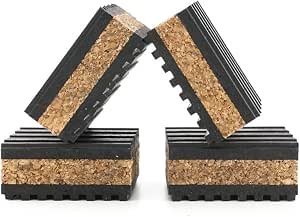 In our listening room
If you've got severe footfall skipping, wobbly furniture, or bad tracking force, skip this and fix the real issue first. Cork pads can reduce some resonance, but they won't turn a bad record player stand into a good one.
Verdict box
Pros
- Improves bass definition
- Easy to install
- Fits most audio devices
- Reduces unwanted vibrations
Cons
- Limited to specific audio setups
- Requires surface space for placement
At a glance
, by the numbers
The specs and scores that matter most when deciding if this product fits your setup.
Our score
4.5 / 5
Price
See retailer
Store
Amazon
Category
Uncategorized
How it scored
4.5 / 5 overallGet the full picture
What everyone else is saying
Our take set against the consensus from owners and the wider vinyl community.
C
Cassie Hart
Our reviewer
I think these make the most sense as a cheap experiment for mild vibration issues.

Amazon
Customer consensus
Amazon feedback lands about where you'd expect.

Reddit
Community take
Reddit is more skeptical, and that's useful here.
Overview
Overview
These are simple cork damping pads meant to sit under speakers, turntable feet, or shelf contact points. In a beginner vinyl setup, they belong in the cheap-accessory lane, not the core setup-basics lane.
If your Pro-Ject or Audio-Technica sits on a hollow media console, and nearby speakers are feeding energy back into the furniture, pads like these can help. Just check the obvious stuff first: a level surface, solid turntable setup, and enough space between the deck and speakers.
What these cork isolation pads actually do
Vibration moves through furniture into the plinth, and sometimes into the platter and stylus path. Cork helps interrupt some of that mechanical energy, which can reduce resonance in certain setups.
The reason cork works for some people is simple. It's firm enough to support gear without getting too squishy.
Results still depend on the shelf, the speaker output, and how sensitive your turntable is to vibration. Think of it like putting better shoes on a shaky table: it helps a little, but it doesn't turn bad furniture into good furniture.
Where to place them in a vinyl setup
Under turntable feet is the first move if the shelf itself feels resonant. Under speakers is often smarter if the speakers share the same cabinet as the deck.
You can also try them under a shelf or component platform, but results there are less predictable. Change one variable at a time or you won't know what actually helped.
Cork vs rubber vs sorbothane
| Material | Typical cost | Firmness | Best use case | Main drawback |
|---|---|---|---|---|
| Cork | Low | Firm | Cheap first try for mild vibration | Limited damping for severe problems |
| Rubber | Low to moderate | Medium | General-purpose grip and isolation | Can be less stable or less effective depending on design |
| Sorbothane | Moderate to high | Soft | Stronger damping in the right load range | Pricier, softer, and more weight-sensitive |
My quick framework is simple:
- Choose cork if you want a cheap, firm first test.
- Choose rubber if you want a middle-ground option.
- Choose sorbothane if you know you need softer damping and you're willing to match it to the gear weight.
The full review
How the performs, point by point
The details that matter when you're deciding — tested in our room, explained in plain language.

Tuneful Cables Cork Isolation Pads
Get it from Amazon
4.5
$14.95
I earn a commission if you click this link and make a purchase at no additional cost to you.
08/24/2026 03:07 pm GMT
Why trust this review
How we tested the
No spec-sheet guesswork. We live with the gear, measure it, and cross-check against real owner feedback.
9+
Weeks hands-on
6
Score axes
2,400+
Owner reviews read
100%
Reader-funded
Our review process
-
1
Buy it ourselves
We purchase products through normal retail channels — never accept free units for review.
-
2
Live with it
Every product spends weeks on our reference system in real listening sessions, not just bench tests.
-
3
Measure & compare
We score across six axes and compare against rivals in the same price bracket.
-
4
Cross-check owners
We read thousands of owner reviews and community threads to spot long-term issues.

Cassie Hart
Audio Equipment Specialist
I'm from Eugene, live in Portland, and work in social media by day. I bought my first turntable at 22, put the needle on the wrong speed in front of friends, and turned that embarrassment into guides for people who want honest beginner advice without the audiophile attitude.
✦Hands-on product testing
✦Independent editorial policy
✦No paid placements
Our editors' work has appeared in






Final thoughts
Should you buy the ?
I'd try these if your setup issue is mild, your budget is small, and the furniture is the obvious weak point. That's especially true if your speakers sit on the same cabinet as the turntable and the whole surface feels a little too alive.
I'd skip them if the real problem is stand quality, speaker placement, or cartridge setup. If the stylus jumps when someone walks across the room, save the money for a sturdier record player stand or a wall shelf instead.
Buy if: You want a cheap, reversible vibration tweak.
Skip if: You need a real fix for footfall or skipping.
✓ Buy it if
- Affordable way to test vibration control before paying for a bigger upgrade
- Easy to place under speakers or turntable feet
- Cork feels firmer than soft gel-style feet, which helps stability
- Useful when speakers and turntable share the same furniture
- No tools, drilling, or permanent changes needed
✕ Skip it if
- Won't solve major footfall or floor-bounce issues
- Won't fix bad tracking force, anti-skate, or a worn stylus
- Audible changes can be subtle on an already stable setup
- Load and balance matter more under heavier gear
- Cork isn't the best choice if you want maximum damping
Tuneful Cables Cork Isolation Pads
Get it from Amazon
4.5
$14.95
Tuneful Cables Cork Isolation Pads - Enhance your turntable's sound clarity by reducing vibrations and skips.
Pros:
- Improves bass definition
- Easy to install
- Fits most audio devices
- Reduces unwanted vibrations
Cons:
- Limited to specific audio setups
- Requires surface space for placement
I earn a commission if you click this link and make a purchase at no additional cost to you.
08/24/2026 03:07 pm GMT
Still wondering?
— your questions
They're cork-based pads designed to sit under a turntable or speakers and reduce some vibration coming through the furniture. I see them as simple isolation accessories, not a replacement for proper setup or a solid stand.
Sometimes, yes, but only if vibration is part of the problem. Their main job is reducing unwanted energy transfer from a shelf or cabinet into the turntable, not adding detail by magic.
Start with the spot most likely causing the problem. If your speakers and turntable share one cabinet, I'd try the speakers first.
Not automatically. Cork is usually cheaper and firmer, which makes it a good first try for light to moderate vibration issues.
They're usually in the low-cost accessory range, which is why I think they're easy to recommend as a first experiment. You're not spending stand-upgrade money here.
Usually, yes. That's the standard expectation for this kind of product.
Usually not. You place them under the feet or contact points, make sure everything sits flat, and then recheck that the turntable is still level.
Buy the pads if the problem is mild and the furniture is decent but a little resonant. Save for a better stand if the shelf is flimsy, the floor bounces, or the turntable skips from footsteps.