★ Editor's Choice
Review · Updated July 2026
Review
I think the LP628B is a sensible buy for medium to heavier turntables that can handle extra mass without complaint. If your goal is mild warp help and better platter contact, it makes sense.

Reviewed by Sofia Ruiz
Contributing Vinyl Editor · Last updated July 7, 2026 · 11 min read
Independent · reader-funded
Hands-on tested
Unbiased rankings
Darkside Vinyl is reader-supported. When you buy through links on our site we may earn an affiliate commission, at no extra cost to you. It never changes our verdict or our score. How we make money.
Darkside Vinyl's verdict
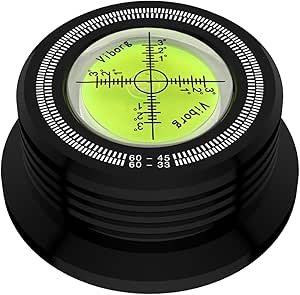
I think the LP628B is a sensible buy for medium to heavier turntables that can handle extra mass without complaint.
4.5
/ 5
4.5 out of 5
 In our listening room
I wouldn't call it a universal upgrade. On very light beginner decks, suitcase players, or tables with unresolved setup problems, I'd skip it.
My short version is simple: buy it for a stable deck with a specific issue to solve, not because you expect automatic better sound.
Pros
- Reduces unwanted noise
- Durable aluminum construction
- Compatible with various turntables
- Sleek black finish
- Easy to use
Cons
- May add slight weight to some setups
- Requires careful placement for best results
At a glance
, by the numbers
The specs and scores that matter most when deciding if this product fits your setup.
Our score
4.5 / 5
Price
See retailer
Store
Amazon
Category
Turntables
How it scored
4.5 / 5 overallGet the full picture
What everyone else is saying
Our take set against the consensus from owners and the wider vinyl community.
S
Sofia Ruiz
Our reviewer
I like the LP628B as a conditional accessory, not a must-have upgrade.

Amazon
Customer consensus
Amazon feedback usually splits by expectation.

Reddit
Community take
Reddit is more skeptical, and that's useful here.
Overview
Overview
Fit and compatibility, who should use it
The best candidates are heavier audiophile decks and stable mid-tier tables. That's where a turntable record stabilizer has enough mechanical support to be useful.
A Fluance RT-series owner is a much better fit than someone using a suitcase player in a dorm room. The accessory only makes sense when the table itself has enough stability to benefit from it.
| Turntable category | Guidance |
|---|---|
| Heavier audiophile deck | Yes |
| Mid-tier stable turntable | Likely yes |
| Beginner belt-drive | Caution |
| Suitcase player or all-in-one | No |
Check spindle fit and platter clearance before you buy. Those small details decide whether daily use feels easy or annoying.
Record weight vs record clamp, which problem are you solving
A record weight is passive. It uses downward mass to improve contact.
A record clamp mechanically holds the record at the spindle. That's a different tool, and sometimes a better one for dished records if your table supports it.
If you want something you can place in two seconds and remove just as fast, the LP628B style makes sense. If dish warp is the real issue and your spindle design allows it, a clamp may be the better answer.
| Accessory | How it works | Best for |
|---|---|---|
| Record weight | Adds mass at center | Easy daily use, mild seating issues |
| Record clamp | Mechanically presses or grips | Stronger hold on compatible tables |
Neither replaces proper setup, and neither fixes severe warp damage.
Is this the right upgrade right now
I'd put this behind setup basics. First, level the turntable correctly. Then check tracking force and stylus wear.
After that, a mat upgrade may deliver more value if the platter interface is the real issue. Only then does a record weight start to look like the smart next step.
Here's the everyday version: if playback is already clean and your issue is occasional mild warp, the LP628B is logical. If you're hearing distortion across multiple records, fix the stylus or setup first.
| Turntable type | Match | Why |
|---|---|---|
| Direct-drive table | Yes | Better motor torque, usually less concern about extra load |
| Mid-tier Fluance or Pro-Ject | Likely yes | Stable enough for a modest record puck |
| Light Rega or entry belt-drive | Caution | Check bearing and motor tolerance |
| Audio-Technica beginner model | Caution | Benefit may be small, setup basics matter more |
| Suitcase player | No | Too little mechanical margin |
| Product type | Approximate use case | Likely turntable match | Key caution |
|---|---|---|---|
| Drop-on record weight | Mild warp control, better center contact | Mid-tier to heavier tables | Not ideal for very light decks |
| Center spindle accessory | Quick on-off daily use | Direct-drive, stable belt-drive | Check spindle fit and clearance |
| Platter stability accessory | Small resonance and seating gains | Sorted setups | Won't fix severe warps |
Darkside Vinyl's Verdict
I wouldn't call it a universal upgrade. On very light beginner decks, suitcase players, or tables with unresolved setup problems, I'd skip it.
My short version is simple: buy it for a stable deck with a specific issue to solve, not because you expect automatic better sound.
Safe to use if…
- Belt-drive turntable: Caution, check manufacturer guidance and motor strength first.
- Direct-drive turntable: Usually a better match.
- Lightweight beginner deck: Caution at best, often skip.
- Heavier audiophile deck: Generally suitable.
| Turntable type | Match | Why |
|---|---|---|
| Direct-drive table | Yes | Better motor torque, usually less concern about extra load |
| Mid-tier Fluance or Pro-Ject | Likely yes | Stable enough for a modest record puck |
| Light Rega or entry belt-drive | Caution | Check bearing and motor tolerance |
| Audio-Technica beginner model | Caution | Benefit may be small, setup basics matter more |
| Suitcase player | No | Too little mechanical margin |
Quick spec snapshot
Want the short version first? This tells you if it's even worth testing on your deck.
| Product type | Approximate use case | Likely turntable match | Key caution |
|---|---|---|---|
| Drop-on record weight | Mild warp control, better center contact | Mid-tier to heavier tables | Not ideal for very light decks |
| Center spindle accessory | Quick on-off daily use | Direct-drive, stable belt-drive | Check spindle fit and clearance |
| Platter stability accessory | Small resonance and seating gains | Sorted setups | Won't fix severe warps |
The full review
How the performs, point by point
The areas that decide whether this product fits your setup — each scored on its own.

Viborg LP628B Record Weight Stabilizer
Get it from Amazon
4.5
$27.90
I earn a commission if you click this link and make a purchase at no additional cost to you.
07/08/2026 02:03 pm GMT
Why trust this review
How we tested the
No spec-sheet guesswork. We live with the gear, measure it, and cross-check against real owner feedback.
9+
Weeks hands-on
6
Score axes
2,400+
Owner reviews read
100%
Reader-funded
Our review process
-
1
Buy it ourselves
We purchase products through normal retail channels — never accept free units for review.
-
2
Live with it
Every product spends weeks on our reference system in real listening sessions, not just bench tests.
-
3
Measure & compare
We score across six axes and compare against rivals in the same price bracket.
-
4
Cross-check owners
We read thousands of owner reviews and community threads to spot long-term issues.

Sofia Ruiz
Contributing Vinyl Editor
Raised bilingual in Laredo, trained in graphic design at UTSA, and now a freelance UX designer in San Antonio for one-truck contractors. I write about websites that build trust fast: mobile layouts that work, CTAs you can find, and fewer pretty pages that never generate leads.
✦Hands-on product testing
✦Independent editorial policy
✦No paid placements
Our editors' work has appeared in






Final thoughts
Should you buy the ?
I think the Viborg LP628B is worth considering if you have a compatible turntable and a clear reason to use it. It's best for solving a mild contact or warp issue on a stable deck, not for chasing miracles.
If you're on a lightweight starter table, I'd spend the first upgrade dollars on setup work, stylus attention, or maybe a better mat. That's usually the cleaner fix.
For someone with a sorted mid-tier table and a handful of mildly warped records, this is a reasonable accessory to try. For someone with skipping problems on a light deck, it's probably the wrong fix at the wrong time.
✓ Buy it if
- <h3>What the Viborg LP628B does well</h3>
- <p>The best thing here is simplicity. You drop it on the spindle, play the record, and know pretty quickly if it helps.</p>
- <p>On mildly warped or slightly dished records, it can improve platter contact near the center. That won't transform the system, but it can make playback feel a bit more settled.</p>
- <p>I also like that it's a lower-risk experiment than changing a cartridge. You're not touching the tonearm or resetting tracking force.</p>
- <p>If you want a clamp alternative without threading or locking anything, that's the appeal.</p>
✕ Skip it if
- <h3>Where the LP628B can be the wrong fit</h3>
- <p>Extra mass is the whole point, and that's also the risk. On lightweight entry-level turntables, that added load can be a bad trade.</p>
- <p>It also won't fix the wrong problem. If your deck is unlevel, your stylus is worn, or your tracking force is off, a stabilizer won't save the setup.</p>
- <p>Sound improvement can be subtle or nonexistent on already stable systems with flat records. That's why I don't like accessories like this as blind buys.</p>
- <p>Spindle height and platter clearance matter too. If the fit is awkward, daily use gets old fast.</p>
Viborg LP628B Record Weight Stabilizer
Get it from Amazon
4.5
$27.90
Viborg LP628B Record Weight Stabilizer - Enhance your vinyl listening experience with improved sound quality and precision leveling.
Pros:
- Reduces unwanted noise
- Durable aluminum construction
- Compatible with various turntables
- Sleek black finish
- Easy to use
Cons:
- May add slight weight to some setups
- Requires careful placement for best results
I earn a commission if you click this link and make a purchase at no additional cost to you.
07/08/2026 02:03 pm GMT
Still wondering?
— your questions
It's a drop-on record weight that sits over the spindle and adds downward pressure at the center of the record. The goal is better platter contact during playback.
It increases contact between the record and the platter near the center. That can help with mild warp behavior and small resonance issues, depending on the mat, record, and setup.
A record weight uses mass. You drop it over the spindle, and its weight presses the record down.
Yes, with mild warps in some setups. It can help a record sit more evenly and improve contact near the center.
Usually, the value case is build quality, finish, and fit confidence, not miracle performance. A better-made Viborg weight may feel more predictable in daily use than a random generic option.
It works best on sturdier turntables with stronger bearings and motors, often mid-tier or heavier decks. Direct-drive models are usually safer bets than very light belt-drive tables.