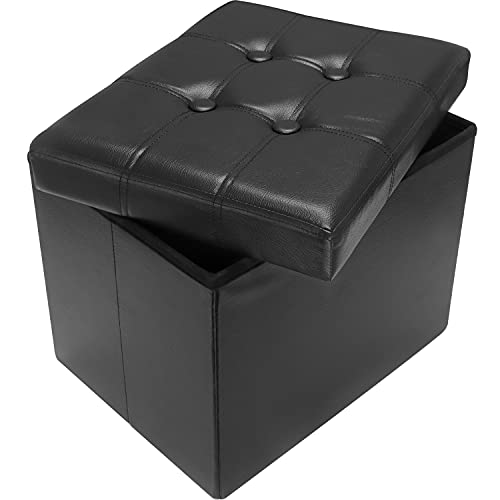
01Storage and Everyday Function
What makes the Vinyl Record Storage Ottoman work is that it doesn’t ask you to choose between furniture and record storage. I like gear that earns its spot in a room, and this does that by hiding your collection in plain sight while still feeling like a normal piece of living room furniture.
In day-to-day use, it’s the kind of thing I’d actually keep near a listening setup because it solves a real problem: where do the records go when they’re not spinning? I can drop a stack of LPs inside and keep the room looking cleaner without turning it into a storage closet.
The design is simple in a good way. It doesn’t try too hard to look like audiophile furniture, which I appreciate, because that usually ends up feeling fussy and dated.
It blends into a room better than a dedicated record rack would, and that matters if your setup lives in a shared space. I’d call it more practical than flashy, but that’s exactly why it works.
03Access and Organization
The big question with something like this is whether it’s actually easy to use, not just nice to look at. I want storage that lets me grab a record without making me move half the room around, and this kind of ottoman setup is good for that sort of quick access.
It also helps keep records out of the open, which is useful if you’ve got pets, kids, or just a habit of leaving albums stacked wherever you last played them. I like that it encourages a little more order without feeling like a chore.
This is the sort of piece that makes the most sense in a living room, den, or listening corner where you want the vinyl collection close by but not on display all the time. It feels less like specialized audio furniture and more like something that can live comfortably in a normal home.
That flexibility is the main appeal for me. If your setup changes over time, or if you don’t want your record storage to lock you into one layout, this kind of ottoman gives you a lot more freedom than a fixed shelf system.
I’d recommend this to anyone who wants their records stored neatly without turning the room into a mini shop. It’s especially appealing if you care about keeping a clean aesthetic and don’t want every piece of vinyl gear shouting for attention.
It’s not the choice for someone building a huge, highly organized archive, but that’s fine. For a casual-to-serious listener who wants storage that feels lived-in and useful, this is the kind of solution that makes sense very quickly.