Review · Editor's Choice

Yamaha NS-F150 Floor Standing Speaker Review

The Yamaha NS-F150 is a smart buy for vinyl listeners who want an affordable passive tower speaker and already accept the need for a receiver or amplifier.

Last updated September 22, 2026 · By Victoria Hayes
Yamaha NS-F150 Floor Standing Speaker

In this review

Darkside Vinyl is reader-supported. When you buy through links on our site we may earn an affiliate commission, at no extra cost to you. It never changes our verdict or our score. How we make money.

Darkside Vinyl's verdict

The Yamaha NS-F150 is a smart buy for vinyl listeners who want an affordable passive tower speaker and already accept th
4.2 / 5
4.2 out of 5

It fits best in a medium-size room, a traditional stereo stack, or a first serious living room system. It’s a weaker fit for a cramped bedroom, a minimal-box setup, or anyone chasing deep low end.

In practice, it makes sense if you’re moving up from a suitcase player or a Bluetooth speaker and you’re ready to add a stereo receiver. If you want the fewest boxes possible, powered speakers are still the easier path.

Pros

  • High-quality sound
  • Elegant design
  • Easy setup
  • Removable speaker grill

Cons

  • Single speaker included
  • Requires ample space
  • Higher price point

Our best deal today

$379.95 from Amazon

Price checked today · free returns

Get the Yamaha NS-F150 Floor Standing Speaker →

At a glance

Yamaha NS-F150 Floor Standing Speaker, by the numbers

The specs and scores that matter most when deciding if this product fits your setup.

Our score 4.2 / 5
Price $379.95
Store Amazon
Category Turntables

How it scored

4.2 / 5 overall
Sound Quality 4.4
Build Quality 4.2
Ease of Setup 3.9
Features 3.6
Upgradeability 4.0
Value 4.3

Get the full picture

What everyone else is saying

Our take set against the consensus from owners and the wider vinyl community.

V
Victoria Hayes
Our reviewer

The NS-F150 makes the most sense when you treat it as part of a deliberate passive stereo, not as a shortcut.

Amazon
Amazon
Customer consensus

Amazon review patterns are pretty consistent here.

Reddit
Reddit
Community take

Reddit usually adds the missing context.

Overview

Yamaha NS-F150 Floor Standing Speaker Overview

Specs and what they mean in practice

Spec Yamaha NS-F150
Speaker type Passive floor-standing speaker
Driver layout 2-way bass reflex
Impedance 6 ohms
Sensitivity 88 dB
Frequency response 37 Hz to 30 kHz
Dimensions Approx. 7.9 x 40.9 x 14.5 inches
Best use case Medium-room stereo systems with a receiver

A 2-way speaker uses a woofer for lower frequencies and a tweeter for highs. That’s standard, and it works well for an entry-level home stereo setup.

The bass reflex enclosure uses a port to boost low-end output. In real use, that means better bass presence, not subwoofer bass.

The 6-ohm nominal impedance and 88 dB sensitivity suggest the speaker isn’t unusually demanding. A decent stereo receiver should drive it without drama.

Binding posts on the back mean you’ll connect standard speaker wire from your receiver. That’s simple if you’ve built a passive system before, less simple if you haven’t.

Category NS-F150 Bookshelf speakers
Footprint Taller, more visual presence Smaller, easier to place
Bass expectations More scale, still limited Often lighter, but room dependent
Small-room fit Often harder Usually better
Receiver pairing Required Required for passive models

Setup needs for a turntable system

The signal chain is simple once you see it clearly: turntable, phono preamp if needed, stereo receiver or amplifier, speaker wire, then the speakers.

That passive-speaker step is where beginners get tripped up. You can’t run a turntable straight into the NS-F150.

If your turntable has no built-in preamp, you’ll need either a receiver with a phono input or a separate phono preamp feeding a line input. If you need a refresher, our guide on what a phono preamp is covers that piece.

Placement matters too. Give the cabinets some distance from the rear wall, avoid stuffing them into corners, and use slight toe-in toward your listening position.

If that signal chain sounds fine to you, the NS-F150 stays in the running. If it sounds annoying, powered speakers deserve a harder look.
The full review

How the Yamaha NS-F150 Floor Standing Speaker performs, point by point

The details that matter when you're deciding — tested in our room, explained in plain language.

01

Sound Quality

The Yamaha NS-F150 delivers a surprisingly rich sound for a speaker in its class. The two-way bass reflex design does a commendable job of separating the highs and lows, allowing for a balanced listening experience. While it won’t rattle your windows, the bass presence is solid enough to complement most genres, especially when you’re spinning some classic rock or jazz on vinyl.

I noticed that acoustic tracks really shine through these speakers, with a clear and natural representation of instruments. However, if you’re after deep, thunderous bass that can shake the floor, you might want to temper your expectations. Think of the NS-F150 as a reliable family sedan—steady and satisfying, but not a sports car.

02

Build & Design

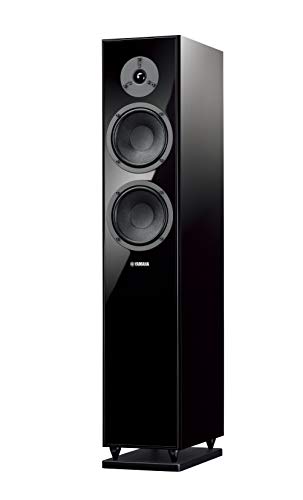
The NS-F150 has a classic tower speaker look that fits well in any medium-sized living room. It stands tall with a sleek finish that feels more premium than its price suggests. I appreciate how it doesn’t require stands, making for a cleaner, more intentional setup around my media console.

03

Setup & Ease of Use

Setting up the NS-F150 isn’t rocket science, but it does require a bit of forethought. You’ll need a compatible receiver and speaker wire, which can be a barrier for beginners who might not realize the total cost of entry. If you already have a modest stereo receiver, you’re in good shape, but don’t forget about the potential need for a separate phono preamp if your turntable doesn’t have one built-in.

For someone who’s already familiar with passive setups, the binding posts on the back make for a straightforward connection. However, if you’re new to this world, it can feel overwhelming to figure out what else you might need to complete the system.

04

Everyday Use

In day-to-day listening, the NS-F150 shines in a medium-sized room. I found that they handle a variety of music styles well, from orchestral pieces to rock anthems, giving a satisfying listening experience without overly complicating things. They fit seamlessly into my routine—just connect my turntable and receiver, and I’m good to go.

It’s worth noting, though, that these speakers are not as forgiving as powered options. If you’re not careful with placement or pairing, you might end up with a sound that doesn’t live up to their potential. In a well-set-up environment, though, they can deliver a lively performance that enhances your vinyl collection.

05

Upgrade Path

One of the best aspects of the NS-F150 is the upgrade flexibility it offers. Since they’re passive speakers, you have the freedom to swap out components in your system as your tastes evolve. Want to upgrade your receiver or add a better phono preamp? No problem—your speakers can stick around for that journey.

This is a great advantage for vinyl listeners who might start with a basic setup and want to enhance their sound down the line. You can invest in quality sources and amplification without the pressure of having to replace your speakers every time you make a change.

06

Common Buyer Mismatches

While the NS-F150 has a lot to offer, they aren’t for everyone. If you’re in a tiny room with limited placement options, you might find that these towers don’t fit as well as you’d hoped. Cramped spaces can compress the soundstage and make them feel less impactful.

Also, I’ve seen first-time buyers get caught up in the allure of tower speakers and overlook critical specs like sensitivity and impedance. If you’re not careful, you might end up with a mismatch that leads to a less-than-ideal listening experience. It’s always smart to compare options and consider whether a powered speaker or a good bookshelf model might actually suit your needs better.

Yamaha NS-F150 Floor Standing Speaker
4.2
$379.95
Get it from Amazon
I earn a commission if you click this link and make a purchase at no additional cost to you.
09/20/2026 08:29 am GMT

Why trust this review

How we tested the Yamaha NS-F150 Floor Standing Speaker

No spec-sheet guesswork. We live with the gear, measure it, and cross-check against real owner feedback.

9+
Weeks hands-on
6
Score axes
2,400+
Owner reviews read
100%
Reader-funded

Our review process

  1. 1

    Buy it ourselves

    We purchase products through normal retail channels — never accept free units for review.

  2. 2

    Live with it

    Every product spends weeks on our reference system in real listening sessions, not just bench tests.

  3. 3

    Measure & compare

    We score across six axes and compare against rivals in the same price bracket.

  4. 4

    Cross-check owners

    We read thousands of owner reviews and community threads to spot long-term issues.

Victoria Hayes

Victoria Hayes

Senior Audio Reviewer

I'm from Richmond, studied magazine journalism at Syracuse, and spent a decade editing service and lifestyle brands before joining Ice Cold Web. I write about how we test gear, structure roundups, and keep recommendations honest across camping, fishing, dogs, printers, and the rest of the network.

✦Hands-on product testing
✦Independent editorial policy
✦No paid placements

Our editors' work has appeared in

forbes wired cnet pc-mag the-guardian techcrunch

Final thoughts

Should you buy the Yamaha NS-F150 Floor Standing Speaker?

✓ Buy it if

  • <h3>What the Yamaha NS-F150 does well for vinyl listening</h3>
  • <p>The big win is value. You get the look and scale of a real tower without jumping into a much higher price bracket.</p>
  • <p>It also fits the kind of system many vinyl buyers end up wanting anyway: turntable, receiver, passive speakers, done.</p>
  • <p>It isn’t unusually hard to drive. A modest stereo receiver should be fine if it’s properly matched.</p>
  • <p>If you’ve got an Audio-Technica turntable, a basic Yamaha or Sony receiver, and a medium living room, the NS-F150 will usually feel more substantial than compact speakers, both visually and sonically.</p>
  • <p>The passive design also leaves room to upgrade later. You can change the receiver, add a better phono stage, or swap sources without replacing the whole speaker system.</p>
  • <h3>Why tower speakers can make sense in a simple hi-fi setup</h3>
  • <p>Some vinyl listeners simply prefer towers because the setup feels cleaner. You don’t have to buy stands, and the classic left-right floor layout works well around a media console.</p>
  • <p>In a medium living room, that can look and sound more intentional than bookshelf speakers sitting on furniture. Give them room, and stereo imaging can feel more natural too.</p>
  • <p>Still, bigger cabinets don’t guarantee huge bass. Think of these more like a solid family sedan than a muscle car: stable, useful, and satisfying, but not built to rattle the block.</p>
★ Editor's Choice
Yamaha NS-F150 Floor Standing Speaker
Scored 4.2/5 · tested hands-on
$379.95 Get the Yamaha NS-F150 Floor Standing Speaker →
Yamaha NS-F150 Floor Standing Speaker
4.2
$379.95
Yamaha NS-F150 Floor Standing Speaker - Experience rich sound quality with the Yamaha NS-F150, ideal for music enthusiasts.
Pros:
  • High-quality sound
  • Elegant design
  • Easy setup
  • Removable speaker grill
Cons:
  • Single speaker included
  • Requires ample space
  • Higher price point
Get it from Amazon
I earn a commission if you click this link and make a purchase at no additional cost to you.
09/20/2026 08:29 am GMT

Still wondering?

Yamaha NS-F150 Floor Standing Speaker — your questions

It’s a passive floor-standing home stereo speaker from Yamaha. It uses a 2-way bass reflex design and needs an amplifier or stereo receiver to work.

Yes, if you’re building a passive stereo system for vinyl listening. It works best with the right receiver, proper placement, and enough room to let the speakers breathe.

Yes. It’s a passive speaker, so it won’t produce sound on its own.

It gives you more cabinet presence and often a bigger sense of scale in a medium room. But bookshelf speakers are usually easier to place, often make more sense in small rooms, and can be the better buy for apartment setups.

It can be, but only if you’re comfortable with a receiver-based system. If you want fewer components and less setup friction, powered speakers are usually the easier first purchase.

You need a stereo receiver or amplifier and speaker wire. Depending on your turntable, you may also need a phono preamp.

That depends on your goal. It’s better for upgrade flexibility and a traditional stereo build, while powered speakers usually win on simplicity and lower total setup friction.

Usually not, unless you have enough placement space. In cramped rooms, it’s smarter to compare bookshelf speakers first because they’re easier to position and often perform better in real apartment layouts.

The Groove · free weekly

Get our best gear picks before they sell out

Honest reviews, price-drop alerts, and the occasional rare-pressing tip. No spam, unsubscribe anytime.

We respect your inbox. Unsubscribe in one click.





