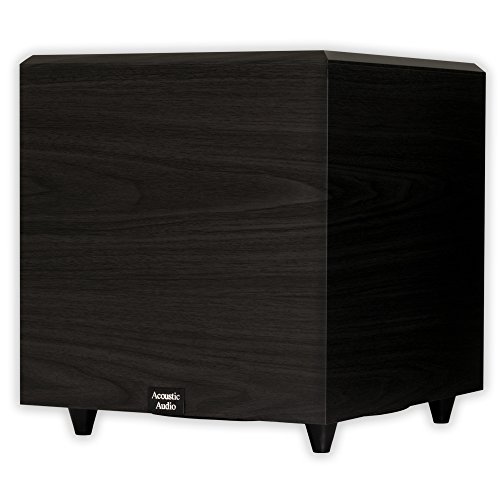
Specs and connectivity at a glance
Here's the short version of the spec sheet, the part that actually matters in a real room.
| Spec |
What to know |
| Driver size |
12-inch driver |
| Type |
Powered subwoofer |
| Inputs |
RCA inputs, LFE input |
| Controls |
Volume control, crossover dial, phase switch |
| Best use case |
Cheap bass boost for entry-level stereo or home theater |
The powered design is the key point. It means the sub has its own amplification, so it's an add-on to your system, not a passive speaker that needs extra power.
The input options matter too. The right connection depends on whether you're using a stereo receiver, an AV receiver, or a less sub-friendly setup.
This also isn't a standalone turntable accessory. It only works properly as part of a full signal path.
How to connect it to a turntable setup
For most people, the clean path looks like this: turntable, phono preamp, receiver, then subwoofer and speakers.
If your turntable has a built-in preamp, that helps. If it doesn't, you'll need an external one, and our guide on what a phono preamp is covers that.
Here's the compatibility checklist:
- Turntable with a built-in preamp, or a turntable plus external phono preamp
- Stereo receiver or integrated amp with sub out or usable pre out
- Powered subwoofer connection through RCA line input or LFE input
- Main speakers that can still handle the rest of the frequency range cleanly
Most beginners can't connect a sub directly to a turntable, and that's a common buying mistake. If you're using powered speakers with no sub output, fix the signal chain first.
For music, lower crossover settings and restraint usually sound better. For movies, extra output and impact often feel more satisfying.