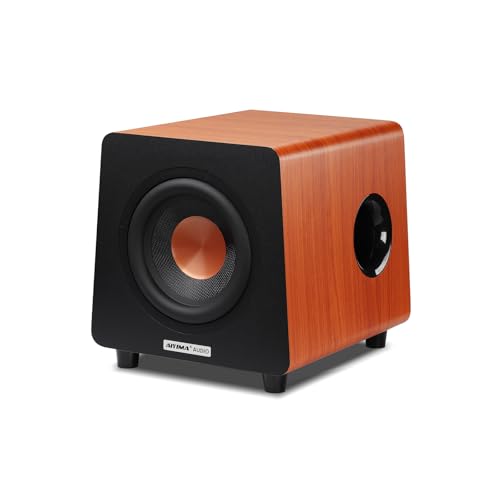
Who the AIYIMA 800X is best for
I’d point this at apartment listeners, bedroom systems, and budget hi-fi setups built around powered speakers or a stereo receiver.
It fits people who want fuller bass, not exaggerated bass. If your system already sounds clean but light on the bottom, this is a sensible next step.
Compared with bookshelf speakers alone, a small sub can give records more weight and balance. Compared with a full speaker upgrade, it only makes sense if the rest of your chain is already doing its job.
Compatibility checklist for common turntable systems
Here’s the plain-English version:
| Setup type |
Can it work with AIYIMA 800X? |
Output needed |
Cable path |
| Turntable with powered speakers |
Sometimes |
Line-level or sub-compatible output from speakers/preamp path |
RCA, depending on speaker inputs |
| Turntable with stereo receiver |
Yes, easiest path |
Sub out or line-level routing |
Receiver to sub via RCA |
| Turntable with external phono preamp |
Maybe |
Depends on what comes after the preamp |
Preamp to amp/speakers, then sub connection |
| All-in-one record player |
Usually no |
Proper line out or sub path |
Often missing |
If your turntable feeds a receiver with a sub out, you’re in good shape. If your chain ends at a bare all-in-one unit, this usually turns into a headache.
Most turntables don’t connect straight to a subwoofer by themselves. If you need help sorting that out, start with the turntable setup guide and what a phono preamp does.
Small room vs larger room performance
This sub makes the most sense in a small room: bedroom, apartment den, or small living room.
“Enough” here means filling in low end for music listening. It doesn’t mean replacing a larger theater sub in a big open space.
Placement matters more than people expect. Shove it in a bad corner and you can get boomy, uneven bass that makes the product seem worse than it is.
In a nearfield setup with compact speakers, the 800X can add missing foundation under vocals and instruments. In a large family room, it may sound restrained unless your expectations stay modest.
Setup basics, crossover, phase, and gain
Treat crossover and gain like integration controls, not “more bass” knobs. That mindset saves a lot of bad first impressions.
Start with moderate gain. Set the crossover around where your bookshelf speakers begin to thin out, then use phase to tighten the blend, not chase loudness.
I’d always tune with familiar records. Put on something with a steady bass line and natural kick drum, then back the sub down until you miss it, not until it announces itself.
That’s the trick. Muddy bass is usually a setup problem before it’s a product problem.