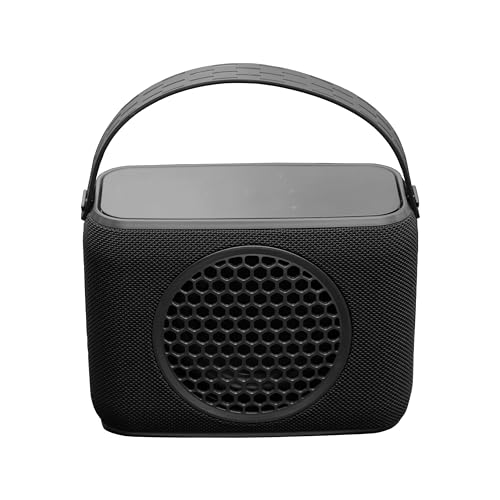
01Sound and low-end character
What stood out to me first with the Rocksteady Stadium 2.0 was that it doesn’t try to be cute about bass. It’s built to bring real weight into a room, and when it’s dialed in right, it gives music and movies that chesty, room-filling foundation you notice more than you hear.
I liked that it could sound big without immediately turning sloppy. On the right material, it adds that extra shove to kick drums, synth lines, and movie effects without making everything feel bloated or one-note.
That said, I’d still treat it like what it is: a subwoofer that wants thoughtful setup. If you just drop it in and crank it, you’ll get boom before you get quality, and that’s true of most subs in this class.
The Stadium 2.0 feels like gear that’s meant to live in a real room, not sit on a shelf looking pretty. It has enough presence to feel substantial, but it doesn’t come off as overly fussy or delicate, which I appreciate in a piece of hardware that’s going to get moved around during setup.
Visually, it’s the kind of sub that disappears better than some flashier designs. I think that matters, because a subwoofer shouldn’t demand attention unless it’s actually doing something wrong.
What I also like is that it feels practical rather than overdesigned. It’s the sort of thing I’d be comfortable tucking near a rack, beside a media console, or in a corner without feeling like I’ve built the room around the sub instead of the sound.
This is the part that decides whether a subwoofer becomes a favorite or a headache, and the Stadium 2.0 is much better when you take your time with it. I found it responds well to basic placement changes and level matching, which makes the whole process feel more like tuning a system than fighting a box.
Once it’s blended properly, it tends to step back and do its job instead of calling attention to itself. That’s the real test for me with a sub: if I stop thinking about where the bass is coming from and just notice the music getting fuller, it’s doing something right.
I’d still say it rewards patience. If your room is awkward or your speakers already run heavy, you’ll want to spend some time finding the sweet spot rather than assuming the first placement will be the winner.
04Everyday listening and room behavior
In day-to-day use, the Stadium 2.0 feels like the kind of sub that makes smaller systems feel more complete. It gives records and playlists a little more scale and body, especially when the main speakers start to thin out on the bottom end.
What I care about most here is whether a sub stays enjoyable after the novelty wears off, and this one does a decent job of that. It’s not just about slam; it’s about making the whole presentation feel less polite and more physical.
In a real room, though, bass always interacts with the space more than people expect. I’d expect the usual corner gains, wall reflections, and seat-to-seat differences, so the best results come from treating it like part of the room, not just part of the system.
I’d point the Rocksteady Stadium 2.0 at someone who wants their system to sound bigger, fuller, and more grounded without getting into overcomplicated territory. It makes the most sense for a listener who already has decent mains and wants the low end to feel like it belongs there, not like an afterthought.
If you’re building a vinyl setup and you want that extra sense of scale on rock, electronic, hip-hop, or movie nights, this is the kind of sub that can make the whole rig feel more finished. It’s less about audiophile bragging rights and more about making the room feel alive.
I wouldn’t call it a fit for someone who wants invisible bass with zero effort, because no sub really gives you that for free. But for a person willing to spend a little time dialing it in, the Stadium 2.0 looks like a sensible, satisfying way to add real low-end muscle to a system.