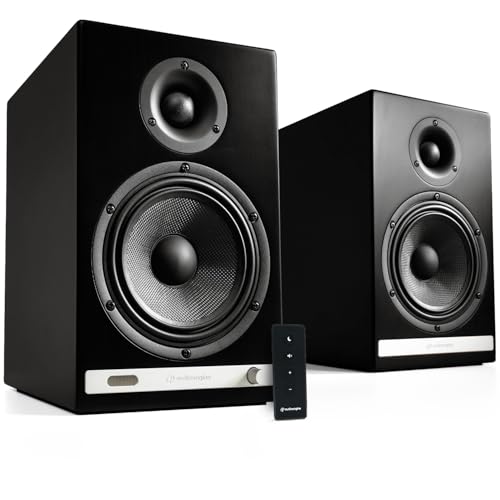
The Audioengine HD6 speakers deliver a sound that’s full and easygoing, perfect for those long vinyl listening sessions. I found the tonal balance pleasing, with a warmth that wraps around you rather than jabbing you in the ears. If you’re looking for a relaxed home-listening experience, these speakers definitely deliver that vibe without sacrificing richness in the lows or clarity in the highs.
What I appreciate is that they don’t try too hard to impress with sharp detail or aggressive highs. Instead, they create an inviting soundstage that feels natural, making it easy to lose yourself in the music. Whether it’s a classic rock album or a smooth jazz record, the HD6 makes everything feel right at home.
The HD6 speakers are a visual treat, boasting a wood veneer finish that looks more like furniture than your typical tech gear. This matters when you’re placing them in your living room, as they blend in beautifully without screaming “look at me.” Their aesthetic is one of the reasons I think they’re a great choice for people who want a polished setup that complements their space.
The build quality feels solid, too, which adds to the overall appeal. You can tell they’re designed to last, and the attention to detail in the design makes them feel more premium than many other options out there. It’s nice to have speakers that don’t just sound good but also look good sitting on your shelves.
03Connectivity & Features
The input options on the HD6 are where they really shine for someone like me who juggles multiple audio sources. You’ve got RCA for your turntable, optical for your TV, and Bluetooth for casual streaming, making it super convenient to switch between devices without a hassle. This kind of flexibility is essential in a real-world setup, and it’s something I wish more powered speakers would get right.
However, it’s worth noting that the absence of a built-in phono preamp can trip some users up. If your turntable only offers phono output, you’ll need an external preamp, which is an extra box and cost that might ruin the clean aesthetic. Still, if you have a turntable with a line output, you’re golden, and it makes the HD6 feel more versatile than its price tag might suggest.
Living with the HD6 has been a breeze. I’ve used them for everything from spinning records at night to casual Spotify sessions during the day, and they handle it all with ease. The ability to connect my TV via optical and stream music over Bluetooth means I’m not constantly swapping cables or worrying about clutter, which is a huge plus in my book.
In practice, the setup is straightforward and user-friendly. I paired an Audio-Technica turntable with a line/phono switch, and it was as simple as plugging in the RCA cables. The seamless transition from vinyl to TV to streaming makes these speakers a great all-in-one solution for someone who wants to keep things simple without compromising on quality.
05Upgrade Path & Who It's For
While the HD6 is a solid choice for most listeners, it’s important to consider your future needs. The subwoofer output is a nice touch, allowing for a bass upgrade down the line if you feel like you need a bit more thump in your music. This feature gives you room to grow without having to replace the whole system, which is something I always appreciate in audio gear.
That said, if you’re strictly a vinyl listener with no plans for other sources, you might find yourself paying for features you won’t use. There are more budget-friendly options out there that could suit your needs better if you don’t see yourself utilizing the optical or Bluetooth capabilities. Ultimately, the HD6 is for someone who values versatility and aesthetics in their setup, making it a great choice for a living room or medium-sized listening space.