★ Editor's Choice
Review · Updated July 2026
Review
The A1S is a good niche buy if you already understand your signal chain and your speakers are an easy match. It’s not the default best small amp for most people.

Reviewed by Calvin Reese
Vinyl & Gear Editor · Last updated July 7, 2026 · 11 min read
Independent · reader-funded
Hands-on tested
Unbiased rankings
Darkside Vinyl is reader-supported. When you buy through links on our site we may earn an affiliate commission, at no extra cost to you. It never changes our verdict or our score. How we make money.
Darkside Vinyl's verdict
The A1S is a good niche buy if you already understand your signal chain and your speakers are an easy match.
4.5
/ 5
4.5 out of 5
 In our listening room
I’d use it for nearfield listening, efficient passive speakers, small rooms, and vinyl-first systems. I’d skip it if you need a phono input, more output, cooler operation, or basics like a remote and broader connectivity.
Best for:
Pros
- Pure Class A sound quality
- Fast dynamic response
- Long-lasting components
- Deep audio penetration
Cons
- Limited output power
- Heavier than typical models
- Higher price point
At a glance
, by the numbers
The specs and scores that matter most when deciding if this product fits your setup.
Our score
4.5 / 5
Price
See retailer
Store
Amazon
Category
Turntables
How it scored
4.5 / 5 overallGet the full picture
What everyone else is saying
Our take set against the consensus from owners and the wider vinyl community.
C
Calvin Reese
Our reviewer
I wouldn’t call the A1S a smart first upgrade for most beginners.

Amazon
Customer consensus
The common positives are predictable: compact size, novelty, and pleasing sound in small systems.

Reddit
Community take
Reddit usually adds the context marketplace reviews miss.
Overview
Overview
What the BRZHIFI A1S is, and what it isn’t
This is a compact stereo amplifier for passive speakers. It’s not a receiver, and it’s not meant to control powered speakers.
It expects a line-level RCA input. That means a turntable without a built-in phono preamp needs an external phono preamp before it reaches the amp.
A valid chain looks like this: Fluance RT82 into a Pro-Ject phono preamp, then RCA into the A1S, then speaker wire out to passive bookshelf speakers. An invalid chain is a raw phono turntable plugged straight into the amp.
Physically, it looks tidy on a desk, but it needs breathing room. The aluminum chassis, heat sinks, RCA input, and banana plug terminals are straightforward, but shelf ventilation matters.
What this means in practice for vinyl setups
Do I need a phono preamp?
Yes, unless your turntable already has a built-in phono preamp and is set to line output. Phono-level signal is too weak and uses different EQ. Line-level signal is what this amp expects.
Speaker matching is the whole story here. Efficient bookshelf speakers in a bedroom, office, or nearfield setup make sense.
Harder loads in a bigger room usually don’t. Powered speakers are also the wrong match, because this amp is built to drive passive speakers directly.
| Amp type | Heat | Efficiency | Sound character | Best speaker match |
|---|---|---|---|---|
| Pure Class A | High | Low | Often described as smooth or warm | Efficient speakers, small rooms |
| Class AB | Moderate | Moderate | Balanced, versatile | Wider range of speakers |
| Class D | Low | High | Clean, punchy, often neutral | Great for desktops and value setups |
Here’s the practical version. An Audio-Technica or Fluance table with line output, plus efficient passive speakers in a small office, is a workable match.
A Rega or Pro-Ject table with no phono stage, feeding low-sensitivity speakers in an open-plan room, is where I’d move to a stronger Class AB amp or a good Class D integrated instead.
If you need help sorting the rest of your chain, start with our turntable setup guide and phono preamp guide.
| Setup item | Works with the A1S? |
|---|---|
| Turntable with built-in preamp | Yes |
| Turntable without built-in preamp | Needs external phono preamp |
| Passive speakers | Yes |
| Powered speakers | No |
| Desktop use | Yes, with ventilation |
The full review
How the performs, point by point
The areas that decide whether this product fits your setup — each scored on its own.
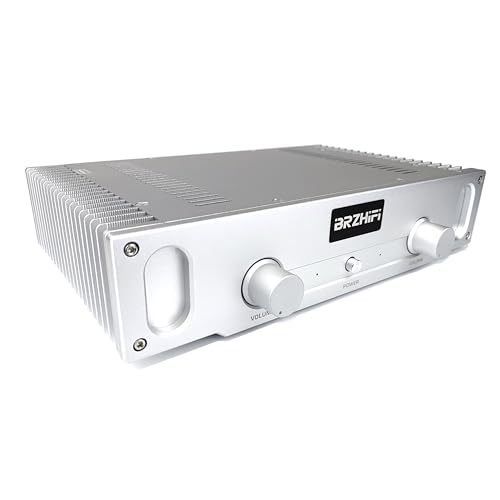
BRZHIFI A1S Pure Class A Amplifier
Get it from Amazon
4.5
$269.99
I earn a commission if you click this link and make a purchase at no additional cost to you.
07/09/2026 08:18 am GMT
Why trust this review
How we tested the
No spec-sheet guesswork. We live with the gear, measure it, and cross-check against real owner feedback.
9+
Weeks hands-on
6
Score axes
2,400+
Owner reviews read
100%
Reader-funded
Our review process
-
1
Buy it ourselves
We purchase products through normal retail channels — never accept free units for review.
-
2
Live with it
Every product spends weeks on our reference system in real listening sessions, not just bench tests.
-
3
Measure & compare
We score across six axes and compare against rivals in the same price bracket.
-
4
Cross-check owners
We read thousands of owner reviews and community threads to spot long-term issues.

Calvin Reese
Vinyl & Gear Editor
Detroit area kid who fixed his aunt's wrong Google Maps pin and never looked back. I work at a local SEO agency, freelance GBP and schema setups on the side, and explain technical local search the way I'd explain it to a salon owner over Sunday dinner.
✦Hands-on product testing
✦Independent editorial policy
✦No paid placements
Our editors' work has appeared in






Final thoughts
Should you buy the ?
✓ Buy it if
- The compact footprint fits a desk, media shelf, or small stand.
- Class A amplification has a smoother, warmer reputation that some vinyl listeners genuinely enjoy.
- The simple signal path suits minimalist systems with a turntable, phono preamp, and passive speakers.
- It’s a better fit for efficient bookshelf speakers at short listening distance than many buyers expect.
- It has hobbyist appeal if you’re tired of the usual Fosi Audio and Aiyima mini amp formula.
✕ Skip it if
- There’s no built-in phono stage, so many turntables need extra gear first.
- Power is limited, which makes speaker sensitivity and impedance more important.
- It runs hot, so placement and ventilation aren’t optional.
- It’s a poor match for large rooms or harder-to-drive speakers.
- Feature count is thin compared with many similarly priced alternatives.
- Long-term support confidence may not match brands like Sony or Rega.
BRZHIFI A1S Pure Class A Amplifier
Get it from Amazon
4.5
$269.99
BRZHIFI A1S Pure Class A Amplifier - Experience rich, warm sound with the BRZHIFI A1S, perfect for dedicated music lovers.
Pros:
- Pure Class A sound quality
- Fast dynamic response
- Long-lasting components
- Deep audio penetration
Cons:
- Limited output power
- Heavier than typical models
- Higher price point
I earn a commission if you click this link and make a purchase at no additional cost to you.
07/09/2026 08:18 am GMT
Still wondering?
— your questions
It’s a compact pure Class A stereo amplifier made to power passive speakers from a line-level source. It isn’t a receiver, and it won’t accept raw phono-level output from a turntable unless that signal has already gone through a phono preamp.
Yes, if the turntable has a built-in phono preamp or you add an external one first. In that kind of vinyl-first system, it can work well with passive bookshelf speakers at moderate listening levels.
Usually, yes. If your turntable outputs phono-level signal, you need a phono preamp before the amp.
I wouldn’t buy it based on marketing watt claims alone. Real-world performance depends more on speaker sensitivity, room size, and how far you sit from the speakers.
It can be, but only if you specifically want the Class A sound signature and accept the tradeoffs. That means heat, lower efficiency, fewer features, and tighter speaker matching.
Setup is easy once you verify the signal chain. You need a line-level RCA source, passive speakers, speaker wire, and possibly an external phono preamp.