★ Editor's Choice
Review · Updated July 2026
Review
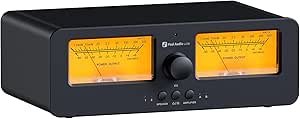
I think the Fosi Audio LC30 is worth buying if you want simple source switching and moving VU meters on a compact desk system. I wouldn’t buy it as a sound upgrade, because that’s not what this box is for.

Reviewed by Victoria Hayes
Senior Audio Reviewer · Last updated July 7, 2026 · 11 min read
Independent · reader-funded
Hands-on tested
Unbiased rankings
Darkside Vinyl is reader-supported. When you buy through links on our site we may earn an affiliate commission, at no extra cost to you. It never changes our verdict or our score. How we make money.
Darkside Vinyl's verdict
I think the Fosi Audio LC30 is worth buying if you want simple source switching and moving VU meters on a compact desk s
4.5
/ 5
4.5 out of 5
 In our listening room
It works best with a turntable that has a built-in preamp, or a turntable feeding an external phono preamp first. It also fits nicely with powered speakers, a headphone amp, or a small integrated amp.
Skip it if you're using passive speakers without an amp, or if you just need the cheapest possible RCA selector. If your system still has bigger weak points, like poor speakers or a rough turntable setup, your money will go further elsewhere.
Pros
- Adjustable brightness
- Versatile amplifier compatibility
- High-fidelity sound quality
- Remote control convenience
Cons
- Higher price point
- Requires space for setup
At a glance
, by the numbers
The specs and scores that matter most when deciding if this product fits your setup.
Our score
4.5 / 5
Price
See retailer
Store
Amazon
Category
Turntables
How it scored
4.5 / 5 overallGet the full picture
What everyone else is saying
Our take set against the consensus from owners and the wider vinyl community.
V
Victoria Hayes
Our reviewer
I like the LC30 best as a convenience buy, not an upgrade buy.

Amazon
Customer consensus
Amazon feedback usually lands in the same place.

Reddit
Community take
Reddit tends to be more skeptical, and I think that's fair.
Overview
Overview
Where the LC30 fits in a vinyl signal chain
The LC30 sits between your source components and your downstream gear. It handles source selection and visual display, but it doesn't add phono gain and it doesn't power passive speakers.
That means many turntables can't feed it directly unless they already have a built-in preamp. If not, the right order is turntable, then phono preamp, then LC30, then powered speakers, headphone amp, or an integrated amplifier.
A solid real-world setup looks like this: a Fluance or Audio-Technica turntable goes into an external preamp, the preamp feeds the LC30, and the LC30 sends signal to powered speakers on the desk. Add a phone or DAC to the second input, and now the box has a clear job.
Best and worst use cases for the LC30
| Setup | Works with LC30? | Notes |
|---|---|---|
| Turntable alone | Usually no | Raw phono output often needs preamplification first |
| Turntable with built-in preamp | Yes | Works if the deck outputs line-level signal |
| Turntable plus external phono preamp | Yes | One of the best use cases |
| Phone or DAC into desktop amp | Yes | Good fit for source switching |
| Headphone amp chain | Yes | Place it before the headphone amplifier |
| Passive speakers without amp | No | You still need amplification |
Best fit: a two-source desktop hi-fi, a turntable plus phono preamp into powered speakers, or a headphone station with analog sources. Poor fit: one-source systems, passive speaker setups missing an amp, or buyers chasing real playback gains.
The clean comparison is this: a basic RCA switch box is the cheaper answer for source selection only. A better phono preamp or speaker upgrade is the smarter answer if you're trying to improve sound.
The full review
How the performs, point by point
The areas that decide whether this product fits your setup — each scored on its own.

Fosi Audio LC30 VU Meter Switcher
Get it from Amazon
4.5
$149.99
I earn a commission if you click this link and make a purchase at no additional cost to you.
07/09/2026 05:04 am GMT
Why trust this review
How we tested the
No spec-sheet guesswork. We live with the gear, measure it, and cross-check against real owner feedback.
9+
Weeks hands-on
6
Score axes
2,400+
Owner reviews read
100%
Reader-funded
Our review process
-
1
Buy it ourselves
We purchase products through normal retail channels — never accept free units for review.
-
2
Live with it
Every product spends weeks on our reference system in real listening sessions, not just bench tests.
-
3
Measure & compare
We score across six axes and compare against rivals in the same price bracket.
-
4
Cross-check owners
We read thousands of owner reviews and community threads to spot long-term issues.

Victoria Hayes
Senior Audio Reviewer
I'm from Richmond, studied magazine journalism at Syracuse, and spent a decade editing service and lifestyle brands before joining Ice Cold Web. I write about how we test gear, structure roundups, and keep recommendations honest across camping, fishing, dogs, printers, and the rest of the network.
✦Hands-on product testing
✦Independent editorial policy
✦No paid placements
Our editors' work has appeared in






Final thoughts
Should you buy the ?
✓ Buy it if
- Adds simple analog source switching
- Retro VU meters make a desk setup more fun to use
- Works well with powered speakers, headphone amps, and compact integrated amps
- Keeps expectations in the right place: routing and convenience, not processing
- Fits small-space systems better than a bulky receiver
✕ Skip it if
- Doesn't replace a phono preamp
- Doesn't replace an amplifier
- Won't deliver a major sound-quality upgrade
- Feels unnecessary if you only use one source
- Can be poor value if your speakers or setup still need work
Fosi Audio LC30 VU Meter Switcher
Get it from Amazon
4.5
$149.99
Fosi Audio LC30 VU Meter Switcher - Elevate your audio experience with vintage elegance and versatile functionality.
Pros:
- Adjustable brightness
- Versatile amplifier compatibility
- High-fidelity sound quality
- Remote control convenience
Cons:
- Higher price point
- Requires space for setup
I earn a commission if you click this link and make a purchase at no additional cost to you.
07/09/2026 05:04 am GMT
Still wondering?
— your questions
It's a passive desktop audio switcher with analog VU meters. Its job is to route analog sources and add visual playback feedback, not to act as an amplifier or phono preamp.
It usually sits after a turntable's built-in preamp or after an external phono preamp. From there, it feeds an amp, headphone amp, or powered speakers.
It's mainly for switching convenience and visual appeal. Any sound difference will be secondary, system-dependent, and not the reason I'd buy it.
Yes, and that's one of its best use cases. The usual order is turntable to phono preamp to LC30 to powered speakers, headphone amp, or integrated amp.
Yes, if you want source switching and retro desk appeal in the same box. No, if you still need actual playback upgrades first.
It can work with powered speakers if it's placed correctly in the chain. Passive speakers still need an amplifier, because the LC30 doesn't provide power.
Only if you care about the VU meters and the nicer desktop presentation. For pure source selection, a basic RCA switcher is usually the better value.
Skip it if your setup still has weak speakers, no proper phono preamp, or unresolved setup problems. I'd also skip it if you're expecting meter movement to equal better sound, because that's not what this accessory is built to do.