★ Editor's Choice
Review · Updated July 2026
Review
I think the Dual CS 429 is worth it if convenience is the feature you actually care about, not just something that sounds nice on day one.

Reviewed by Calvin Reese
Vinyl & Gear Editor · Last updated July 7, 2026 · 11 min read
Independent · reader-funded
Hands-on tested
Unbiased rankings
Darkside Vinyl is reader-supported. When you buy through links on our site we may earn an affiliate commission, at no extra cost to you. It never changes our verdict or our score. How we make money.
Darkside Vinyl's verdict
I think the Dual CS 429 is worth it if convenience is the feature you actually care about, not just something that sound
4.5
/ 5
4.5 out of 5
 In our listening room
It's a polished Dual deck with fully automatic operation, a built-in phono preamp, and an Ortofon 2M Red. That combo makes daily use easier without dropping you into toy-grade territory.
If you're chasing the best raw sound-per-dollar, I'd skip it and look at manual options first.
Pros
- Fully automatic operation
- Solid aluminum construction
- High-quality sound reproduction
- Elegant design
Cons
- Limited compatibility with some cartridges
- Requires a dedicated space
At a glance
, by the numbers
The specs and scores that matter most when deciding if this product fits your setup.
Our score
4.5 / 5
Price
See retailer
Store
Amazon
Category
Turntables
How it scored
4.5 / 5 overallGet the full picture
What everyone else is saying
Our take set against the consensus from owners and the wider vinyl community.
C
Calvin Reese
Our reviewer
I see the CS 429 as a premium convenience deck first, and that framing keeps the decision honest.

Amazon
Customer consensus
Amazon feedback usually clusters around ease of use, simple setup, and the fact that it feels more premium than starter models.

Reddit
Community take
Reddit usually puts this model in the right competitive set.
Overview
Overview
Specs that matter
| Feature | Dual CS 429 |
|---|---|
| Cartridge | Ortofon 2M Red |
| Drive type | Belt-drive motor system |
| Automation | Fully automatic operation |
| Built-in phono preamp | Yes |
| Outputs | Switchable line/phono RCA connectivity |
In practice, this is pretty straightforward. If you have powered speakers, use line output and get running fast.
If your receiver already has a phono input, switch to phono mode and keep the signal chain cleaner.
The cartridge is the standout spec. A turntable with an Ortofon 2M Red starts from a much better place than a deck bundled with a generic cartridge you'll want to replace right away.
Best for, and what this means in practice
For beginners, this is a strong pick if your budget is healthy and you want fewer setup headaches.
It's an easy setup automatic record player that still uses respectable core parts.
For convenience-first buyers, the case is stronger. If your goal is to spin records after work without treating every side like a small procedure, the CS 429 earns its keep.
For upgrade-minded shoppers, I'd be more careful. A manual turntable in the same range may offer more flexibility if your real hobby is tweaking.
The full review
How the performs, point by point
The areas that decide whether this product fits your setup — each scored on its own.
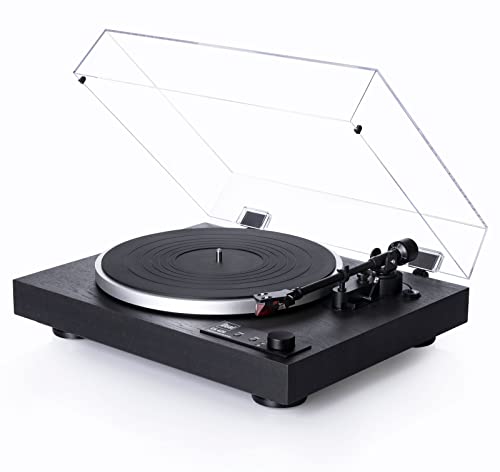
Dual CS 429 Fully Automatic Turntable
$899.00
$730.00
Get it from Amazon
4.5
I earn a commission if you click this link and make a purchase at no additional cost to you.
07/08/2026 11:03 pm GMT
Why trust this review
How we tested the
No spec-sheet guesswork. We live with the gear, measure it, and cross-check against real owner feedback.
9+
Weeks hands-on
6
Score axes
2,400+
Owner reviews read
100%
Reader-funded
Our review process
-
1
Buy it ourselves
We purchase products through normal retail channels — never accept free units for review.
-
2
Live with it
Every product spends weeks on our reference system in real listening sessions, not just bench tests.
-
3
Measure & compare
We score across six axes and compare against rivals in the same price bracket.
-
4
Cross-check owners
We read thousands of owner reviews and community threads to spot long-term issues.

Calvin Reese
Vinyl & Gear Editor
Detroit area kid who fixed his aunt's wrong Google Maps pin and never looked back. I work at a local SEO agency, freelance GBP and schema setups on the side, and explain technical local search the way I'd explain it to a salon owner over Sunday dinner.
✦Hands-on product testing
✦Independent editorial policy
✦No paid placements
Our editors' work has appeared in






Final thoughts
Should you buy the ?
Yes, if you want premium convenience and you'll use it every week.
The built-in phono stage, automatic operation, and better-than-basic parts make it a smart fit for simple living-room systems.
No, if your top priority is squeezing the most sound from the budget. In that lane, a Fluance RT85 or Pro-Ject Debut Carbon EVO usually makes a stronger value argument.
✓ Buy it if
- <h3>Where the Dual CS 429 earns its price</h3>
- <p>The big win is simple: automatic playback that doesn't feel cheap.</p>
- <p>You get push-button ease without the plasticky, bare-bones feel that drags down a lot of entry-level automatics.</p>
- <p>The Ortofon 2M Red helps a lot here. Dual didn't cheap out on the cartridge, and that gives the table more credibility right away.</p>
- <p>The built-in phono preamp also solves a common setup problem. If you're using powered speakers, you can run line output and get music fast without adding another box.</p>
- <p>I also like that this feels like a real hi-fi product, not a disposable convenience deck. Someone moving up from a basic starter table will notice that pretty quickly.</p>
- <h3>Best fit use cases</h3>
- <p>I'd put this in front of four buyers: beginners with a healthy budget, convenience-first listeners, people building a clean powered-speaker setup, and shoppers who want some enthusiast credibility without going fully manual.</p>
- <p>If you want one neat box on a console instead of a rack full of gear, this is a strong fit. Automatic start-stop and a built-in preamp are genuinely useful in that kind of setup.</p>
- <p>I'd also call it a solid beginner audiophile turntable, with one caveat. It's beginner-friendly because it's easy to use and built with respectable parts, not because it's endlessly tweakable.</p>
✕ Skip it if
- <h3>Where the Dual CS 429 gives up value</h3>
- <p>This is where the math gets real. At this price, the CS 429 runs into manual decks from Fluance, Pro-Ject, and sometimes Rega, and those tables often give you more raw performance for the money.</p>
- <p>If you already know how to cue records and don't mind lifting the arm yourself, the convenience premium can feel expensive fast.</p>
- <p>Automation is nice, but it doesn't improve sound the way a better platter, tonearm, or external phono stage might.</p>
- <p>The built-in preamp is useful, but some buyers will outgrow it. If you already plan to add an external phono stage and keep refining the chain, a more manual-first platform may make better long-term sense.</p>
- <h3>Buyers who may want a different path</h3>
- <p>If you enjoy the ritual side of vinyl, I wouldn't force this one.</p>
- <p>A Fluance RT85 or Pro-Ject Debut Carbon EVO is often the smarter buy for someone who wants the best sound they can squeeze from the budget.</p>
- <p>Strict value shoppers should pause too. The Dual is clearly better than an Audio-Technica AT-LP60X, but it's also playing in a very different price class.</p>
- <p>Here's the clean split: if you want records to feel easy on a weeknight, the Dual gets compelling. If you want the best possible sound for the money and don't mind manual cueing, a manual deck probably wins.</p>
- <div class="wp-block-affiliate-plugin-lasso">[lasso id="6770" link_id="6770" ref="amzn-dual-cs-429-fully-automatic-turntable"]</div>
Dual CS 429 Fully Automatic Turntable
$899.00
$730.00
Get it from Amazon
4.5
Dual CS 429 Fully Automatic Turntable - Experience vinyl like never before with this easy-to-use, fully automatic turntable.
Pros:
- Fully automatic operation
- Solid aluminum construction
- High-quality sound reproduction
- Elegant design
Cons:
- Limited compatibility with some cartridges
- Requires a dedicated space
I earn a commission if you click this link and make a purchase at no additional cost to you.
07/08/2026 11:03 pm GMT
Still wondering?
— your questions
The Dual CS 429 is a fully automatic belt-drive turntable with an Ortofon 2M Red cartridge and a built-in phono preamp. It's built for buyers who want easier playback and simpler hookup options than a manual deck offers.
You press start, the tonearm moves into position, playback begins, and the arm returns automatically at the end of the record. That's the main appeal if you don't want to manually cue and lift the arm every side.
Yes, it does. You can run it into powered speakers or any amp with a standard line-level input by using the line output setting.
It's best for buyers who want easy operation, a cleaner living-room setup, and better parts than entry-level automatics usually offer.
For a modest living-room system, it's good enough and convenient. If you're pairing the table with powered speakers or a simple amp, the internal stage keeps the setup clean and easy.
It depends on what you value. If you want push-button playback, less daily fuss, and easier integration into a simple setup, the Dual can absolutely be the better buy.