★ Editor's Choice
Review · Updated July 2026
Review
Yes, I’d recommend the Edifier S1000W for beginners and upgraders who want one speaker pair for vinyl plus wireless streaming. The catch is simple: your turntable needs either a built-in phono preamp or an external one.

Reviewed by Cassie Hart
Audio Equipment Specialist · Last updated July 7, 2026 · 11 min read
Independent · reader-funded
Hands-on tested
Unbiased rankings
Darkside Vinyl is reader-supported. When you buy through links on our site we may earn an affiliate commission, at no extra cost to you. It never changes our verdict or our score. How we make money.
Darkside Vinyl's verdict
Yes, I'd recommend the Edifier S1000W for beginners and upgraders who want one speaker pair for vinyl plus wireless stre
4.5
/ 5
4.5 out of 5
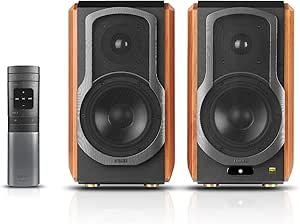 In our listening room
I like these best for a first or second turntable setup in a small or medium room. They're a poor fit if you want passive speakers, the cheapest possible setup, or a tiny desktop system.
The tradeoff is convenience versus upgrade freedom. You get fewer boxes, more inputs, and easier daily use, but you give up some of the flexibility you'd get with passive speakers and a stereo receiver.
Pros
- Hi-Res audio quality
- Multiple connectivity options
- Alexa compatibility
- Durable build
- Multi-room music support
Cons
- Higher price point
- Requires app for multi-room setup
- May be too large for small spaces
At a glance
, by the numbers
The specs and scores that matter most when deciding if this product fits your setup.
Our score
4.5 / 5
Price
See retailer
Store
Amazon
Category
Turntables
How it scored
4.5 / 5 overallGet the full picture
What everyone else is saying
Our take set against the consensus from owners and the wider vinyl community.
C
Cassie Hart
Our reviewer
I think the S1000W solves a real beginner problem.

Amazon
Customer consensus
Common praise on Amazon centers on easy setup, versatile inputs, strong everyday sound, and the design.

Reddit
Community take
Reddit usually splits into two camps.
Overview
Overview
Setup and compatibility, what you need to know first
The signal chain is the whole story here. If your turntable has a built-in preamp, you can run RCA straight into the speakers and be listening pretty quickly.
If your turntable doesn't have a built-in preamp, you need an external phono preamp between the turntable and the speakers. If you're fuzzy on that, start with this guide: what is a phono preamp?.
Do I need a phono preamp?
Yes, if your turntable outputs phono-level signal only.
No, if your turntable has built-in or switchable line output.
A Fluance RT82 can't go straight into these without extra help. An Audio-Technica AT-LP120X can, because it already handles that signal conversion internally.
Bluetooth turntables can connect wirelessly, but wired RCA is still the better path for vinyl. You also don't need a receiver here, because these powered speakers already have built-in amplification.
Is it worth paying for Wi-Fi and extra inputs?
If the same speakers will handle records, TV, and daily streaming, yes, I think the premium makes sense. That's the buyer these were built for.
If this is a vinyl-only corner setup, maybe not. A cheaper pair of powered speakers could give you the RCA connection you need without making you pay for Wi-Fi, optical, and coaxial features you won't use.
Against basic Bluetooth-only powered speakers, the S1000W wins on flexibility. Against passive speakers plus a stereo receiver, it wins on simplicity but loses on long-term upgrade freedom.
Against speakers with a built-in phono input, it's more conditional. Those options can be easier for raw turntable compatibility, while the Edifier pair makes a stronger case if streaming and TV matter too.
The short answer
I like these best for a first or second turntable setup in a small or medium room. They're a poor fit if you want passive speakers, the cheapest possible setup, or a tiny desktop system.
The tradeoff is convenience versus upgrade freedom. You get fewer boxes, more inputs, and easier daily use, but you give up some of the flexibility you'd get with passive speakers and a stereo receiver.
Compatibility snapshot:
- Turntable with built-in preamp: yes, easy RCA setup
- Turntable without preamp: yes, but you need an external phono preamp
- Bluetooth turntable: yes, but wired RCA is still the better vinyl path
- TV: yes, via optical
- Phone: yes, via Bluetooth or Wi-Fi
A very normal setup is an Audio-Technica or Fluance turntable with line output, plus a TV on the same wall. In that kind of room, the S1000W does exactly what most people want: records over RCA, TV over optical, and streaming through Apple AirPlay 2 or Spotify Connect, without adding a receiver.
If you're comparing these to basic Bluetooth-only powered bookshelf speakers, the difference is flexibility. Cheaper pairs can work for records, but the S1000W makes more sense if you'll use the speakers every day for more than vinyl.
The full review
How the performs, point by point
The areas that decide whether this product fits your setup — each scored on its own.

Edifier S1000W Wireless HiFi Speakers
$599.99
$508.71
Get it from Amazon
4.5
I earn a commission if you click this link and make a purchase at no additional cost to you.
07/06/2026 07:09 pm GMT
Why trust this review
How we tested the
No spec-sheet guesswork. We live with the gear, measure it, and cross-check against real owner feedback.
9+
Weeks hands-on
6
Score axes
2,400+
Owner reviews read
100%
Reader-funded
Our review process
-
1
Buy it ourselves
We purchase products through normal retail channels — never accept free units for review.
-
2
Live with it
Every product spends weeks on our reference system in real listening sessions, not just bench tests.
-
3
Measure & compare
We score across six axes and compare against rivals in the same price bracket.
-
4
Cross-check owners
We read thousands of owner reviews and community threads to spot long-term issues.

Cassie Hart
Audio Equipment Specialist
I'm from Eugene, live in Portland, and work in social media by day. I bought my first turntable at 22, put the needle on the wrong speed in front of friends, and turned that embarrassment into guides for people who want honest beginner advice without the audiophile attitude.
✦Hands-on product testing
✦Independent editorial policy
✦No paid placements
Our editors' work has appeared in






Final thoughts
Should you buy the ?
✓ Buy it if
- <h3>Why the S1000W works well in a beginner vinyl system</h3>
- <p>The biggest win is the powered design. You don't need a receiver, which cuts cost, clutter, and setup mistakes.</p>
- <p>I like these most for people who want one pair for records, streaming, and TV. If you spin vinyl on weekends but stream Spotify every day, this setup makes more sense than building two separate systems.</p>
- <p>The Wi-Fi features aren't fluff if you'll use them. AirPlay 2, Spotify Connect, and Alexa support make these feel like real living-room speakers, not just vinyl add-ons.</p>
- <p>Compared with passive speakers plus a stereo receiver, this route is easier. You lose some upgrade path, but you gain simplicity fast.</p>
- <h3>What the extra inputs mean in practice</h3>
- <p>For vinyl buyers, RCA is the key input. That's what you'll use with a turntable that has a built-in preamp, or with an external phono stage.</p>
- <p>Optical is the sleeper feature. If your TV is in the same room, it's a cleaner hookup than forcing everything through Bluetooth.</p>
- <p>Coaxial is nice to have, but it probably won't decide the sale. Bluetooth 5.0 is handy for quick phone playback, though I still wouldn't buy vinyl speakers just for Bluetooth.</p>
- <p>Wi-Fi is the premium feature here. If you use AirPlay 2 or Spotify Connect every day, the price starts to make more sense.</p>
- <table>
- <thead>
- <tr>
- <th>Input</th>
- <th>Connects to</th>
- <th>Best for</th>
- </tr>
- </thead>
- <tbody><tr>
- <td>RCA</td>
- <td>Turntable with built-in preamp or external preamp</td>
- <td>Vinyl listening</td>
- </tr>
- <tr>
- <td>Optical</td>
- <td>TV or streamer</td>
- <td>Cleaner TV hookup</td>
- </tr>
- <tr>
- <td>Coaxial</td>
- <td>Digital source</td>
- <td>Secondary digital gear</td>
- </tr>
- <tr>
- <td>Bluetooth</td>
- <td>Phone or Bluetooth turntable</td>
- <td>Convenience</td>
- </tr>
- <tr>
- <td>Wi-Fi</td>
- <td>AirPlay 2, Spotify Connect</td>
- <td>Daily music streaming</td>
- </tr>
- </tbody></table>
- <p>Here's the real-world version: RCA from your turntable, optical from your TV, Wi-Fi for playlists while cooking. That's where the S1000W earns its keep better than a cheaper Bluetooth-only pair.</p>
✕ Skip it if
- <h3>Where the S1000W can disappoint vinyl buyers</h3>
- <p>The biggest issue is simple: there's no built-in phono stage. If your turntable outputs phono only, you can't just run one cable and start spinning records.</p>
- <p>That's where a lot of first-time buyers get tripped up. A Fluance RT82, for example, needs an external phono preamp here, while an AT-LP120X connects much more easily with its built-in preamp.</p>
- <p>The price can also feel high if you'll only use RCA for records. In that case, you're paying for Wi-Fi and extra digital inputs you may never touch.</p>
- <p>These are also less modular than passive speakers. If you already know you want to upgrade your amp and speakers separately over time, this isn't the cleanest long-term path.</p>
- <p>And for a tiny desk, they're a lot. In a cramped nearfield setup, the cabinet size can feel awkward fast.</p>
- <h3>Skip this if your setup looks like this</h3>
- <p>Skip this if you want passive speakers and plan to upgrade one piece at a time. A separate amp-and-speaker path fits that goal better.</p>
- <p>Skip this if your room is very small and the speakers will sit 18 inches from your face on a desk. A smaller powered pair will be easier to place and easier to live with.</p>
- <p>Skip this if you're on a tight budget and won't use Wi-Fi streaming. There are cheaper powered speakers for vinyl that handle the basics just fine.</p>
- <p>Skip this if you specifically want a built-in phono input. That's not what this pair is.</p>
Edifier S1000W Wireless HiFi Speakers
$599.99
$508.71
Get it from Amazon
4.5
Edifier S1000W Wireless HiFi Speakers - Elevate your audio experience with these versatile, high-fidelity bookshelf speakers.
Pros:
- Hi-Res audio quality
- Multiple connectivity options
- Alexa compatibility
- Durable build
- Multi-room music support
Cons:
- Higher price point
- Requires app for multi-room setup
- May be too large for small spaces
I earn a commission if you click this link and make a purchase at no additional cost to you.
07/06/2026 07:09 pm GMT
Still wondering?
— your questions
They're a pair of powered wireless bookshelf speakers with built-in amplification. You don't need a separate receiver to use them.
Yes, for a lot of beginner and mixed-use setups they are. I like them most for people who want one pair of speakers for records, TV, and streaming in the same room.
Yes, if your turntable doesn't have a built-in phono preamp. No, if your turntable already has built-in or switchable line output.
Usually by RCA. If your turntable has a built-in preamp, connect it directly to the RCA input on the speakers.
Yes, if you want one pair of speakers for vinyl, TV, and streaming. That's where the extra cost starts to feel justified.
Sometimes none beyond cables. If your turntable has a built-in preamp, you're usually close to plug-and-play.
Yes. That's one of the main reasons to buy powered speakers like these.
They're best in small to medium rooms, bedrooms, apartments, and living rooms where the speakers have a little breathing space.