★ Editor's Choice
Review · Updated July 2026
Review
The Edifier S1000MKII is an easy yes if you want a real step up from cheap powered speakers for a vinyl-first setup. In a small to medium room, it delivers cleaner highs, better separation, and enough connectivity to handle TV and Bluetooth too.

Reviewed by Sofia Ruiz
Contributing Vinyl Editor · Last updated July 7, 2026 · 11 min read
Independent · reader-funded
Hands-on tested
Unbiased rankings
Darkside Vinyl is reader-supported. When you buy through links on our site we may earn an affiliate commission, at no extra cost to you. It never changes our verdict or our score. How we make money.
Darkside Vinyl's verdict
The Edifier S1000MKII is an easy yes if you want a real step up from cheap powered speakers for a vinyl-first setup.
4.5
/ 5
4.5 out of 5
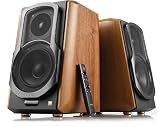 In our listening room
Skip it if you need a built-in phono stage or already know you want the long-term upgrade path of passive speakers and a separate amp.
Best for vinyl listeners who want fuller sound and cleaner detail than entry-level powered speakers, especially in a mixed-use room.
Pros
- High-efficiency Class D amplifier
- Bluetooth 5.0 connectivity
- Wide frequency response
- Stylish design
- Ideal for various devices
Cons
- Higher price point
- Larger footprint may not fit all spaces
At a glance
, by the numbers
The specs and scores that matter most when deciding if this product fits your setup.
Our score
4.5 / 5
Price
See retailer
Store
Amazon
Category
Turntables
How it scored
4.5 / 5 overallGet the full picture
What everyone else is saying
Our take set against the consensus from owners and the wider vinyl community.
S
Sofia Ruiz
Our reviewer
The setup logic is strong here.

Amazon
Customer consensus
The broad pattern is consistent.

Reddit
Community take
Reddit is usually more honest about the tradeoffs.
Overview
Overview
What the Edifier S1000MKII is and who it fits
This is a powered speaker system with built-in amplification, not a passive speaker set. You plug your sources straight into the speakers, which keeps the setup cleaner and simpler.
The best fit is a vinyl listener in a small to medium room who wants better sound than basic powered speakers and also wants TV and Bluetooth convenience. That’s a strong use case for a first serious living-room setup.
A simple example is an Audio-Technica turntable with a built-in preamp and a modest TV nearby. That buyer gets a cleaner setup and a more obvious sound upgrade than they’d get from entry-level all-in-one speaker options.
Connection and compatibility snapshot
Here’s the compatibility view that matters more than wattage claims:
| Source | Works? | Connection | Extra gear needed? |
|---|---|---|---|
| Turntable with built-in preamp | Yes | RCA | No |
| Turntable without built-in preamp | Yes | RCA | Yes, phono preamp |
| TV | Yes | Optical | No |
| CD player or streamer | Yes | Coaxial or RCA | No |
| Phone | Yes | Bluetooth | No |
They can work nearfield at a desk, but they make more sense for room listening than ultra-tight desktop placement. The remote also helps if you’re switching between records and TV audio from the couch.
A solid real-world setup is a Fluance RT82 with an external preamp on RCA, plus a TV on optical. You can switch sources cleanly without touching the turntable wiring.
Mini comparison opportunities
Against the Edifier R1700BT, this is the clear step-up pick. Choose the R1700BT if price matters more than refinement and input flexibility.
Against the Klipsch R-51PM, the Edifier makes more sense if you want mixed-use value and smoother day-to-day usability. Choose the Klipsch if built-in phono support matters more.
Against the Kanto YU6, the Edifier usually wins on value and source flexibility. Choose the Kanto if you want a more turntable-friendly premium option and don’t mind paying more.
| Speaker | Built-in phono stage | Best for | Main advantage | Main tradeoff |
|---|---|---|---|---|
| Edifier S1000MKII | No | Vinyl listeners who want better sound plus TV and Bluetooth | Strong value, multiple inputs, clear upgrade over entry-level powered speakers | Needs external phono preamp for some turntables |
| Edifier R1700BT | No | Budget buyers | Lower price and simple powered setup | Less refinement and less of a true step-up in sound |
| Klipsch R-51PM | Yes | Turntable users who want easier phono-ready setup | Built-in phono support | Usually less compelling value for mixed-use setups |
| Kanto YU6 | Yes | Buyers willing to pay more for a turntable-friendly premium powered pair | More vinyl-friendly feature set | Higher price |
The full review
How the performs, point by point
The areas that decide whether this product fits your setup — each scored on its own.
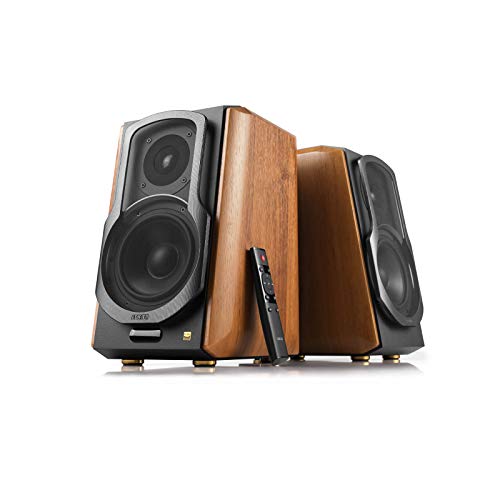
Edifier S1000MKII Bookshelf Speakers
Get it from Amazon
4.5
$434.10
I earn a commission if you click this link and make a purchase at no additional cost to you.
07/07/2026 10:16 am GMT
Why trust this review
How we tested the
No spec-sheet guesswork. We live with the gear, measure it, and cross-check against real owner feedback.
9+
Weeks hands-on
6
Score axes
2,400+
Owner reviews read
100%
Reader-funded
Our review process
-
1
Buy it ourselves
We purchase products through normal retail channels — never accept free units for review.
-
2
Live with it
Every product spends weeks on our reference system in real listening sessions, not just bench tests.
-
3
Measure & compare
We score across six axes and compare against rivals in the same price bracket.
-
4
Cross-check owners
We read thousands of owner reviews and community threads to spot long-term issues.

Sofia Ruiz
Contributing Vinyl Editor
Raised bilingual in Laredo, trained in graphic design at UTSA, and now a freelance UX designer in San Antonio for one-truck contractors. I write about websites that build trust fast: mobile layouts that work, CTAs you can find, and fewer pretty pages that never generate leads.
✦Hands-on product testing
✦Independent editorial policy
✦No paid placements
Our editors' work has appeared in






Final thoughts
Should you buy the ?
✓ Buy it if
- <h3>Sound quality and step-up value</h3>
- <p>The main reason to buy these is simple: they sound like an actual upgrade, not a sideways move. The titanium dome tweeter gives the top end more bite and air than cheaper powered pairs.</p>
- <p>On dense records, that matters fast. If you’re moving up from something like an Edifier R1700BT, guitars, vocals, and cymbals stop piling into the same lane.</p>
- <p>The 5.5-inch mid-bass driver also adds more body. Kick drums and bass lines feel more grounded at normal living-room volume, not just louder.</p>
- <p>In a condo or apartment setup with a Fluance or Audio-Technica turntable, expect better separation on busy pressings and less congestion when the chorus hits. That’s the kind of upgrade you hear right away.</p>
- <h3>Connectivity that actually helps</h3>
- <p>The input mix is better than average for powered bookshelf speakers. You get RCA, optical, coaxial, and Bluetooth 5.0 with aptX HD.</p>
- <p>For vinyl, RCA is the key input. Optical is what makes these practical in a room with a TV, because you can switch sources without crawling behind the stand.</p>
- <p>Bluetooth is useful, but it’s a convenience feature, not the reason to choose speakers for records.</p>
- <p>A common setup is simple: turntable on RCA, TV on optical, and phone on Bluetooth for casual listening. That’s where the extra inputs actually earn their keep.</p>
✕ Skip it if
- <h3>No built-in phono stage</h3>
- <p>This is the big compatibility catch. The S1000MKII has an RCA input, but it doesn’t have a phono input.</p>
- <p>So if your turntable doesn’t have a built-in phono preamp, you can’t plug it straight in and expect good sound. The phono signal is too weak and needs RIAA equalization first. That’s what a phono preamp does. If you need a refresher, start with what a phono preamp does.</p>
- <p>This is a common mistake. Someone plugs a vintage turntable straight into powered speakers, gets thin and quiet sound, and blames the speakers when the real problem is the missing preamp.</p>
- <h3>Size, placement, and upgrade limits</h3>
- <p>These aren’t tiny desktop speakers, and they need some breathing room. If you shove them into corners or tight shelves, the bass can get heavy and the imaging can fall apart.</p>
- <p>That matters more than people think. Bigger speakers don’t automatically mean better sound if the room layout is working against you.</p>
- <p>There’s also the usual active-speaker tradeoff. Built-in amplification keeps things simple now, but it limits how you can upgrade later compared with passive speakers and a separate amp.</p>
Edifier S1000MKII Bookshelf Speakers
Get it from Amazon
4.5
$434.10
Edifier S1000MKII Bookshelf Speakers - Premium audiophile speakers for rich sound and versatile connectivity.
Pros:
- High-efficiency Class D amplifier
- Bluetooth 5.0 connectivity
- Wide frequency response
- Stylish design
- Ideal for various devices
Cons:
- Higher price point
- Larger footprint may not fit all spaces
I earn a commission if you click this link and make a purchase at no additional cost to you.
07/07/2026 10:16 am GMT
Still wondering?
— your questions
They’re best for a vinyl-first listener who wants a clear upgrade from basic powered speakers without adding a receiver. They make the most sense in a small to medium room where the same speakers may also handle TV audio and Bluetooth streaming.
No, they don’t need a separate amplifier or stereo receiver. They’re powered bookshelf speakers, so the amplification is built in.
Yes, but only if the turntable has a built-in phono preamp or you add an external one first. If your turntable outputs only a phono-level signal, a direct RCA connection won’t sound right. For setup help, see the turntable setup guide.
They sound cleaner, fuller, and more controlled. You’ll usually hear better treble detail, stronger mid-bass, and less congestion on busy records than you get from cheaper starter pairs.
Yes, if you’re upgrading from a basic powered setup and want better sound plus useful TV and digital inputs. No, if your top priority is built-in phono support or the cheapest possible way into vinyl playback.
If your turntable has a built-in preamp, you only need an RCA connection. If it doesn’t, you’ll need an external phono preamp between the turntable and speakers. This guide helps: what a phono preamp does.
It’s better if you want simplicity, fewer boxes, and easier mixed-use connectivity. Passive speakers plus an amp are better if you want a more traditional upgrade path and more freedom to swap components later.
Yes. That’s one of the best reasons to buy them, because you can run a turntable through RCA and a TV through optical, then switch sources as needed.