★ Editor's Choice
Review · Updated July 2026
Review
I think the JBL Stage 2 240B is a smart buy if you want a cleaner upgrade path than most powered speakers give you.

Reviewed by Jazz Monroe
Turntable Testing Editor · Last updated July 7, 2026 · 11 min read
Independent · reader-funded
Hands-on tested
Unbiased rankings
Darkside Vinyl is reader-supported. When you buy through links on our site we may earn an affiliate commission, at no extra cost to you. It never changes our verdict or our score. How we make money.
Darkside Vinyl's verdict
I think the JBL Stage 2 240B is a smart buy if you want a cleaner upgrade path than most powered speakers give you.
4.5
/ 5
4.5 out of 5
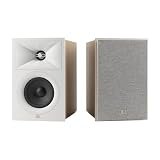 In our listening room
It makes the most sense in small to mid-size rooms for vinyl listeners who are ready to build a proper turntable, preamp, amp, and speaker chain. If that sounds like your lane, I’d recommend these over a lot of flashy beginner gear.
They aren’t the easiest first step. You’ll need an integrated amp or stereo receiver, and placement matters more than most beginners expect.
Pros
- Great sound quality
- Space-saving design
- Easy installation
- Versatile mounting options
Cons
- Limited bass response for large rooms
- Pricey for budget buyers
At a glance
, by the numbers
The specs and scores that matter most when deciding if this product fits your setup.
Our score
4.5 / 5
Price
See retailer
Store
Amazon
Category
Turntables
How it scored
4.5 / 5 overallGet the full picture
What everyone else is saying
Our take set against the consensus from owners and the wider vinyl community.
J
Jazz Monroe
Our reviewer
I like where the 240B sits in a vinyl system.

Amazon
Customer consensus
Amazon feedback usually lands on three things: clarity, output, and value.

Reddit
Community take
Reddit is usually more useful for system matching.
Overview
Overview
Specs and design, what matters for a turntable setup
This is a passive speaker, so it needs a full signal chain. That means turntable, phono preamp if needed, amplifier or receiver, then speaker wire to the pair.
The 2-way layout is simple and proven. The 5.25-inch woofer handles the lows and mids, and the 1-inch tweeter handles the highs.
The rear-ported cabinet helps with bass output, but it also makes placement matter. If you see “bookshelf” and assume any crowded shelf will do, you’re setting yourself up for a bad result.
The binding posts are straightforward, and banana plugs can make setup cleaner. None of this is hard, but it does ask you to think about the whole system.
Good for vinyl, room fit, and powered speaker alternatives
Yes, I think these are good for vinyl if you want a separate amp-and-speaker system. They fit someone building a real stereo, not someone chasing the fastest possible setup.
Room size matters. In a bedroom, office, or apartment living room, the 240B should have enough body and scale to feel satisfying.
It’s not a floorstander substitute in a big open room. But in the right space, it can hit a nice middle ground.
If you want more fullness than tiny powered speakers usually give, this is a sensible move. If you want to unbox, connect one cable, and play records in ten minutes, powered speakers are still the better answer.
One practical note: don’t put bookshelf speakers on the same surface as your turntable if you can avoid it. With vinyl, vibration is like trying to read while someone shakes the table. Stands usually win.
Passive vs powered for beginners:
| Option | Choose it if… |
|---|---|
| JBL Stage 2 240B | You want upgrade flexibility, fuller stereo sound, and separate components |
| Powered speakers | You want simplicity, fewer boxes, and lower total setup friction |
The full review
How the performs, point by point
The areas that decide whether this product fits your setup — each scored on its own.

JBL Stage 2 240B Bookshelf Speakers
Get it from Amazon
4.5
$259.95
I earn a commission if you click this link and make a purchase at no additional cost to you.
07/07/2026 02:06 am GMT
Why trust this review
How we tested the
No spec-sheet guesswork. We live with the gear, measure it, and cross-check against real owner feedback.
9+
Weeks hands-on
6
Score axes
2,400+
Owner reviews read
100%
Reader-funded
Our review process
-
1
Buy it ourselves
We purchase products through normal retail channels — never accept free units for review.
-
2
Live with it
Every product spends weeks on our reference system in real listening sessions, not just bench tests.
-
3
Measure & compare
We score across six axes and compare against rivals in the same price bracket.
-
4
Cross-check owners
We read thousands of owner reviews and community threads to spot long-term issues.

Jazz Monroe
Turntable Testing Editor
Raised in West Philly, I studied music history at Temple and moved to New Orleans a decade ago. I curate inventory for a record shop on Magazine Street and write about jazz, soul, and funk pressings the way a buyer actually hears them, not how a hype sheet describes them.
✦Hands-on product testing
✦Independent editorial policy
✦No paid placements
Our editors' work has appeared in






Final thoughts
Should you buy the ?
✓ Buy it if
- <p>The biggest win is flexibility. If you upgrade your turntable, cartridge, or phono preamp later, these speakers can still keep up.</p>
- <p>The 5.25-inch woofer gives them a more grown-up sound than tiny desktop speakers. In a small apartment living room, I’d expect a wider soundstage and better control at normal listening levels than you get from a compact powered setup.</p>
- <p>JBL also uses its HDI waveguide around the 1-inch tweeter. In practice, that can help the highs spread more evenly and keep imaging stable when you’re in the sweet spot.</p>
- <p>That matters with jazz, soul, and funk. Horns, backing vocals, and percussion tend to sound less crowded when the setup is right.</p>
- <p>I also like the size sweet spot here. You get more bass weight and scale than smaller bookshelf speakers, without dragging floorstanders into the room.</p>
✕ Skip it if
- <p>The passive design is the first hurdle. The speaker price isn’t your full cost, because you still need amplification, wire, and ideally stands.</p>
- <p>That catches a lot of first-time buyers. They see “bookshelf speaker,” then realize they still need a receiver and maybe a phono preamp too.</p>
- <p>Placement is the next issue. The rear port and cabinet size can sound boomy if you shove them into a tight shelf or too close to the wall.</p>
- <p>I’ve seen this movie before: speakers on the same furniture as the turntable, powered by a weak mini amp, then blamed for sounding thin or harsh. That’s not always the speaker. Sometimes the whole chain is fighting itself.</p>
- <p>The sound may also be a little lively for some listeners. If you want a softer, warmer presentation, your room and amp pairing will matter a lot.</p>
JBL Stage 2 240B Bookshelf Speakers
Get it from Amazon
4.5
$259.95
JBL Stage 2 240B Bookshelf Speakers - Compact and powerful speakers ideal for music lovers and home theater enthusiasts.
Pros:
- Great sound quality
- Space-saving design
- Easy installation
- Versatile mounting options
Cons:
- Limited bass response for large rooms
- Pricey for budget buyers
I earn a commission if you click this link and make a purchase at no additional cost to you.
07/07/2026 02:06 am GMT
Still wondering?
— your questions
They’re passive 2-way bass reflex bookshelf speakers from JBL’s Stage 2 series. Each speaker uses a 5.25-inch woofer and 1-inch tweeter, and the pair is built for home stereo use, not plug-and-play turntable use.
Yes, if you want a separate stereo system with an amp or receiver. They make more sense for listeners who care about stereo imaging, upgrade flexibility, and better room sound than for buyers who just want the easiest setup.
Yes. These are passive speakers, so they won’t work on their own with a turntable unless you add an integrated amplifier or stereo receiver, plus a phono preamp if your source chain doesn’t already include one.
In a small room, they should sound full, lively, and more spacious than tiny desktop or compact powered speakers, assuming placement is decent. Give them some breathing room from the wall and, if possible, put them on stands instead of a crowded shelf.
Plan for more than the speaker price. If you need everything, you may also need a stereo receiver or integrated amp, speaker wire, and possibly a phono preamp, so the real system cost can climb well beyond the speaker pair itself.
Don’t assume they do. In most cases, you’ll want to budget separately for speaker wire, and stands are usually an extra purchase too.
They are if you care about long-term upgrades and a traditional stereo path. They aren’t if convenience, Bluetooth, and minimal wiring matter more than flexibility.
A decent entry-level stereo receiver or integrated amplifier from a known hi-fi brand is the safe move. Look for enough clean power for a small to mid-size room, and don’t cheap out on a weak mini amp if you want to hear what these speakers can actually do.