★ Editor's Choice
Review · Updated July 2026
Review
Yes, I think these are a smart buy for vinyl listeners, if you already accept the passive speaker tradeoff. In a living room setup, they sound fuller and more grown-up than a lot of entry-level powered options.

Reviewed by Mara Chen
Accessories Review Editor · Last updated July 7, 2026 · 11 min read
Independent · reader-funded
Hands-on tested
Unbiased rankings
Darkside Vinyl is reader-supported. When you buy through links on our site we may earn an affiliate commission, at no extra cost to you. It never changes our verdict or our score. How we make money.
Darkside Vinyl's verdict
Yes, I think these are a smart buy for vinyl listeners, if you already accept the passive speaker tradeoff.
4.5
/ 5
4.5 out of 5
 In our listening room
If you want the fastest path from turntable to music, skip them. If you want a better long-term stereo foundation, these make a lot more sense.
Best for: vinyl listeners with an amplifier or stereo receiver, small to medium rooms, balanced music listening, upgrade-friendly systems.
Pros
- High fidelity sound
- Captivating clarity
- Enhanced soundstage
- Distortion-free performance
- Lifetime warranty
Cons
- External amplifier required
- Larger size may not fit all spaces
At a glance
, by the numbers
The specs and scores that matter most when deciding if this product fits your setup.
Our score
4.5 / 5
Price
See retailer
Store
Amazon
Category
Turntables
How it scored
4.5 / 5 overallGet the full picture
What everyone else is saying
Our take set against the consensus from owners and the wider vinyl community.
M
Mara Chen
Our reviewer
I like these for buyers who want passive speakers and already know an amp is part of the deal.

Amazon
Customer consensus
The pattern in Amazon reviews is pretty consistent.

Reddit
Community take
Reddit usually treats these as a sensible starter hi-fi choice, not a miracle box.
Overview
Overview
What you need to run these speakers
Here’s the clean checklist:
- Turntable
- Phono preamp, if your turntable doesn’t have one built in
- Amplifier or stereo receiver
- Speaker wire
- Optional stands for better placement
The chain is simple once you see it: turntable, phono preamp if needed, then amplifier or stereo receiver, then speaker wire to the Fluance binding posts.
A Pro-Ject or Rega deck without a built-in phono stage can’t feed these directly. You’d need a phono preamp first, then an amp, then the speakers.
The speakers themselves don’t need a phono preamp. Your turntable system might.
Sound quality and room fit
These Fluance bookshelf speakers sound balanced to slightly warm. You get solid mids, controlled treble detail, and respectable bass extension for the size.
They make the most sense in small to medium rooms. In a 12-by-15-foot room with some breathing space from the rear wall, they should throw a nice soundstage and give records a fuller, more relaxed presentation than many compact speakers.
The rear bass port needs room to work. Shove them tight against a wall or into a tiny desk corner, and the low end can get thick.
Don’t buy them expecting subwoofer bass. Proper placement matters more than a lot of buyers think.
Fluance Signature vs common alternatives
| Feature | Fluance Signature | Sony SSCS5 | Klipsch R-51M |
|---|---|---|---|
| Sound profile | Balanced, slightly warm | Lighter, airy | Bright, forward |
| Bass weight | Moderate, fuller than Sony | Lighter low end | Punchy, more energetic |
| Treble character | Smooth, controlled | Open but softer | Crisp, more aggressive |
| Amp needed | Yes | Yes | Yes |
| Best for | Vinyl-first stereo listening | Lower-cost passive entry | Movies, sparkle, louder casual play |
Choose Fluance if you want balanced record playback and room to upgrade your amp later.
Choose Sony if price is the main driver and you can live with less bass weight.
Choose Klipsch if you want more bite and a more forward presentation.
If your budget stretches higher, ELAC Debut 2.0 B6.2 is the step-up name that comes up a lot. It also asks more from your budget and placement.
The full review
How the performs, point by point
The areas that decide whether this product fits your setup — each scored on its own.
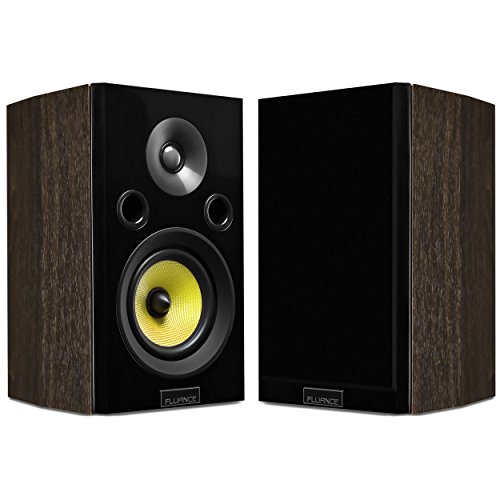
Fluance Signature HiFi Bookshelf Speakers
Get it from Amazon
4.5
$199.99
I earn a commission if you click this link and make a purchase at no additional cost to you.
07/08/2026 02:04 pm GMT
Why trust this review
How we tested the
No spec-sheet guesswork. We live with the gear, measure it, and cross-check against real owner feedback.
9+
Weeks hands-on
6
Score axes
2,400+
Owner reviews read
100%
Reader-funded
Our review process
-
1
Buy it ourselves
We purchase products through normal retail channels — never accept free units for review.
-
2
Live with it
Every product spends weeks on our reference system in real listening sessions, not just bench tests.
-
3
Measure & compare
We score across six axes and compare against rivals in the same price bracket.
-
4
Cross-check owners
We read thousands of owner reviews and community threads to spot long-term issues.

Mara Chen
Accessories Review Editor
I grew up in Fargo watching my parents' restaurant rise or fall with the map pack. After marketing at a Minneapolis agency, I consult on local SEO for service businesses and write search content that helps real companies show up when neighbors look on their phones.
✦Hands-on product testing
✦Independent editorial policy
✦No paid placements
Our editors' work has appeared in






Final thoughts
Should you buy the ?
✓ Buy it if
- Warm, easy-listening tuning that works well for long vinyl sessions.
- Better upgrade path than most all-in-one powered speakers.
- Solid MDF cabinet and driver package for the money.
- Good stereo imaging and a respectable soundstage with proper placement.
- Strong fit for small to medium rooms.
- Balanced enough for rock, jazz, indie, soul, and mixed everyday listening.
✕ Skip it if
- You need an external amplifier or stereo receiver.
- They won’t connect directly to every turntable.
- The rear bass port means placement matters more than some buyers expect.
- They’re not my favorite pick for nearfield desk use.
- If you want very bright, forward treble, Klipsch may suit you better.
- Total cost climbs once you add speaker wire, stands, and amplification.
Fluance Signature HiFi Bookshelf Speakers
Get it from Amazon
4.5
$199.99
Fluance Signature HiFi Bookshelf Speakers - Elevate your audio experience with premium sound quality for music and home theater.
Pros:
- High fidelity sound
- Captivating clarity
- Enhanced soundstage
- Distortion-free performance
- Lifetime warranty
Cons:
- External amplifier required
- Larger size may not fit all spaces
I earn a commission if you click this link and make a purchase at no additional cost to you.
07/08/2026 02:04 pm GMT
Still wondering?
— your questions
They’re passive 2-way bookshelf speakers from Fluance built for stereo listening. The design uses a silk dome tweeter, a woven glass fiber woofer, and an MDF cabinet with a rear bass port.
They’re passive speakers. That means they don’t have built-in amplification and can’t power themselves.
Yes, if you want a passive stereo system and you’re okay building the full chain. They’re a good match for vinyl listeners who want balanced sound, decent bass weight, and the option to upgrade gear later.
In the right room, they sound balanced and slightly warm. Mids are the strong point, treble stays controlled, and bass is satisfying without pretending to be subwoofer-deep.
You don’t need a monster amp for these. A modest, decent-quality stereo receiver or integrated amplifier is enough for most home vinyl setups.
The speakers don’t need a phono preamp themselves. Your turntable system might.
They can be, but the answer depends on what you value. If you want simplicity, powered speakers usually win because they cut out extra boxes and setup steps.
A basic stereo receiver or integrated amp with clean, stable power is the right target. You don’t need anything exotic.