★ Editor's Choice
Review · Updated July 2026
Review
KEF Q150 Bookshelf Speakers are passive bookshelf speakers built for listeners who want better imaging, cleaner vocals, and a more upgrade-friendly vinyl system. They need an external amplifier or receiver, and some turntables also need a phono preamp.

Reviewed by Victoria Hayes
Senior Audio Reviewer · Last updated July 7, 2026 · 11 min read
Independent · reader-funded
Hands-on tested
Unbiased rankings
Darkside Vinyl is reader-supported. When you buy through links on our site we may earn an affiliate commission, at no extra cost to you. It never changes our verdict or our score. How we make money.
Darkside Vinyl's verdict
KEF Q150 Bookshelf Speakers are passive bookshelf speakers built for listeners who want better imaging, cleaner voca
4.9
/ 5
4.9 out of 5
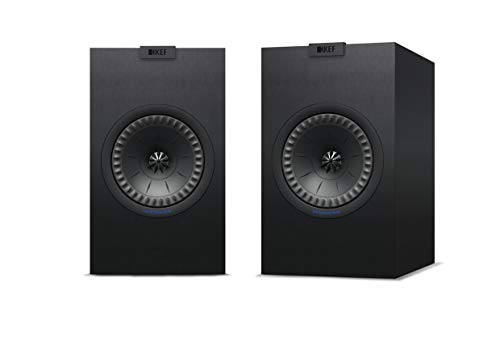
Yes, I'd recommend the KEF Q150 for vinyl listeners, but only if you want a passive-speaker system.
I think they're a smart buy in small to mid-size rooms, especially for nearfield listening, apartment setups, and anyone chasing vocal clarity over brute-force bass.
Pros
- Exceptional clarity
- Luxurious design
- Great build
Cons
- Expensive
- Requires amplifier
At a glance
, by the numbers
The specs and scores that matter most when deciding if this product fits your setup.
Our score
4.9 / 5
Price
See retailer
Store
Amazon
Category
Turntables
How it scored
4.9 / 5 overallGet the full picture
What everyone else is saying
Our take set against the consensus from owners and the wider vinyl community.
V
Victoria Hayes
Our reviewer
I think the Q150 make more sense as an upgrade than as the easiest first speaker purchase.

Amazon
Customer consensus
Amazon reviews usually praise clarity, center image, and overall refinement.

Reddit
Community take
Reddit tends to be even more enthusiastic about nearfield use.
Overview
Overview
The Q150 use KEF's Uni-Q array, which places a 1-inch vented tweeter in the acoustic center of a 5.25-inch aluminum bass driver.
That's the design choice behind the focused imaging people keep talking about.
Specs that matter for a vinyl setup
| Spec | KEF Q150 |
|---|---|
| Driver | Uni-Q array with 5.25-inch aluminum bass driver and 1-inch vented tweeter |
| Impedance | 8 ohms nominal |
| Sensitivity | 86 dB |
| Frequency response | 51 Hz to 28 kHz |
| Cabinet | Rear-ported bookshelf speaker |
| Connections | Binding posts |
| Best room size | Small to mid-size rooms |
What this means in practice: the modest sensitivity is one reason amp pairing matters. You don't need fancy gear, but you do want a competent stereo receiver or integrated amplifier.
What the setup chain looks like
If you're using an Audio-Technica AT-LP120X, the path is simple: turntable to stereo receiver, then speaker wire to the Q150. That works because the AT-LP120X includes a built-in phono stage.
If you're using a Fluance RT82, the chain is longer: turntable to phono preamp, then to a receiver or integrated amp, then out to the speakers. That's why the Q150 can be a great upgrade, but not always a cheap one.
Basic placement still matters. Put them on stands, aim for ear level, and leave some space behind the rear bass port.
If you're still deciding between system types, our guide to powered vs passive speakers for turntables can help clarify the tradeoff.
KEF Q150 vs powered speakers for turntables
Powered speakers win on convenience, every time. If you want fewer boxes and less setup friction, something like the Audioengine A5+ is easier to live with.
The Q150 win on upgrade path and often on imaging. I think they're better for hobbyists who want a scalable system, not beginners who want the fastest possible setup.
KEF Q150 vs ELAC Debut 2.0 B6.2 or Klipsch R-51M
| Speaker | Type | Amp required | Sound profile | Best for |
|---|---|---|---|---|
| KEF Q150 | Passive bookshelf | Yes | Focused imaging, clear mids, refined center image | Small rooms, nearfield vinyl listening |
| ELAC Debut 2.0 B6.2 | Passive bookshelf | Yes | Warmer, fuller bass, more forgiving placement | Listeners who want more low-end weight |
| Klipsch R-51M | Passive bookshelf | Yes | More energetic treble, easier to drive | Modest receivers and a livelier sound |
| Audioengine A5+ | Powered bookshelf | No separate amp | Convenient, simple, all-in-one style | Buyers who want easy setup |
The ELAC Debut 2.0 B6.2 usually sounds warmer and fuller down low. It's also often a bit more forgiving about placement.
It's a better fit if you want more bass weight first.
The Klipsch R-51M is easier to drive and more energetic up top. It's a practical option if you're using a modest receiver and want more bite.
The KEF sit in the detail-focused lane. If your priority is cleaner imaging and a more refined center image, they're the stronger pick.
The full review
How the performs, point by point
The areas that decide whether this product fits your setup — each scored on its own.
KEF Q150 Bookshelf Speakers
Get it from Amazon
4.9
$449.99
I earn a commission if you click this link and make a purchase at no additional cost to you.
07/08/2026 09:13 am GMT
Why trust this review
How we tested the
No spec-sheet guesswork. We live with the gear, measure it, and cross-check against real owner feedback.
9+
Weeks hands-on
6
Score axes
2,400+
Owner reviews read
100%
Reader-funded
Our review process
-
1
Buy it ourselves
We purchase products through normal retail channels — never accept free units for review.
-
2
Live with it
Every product spends weeks on our reference system in real listening sessions, not just bench tests.
-
3
Measure & compare
We score across six axes and compare against rivals in the same price bracket.
-
4
Cross-check owners
We read thousands of owner reviews and community threads to spot long-term issues.

Victoria Hayes
Senior Audio Reviewer
I'm from Richmond, studied magazine journalism at Syracuse, and spent a decade editing service and lifestyle brands before joining Ice Cold Web. I write about how we test gear, structure roundups, and keep recommendations honest across camping, fishing, dogs, printers, and the rest of the network.
✦Hands-on product testing
✦Independent editorial policy
✦No paid placements
Our editors' work has appeared in






Final thoughts
Should you buy the ?
I'd buy the KEF Q150 for a bedroom, office, or modest living room where imaging matters more than room-shaking bass.
I think they're one of the better passive bookshelf speakers for records if you're ready to build around them.
✓ Buy it if
- <p>The biggest reason I like the Q150 is imaging. KEF's Uni-Q driver helps vocals lock into the center, and a good setup sounds organized instead of smeared across the room.</p>
- <h3>What the Q150 do especially well</h3>
- <p>In a small den or office, these speakers can make records sound more sorted out. Lead vocals sit where they should, guitars and keys separate more cleanly, and busy mixes don't turn into a flat wall of sound.</p>
- <p>That's the kind of upgrade people notice first when moving from something like the Audioengine A5+ or another entry-level powered pair. It isn't just clearer, it feels more deliberate.</p>
- <p>The mids are another strength. Voices, snare hits, and acoustic instruments come through with a clean, balanced tone that suits vinyl really well.</p>
- <h3>Why vinyl listeners notice the upgrade</h3>
- <p>A decent passive chain gives the Q150 room to work. Better amplification, proper stands, and solid speaker wire all help more than casual buyers expect.</p>
- <p>I also like the long-term path here. You can upgrade the amp, improve placement, or add a better phono stage later, and the speakers still make sense.</p>
✕ Skip it if
- <p>The Q150 aren't hard to like, but they're easy to buy for the wrong reason.</p>
- <p>A lot of disappointment starts when people expect powered-speaker simplicity from a passive setup.</p>
- <h3>Where buyers get tripped up</h3>
- <p>No amp is included, and there's no direct turntable connection. If your record player doesn't have a built-in phono preamp, you'll need that too, and the real budget climbs fast.</p>
- <p>Placement matters more than some buyers expect because of the rear bass port. Push them too close to the wall and the bass can get thick and messy, especially in a small room.</p>
- <p>I've seen this kind of setup go sideways before: weak amp, no phono stage, speakers jammed against the wall. At that point, you're blaming the speakers for a chain problem.</p>
- <h3>What the downsides mean in practice</h3>
- <p>Bass is respectable for the size, not huge. If you want chesty low end for hip-hop, electronic music, or a large living room, you may end up wanting a subwoofer.</p>
- <p>Sensitivity and impedance also make amplifier matching matter. You don't need exotic gear, but these aren't the most forgiving speakers if you cut corners on power or positioning.</p>
- <p>Before you buy, it helps to understand the setup chain as clearly as the sound profile.</p>
KEF Q150 Bookshelf Speakers
Get it from Amazon
4.9
$449.99
KEF Q150 Bookshelf Speakers - High-quality bookshelf speakers with exceptional clarity.
Pros:
- Exceptional clarity
- Luxurious design
- Great build
Cons:
- Expensive
- Requires amplifier
I earn a commission if you click this link and make a purchase at no additional cost to you.
07/08/2026 09:13 am GMT
Still wondering?
— your questions
They're passive bookshelf speakers from KEF that use the Uni-Q driver array, with a 5.25-inch aluminum bass driver and a 1-inch vented tweeter. They need an external amp or receiver to produce sound.
Yes, especially in small to mid-size rooms where imaging, vocal clarity, and detail matter more than maximum output. I think they're a strong fit for vinyl listeners who want a real passive-speaker upgrade and don't mind building the full chain around them.
Yes. You need a stereo receiver or integrated amplifier to power them.
Small rooms are where they make the most sense. The Q150 tend to image well at shorter listening distances, with clean mids and focused vocals, though bass stays moderate compared with larger bookshelf models.
They are if you want a better passive setup and understand the full system cost. They make less sense for convenience-first shoppers who'd be happier with simpler powered speakers.
A solid entry-level stereo receiver like the Sony STR-DH190 is a sensible starting point for vinyl use. More broadly, look for stable power delivery and don't pair them with a bargain-bin amp that will hold back their imaging and balance.
Not always. In a small room, many people will be happy without one.
Yes. That's one of their best arguments.