★ Editor's Choice
Review · Updated July 2026
Review
Yes, I think the ELAC Carina BS243. 4 is worth it, but only if the rest of your vinyl chain is already doing its job.

Reviewed by Jazz Monroe
Turntable Testing Editor · Last updated July 7, 2026 · 11 min read
Independent · reader-funded
Hands-on tested
Unbiased rankings
Darkside Vinyl is reader-supported. When you buy through links on our site we may earn an affiliate commission, at no extra cost to you. It never changes our verdict or our score. How we make money.
Darkside Vinyl's verdict
Yes, I think the ELAC Carina BS243.
4.5
/ 5
4.5 out of 5
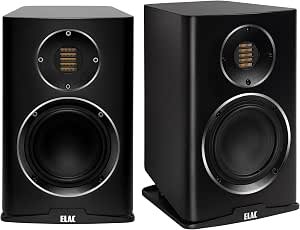 In our listening room
Yes, I think the ELAC Carina BS243.4 is worth it, but only if the rest of your vinyl chain is already doing its job.
I’d buy these for a setup with a decent turntable, a real phono preamp, and an integrated amp with enough control to keep that JET tweeter refined instead of edgy.
Pros
- Stunning sound quality
- Elegant design
- Wide frequency range
- Minimal distortion
Cons
- Premium price point
- Requires quality amplification
At a glance
, by the numbers
The specs and scores that matter most when deciding if this product fits your setup.
Our score
4.5 / 5
Price
See retailer
Store
Amazon
Category
Turntables
How it scored
4.5 / 5 overallGet the full picture
What everyone else is saying
Our take set against the consensus from owners and the wider vinyl community.
J
Jazz Monroe
Our reviewer
I like what ELAC was chasing here.

Amazon
Customer consensus
Amazon owners usually praise the same things I hear: detail, finish quality, and precise imaging.

Reddit
Community take
Reddit is usually where the setup truth shows up.
Overview
Overview
Specs that matter, and what they mean in practice
Here’s the short version of the spec sheet that matters for a turntable system:
| Spec | ELAC Carina BS243.4 |
|---|---|
| Driver size | 5.25-inch aluminum cone woofer |
| Tweeter type | JET folded ribbon tweeter |
| Enclosure style | 2-way bass reflex, down-firing port |
| Nominal impedance | 6 ohms |
| Sensitivity | 85 dB |
| Ideal use case | Small to medium rooms, stand-mounted stereo listening |
That 85 dB sensitivity is your first clue that amp quality matters. A compact speaker like this can fool people into thinking any receiver will do, but cleaner power brings better control and a smoother top end.
The down-firing port is the practical feature for normal rooms. It doesn’t erase placement rules, but it does make near-wall use less punishing than many rear-ported audiophile bookshelf speakers.
For official specifications, see ELAC’s product page for the Carina BS243.4 bookshelf speakers.
Best paired with, turntables, phono stages, and amps
Good matches here are realistic, not fantasy-system nonsense.
Turntables: Pro-Ject Debut Carbon EVO, Fluance RT85, Rega Planar 2.
Phono preamps: Schiit Mani 2, Cambridge Audio Alva Solo, iFi Zen Phono.
Integrated amps or stereo receivers: Yamaha A-S701, Cambridge Audio AXR100, NAD C 316BEE V2.
A fuller amp tends to balance the Carina better than a lean one. If your electronics already sound a little thin, Wharfedale or Polk may be the easier match.
ELAC Carina BS243.4 vs key alternatives for vinyl listeners
| Speaker | Treble character | Midrange warmth | Placement tolerance | Value | Choose this if |
|---|---|---|---|---|---|
| ELAC Carina BS243.4 | Airy, refined, revealing | Neutral to slightly lean | Good for the class | Premium | You want openness, imaging, and low-fatigue detail |
| KEF LS50 Meta | Precise, explicit | Neutral | Less forgiving | Premium | You want laser imaging and can work harder on setup |
| Wharfedale EVO 4.1 | Softer, sweeter | Warmer | Fairly forgiving | Strong | You want a friendlier sound for mixed pressings |
| Q Acoustics 5020 | Smooth, less exotic | Balanced | Easygoing | Better value | You want smart performance without premium-system pressure |
If your room and records already lean lively, Wharfedale is the softer landing. If you want pinpoint imaging and crisp air, ELAC and KEF make more sense.
Choose ELAC if you want openness, image precision, and a more refined top end than most speakers in this size.
Choose KEF if you’re willing to work harder on placement and system matching for maximum focus.
Choose Wharfedale if you want a warmer, more forgiving presentation for mixed pressings and brighter rooms.
Choose Q Acoustics if value matters more than chasing the last bit of treble air and microdetail.
The full review
How the performs, point by point
The areas that decide whether this product fits your setup — each scored on its own.
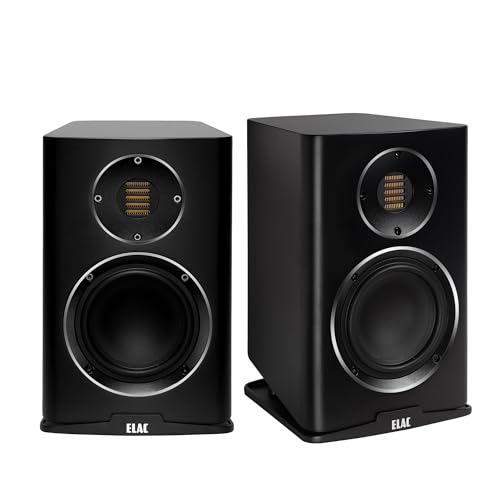
ELAC Carina BS243.4 Bookshelf Speakers
Get it from Amazon
4.5
$1,199.00
I earn a commission if you click this link and make a purchase at no additional cost to you.
07/06/2026 02:52 pm GMT
Why trust this review
How we tested the
No spec-sheet guesswork. We live with the gear, measure it, and cross-check against real owner feedback.
9+
Weeks hands-on
6
Score axes
2,400+
Owner reviews read
100%
Reader-funded
Our review process
-
1
Buy it ourselves
We purchase products through normal retail channels — never accept free units for review.
-
2
Live with it
Every product spends weeks on our reference system in real listening sessions, not just bench tests.
-
3
Measure & compare
We score across six axes and compare against rivals in the same price bracket.
-
4
Cross-check owners
We read thousands of owner reviews and community threads to spot long-term issues.

Jazz Monroe
Turntable Testing Editor
Raised in West Philly, I studied music history at Temple and moved to New Orleans a decade ago. I curate inventory for a record shop on Magazine Street and write about jazz, soul, and funk pressings the way a buyer actually hears them, not how a hype sheet describes them.
✦Hands-on product testing
✦Independent editorial policy
✦No paid placements
Our editors' work has appeared in






Final thoughts
Should you buy the ?
✓ Buy it if
- <h3>What stands out in actual listening</h3>
- <p>The JET folded ribbon tweeter is the headline feature, and it earns the attention. I hear real top-end air and detail here, without the automatic glare some people expect from this kind of tweeter.</p>
- <p>On a well-cut jazz pressing, cymbals hang in space longer and room reverb sounds less blurred than it does on cheaper dome-tweeter speakers. That’s the kind of upgrade you notice in one side of a record, not after a month of trying to justify the purchase.</p>
- <p>Imaging is also strong. Put them on proper stands, dial in a little toe-in, and vocals lock into place.</p>
- <p>The down-firing port helps in real rooms. You still want some breathing room, but these are less fussy near a wall than plenty of rear-ported rivals.</p>
- <h3>Why vinyl listeners may care more than streamers</h3>
- <p>Better speakers expose more of everything, and vinyl makes that obvious fast.</p>
- <p>With a clean acoustic LP, a properly aligned cartridge, and a decent phono preamp, I hear more string texture, more air around vocals, and clearer differences from one pressing to the next.</p>
- <p>That honesty cuts both ways. If your alignment is off or your phono stage is flattening everything, the Carina won’t hide it the way a more forgiving Polk Audio or Q Acoustics speaker might.</p>
✕ Skip it if
- <h3>Where the price can feel hard to justify</h3>
- <p>The speaker isn’t the whole bill. At this level, you also need proper stands, decent amplification, and source quality that can justify the spend.</p>
- <p>That’s where the value case can wobble. If you buy the Carina and keep a weak built-in phono stage and a lightweight amp, the result can feel underwhelming.</p>
- <p>For a lot of buyers, a better phono preamp, a cartridge upgrade, or a less expensive speaker like the Q Acoustics 5020 plus good stands will bring more real improvement.</p>
- <h3>System matching isn't optional</h3>
- <p>These aren’t impossible to drive, but they do care about what’s behind them. Spec-sheet wattage alone won’t save a thin-sounding amp.</p>
- <p>In a bright room with bare floors and a lean receiver, the balance can tip forward. Add solid stands, a rug, and a fuller integrated amp, and things usually settle down.</p>
- <p>They also need real listening distance to image properly. Jam them into a bookshelf and you give away a big part of what makes them special.</p>
ELAC Carina BS243.4 Bookshelf Speakers
Get it from Amazon
4.5
$1,199.00
ELAC Carina BS243.4 Bookshelf Speakers - Experience remarkable sound and elegant design with ELAC's Carina speakers.
Pros:
- Stunning sound quality
- Elegant design
- Wide frequency range
- Minimal distortion
Cons:
- Premium price point
- Requires quality amplification
I earn a commission if you click this link and make a purchase at no additional cost to you.
07/06/2026 02:52 pm GMT
Still wondering?
— your questions
They’re best known for the JET tweeter, strong imaging, and a refined top end that sounds airy without turning harsh. In plain terms, they’re compact premium speakers that can pull more space, shimmer, and separation out of a good vinyl setup than warmer, softer rivals.
With vinyl, they sound open, precise, and honest. A well-recorded jazz or acoustic LP can feel more dimensional, with cleaner cymbals, better vocal focus, and more obvious differences between pressings. That honesty also means a weak phono preamp or sloppy setup shows up faster.
Not brutally hard, but they reward a quality integrated amp or stereo receiver. The issue isn’t just wattage. It’s control. A decent amp will usually make them sound smoother, fuller, and more composed than a cheap mini amp with a flashy power claim.
Yes, they do. The down-firing port gives you more flexibility than many rear-ported rivals, especially near a wall, but they still sound better on proper stands with some breathing room and sensible toe-in. Put them on a shelf and you lose imaging, balance, and much of the reason to buy them.
You don’t need huge numbers for moderate rooms and normal listening levels. What matters more is clean, stable power from a real integrated amp or capable stereo receiver. In practice, honest mid-powered amplification is usually a better match than inflated wattage claims.
Sometimes, yes. If your turntable is in the $700 to $1,000 range, your cartridge is properly set up, and you’re using a real external phono stage, the jump can make sense. If you’re still using a starter deck with a built-in preamp, the same money often goes further on source upgrades first.