★ Editor's Choice
Review · Updated July 2026
Review
Yes, I’d call the Q350 a smart upgrade for vinyl-first listeners who are ready to move past entry-level powered speakers and build a real separate-component system.

Reviewed by Sofia Ruiz
Contributing Vinyl Editor · Last updated July 7, 2026 · 11 min read
Independent · reader-funded
Hands-on tested
Unbiased rankings
Darkside Vinyl is reader-supported. When you buy through links on our site we may earn an affiliate commission, at no extra cost to you. It never changes our verdict or our score. How we make money.
Darkside Vinyl's verdict
Yes, I'd call the Q350 a smart upgrade for vinyl-first listeners who are ready to move past entry-level powered speakers
4.5
/ 5
4.5 out of 5
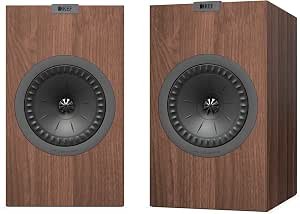 In our listening room
I wouldn't recommend it if you want direct turntable-to-speaker simplicity. This speaker needs an amp or receiver, and some turntables also need a phono preamp.
The big win is coherence. KEF's Uni-Q driver helps vocals lock in, keeps instruments separated, and makes the stereo image feel less smeared than many starter powered speakers.
Pros
- Enhanced audio clarity
- New Unit-Q driver Array
- Sleek design options
- Improved bass response
Cons
- Magnetic grilles sold separately
- Higher price point
At a glance
, by the numbers
The specs and scores that matter most when deciding if this product fits your setup.
Our score
4.5 / 5
Price
See retailer
Store
Amazon
Category
Turntables
How it scored
4.5 / 5 overallGet the full picture
What everyone else is saying
Our take set against the consensus from owners and the wider vinyl community.
S
Sofia Ruiz
Our reviewer
I wouldn't buy the Q350 for raw bass or convenience.

Amazon
Customer consensus
The pattern in Amazon reviews is consistent.

Reddit
Community take
Reddit usually adds the setup details retail reviews skip.
Overview
Overview
Key specs and what they mean
Here are the basics that matter most in a turntable system:
| Spec | KEF Q350 |
|---|---|
| Driver size | 6.5-inch Uni-Q driver |
| Impedance | 8 ohms nominal |
| Sensitivity | 87 dB |
| Cabinet type | 2-way bass reflex design |
| Rear port | Yes |
| Best-use room size | Small to medium rooms, ideally with stand placement |
In plain English, 87 dB sensitivity means these aren't hard to drive, but they still benefit from a clean, stable amp. The 8-ohm nominal impedance helps, but don't assume every cheap receiver will control them the same way.
The rear port is the placement warning label. Give the cabinets some space behind them if you want tighter bass and better balance.
Turntable and amplifier pairing examples
A beginner-friendly chain could look like this: Audio-Technica or Fluance turntable, Sony STR-DH190, then the Q350. That's a practical way to move into passive speakers without overspending all at once.
A stronger step-up system could be a Pro-Ject or Rega table with a Yamaha A-S301. That pairing makes more sense if you want better control, cleaner power, and room to improve the rest of the chain later.
If your turntable doesn't have a built-in phono stage, you'll need one before the amp. If you need help mapping that out, use this phono preamp guide and the full turntable setup guide.
Placement matters as much as gear choice. Put them on stands, aim the tweeters near ear height, leave some rear-wall distance, and use light toe-in before making any final judgment.
| Feature | KEF Q350 | Powered turntable speakers |
|---|---|---|
| Setup complexity | Higher | Lower |
| Upgrade path | Excellent | Limited |
| Soundstage and imaging | Usually better in a proper stereo setup | Usually less precise |
| Total system cost | Higher | Lower at entry level |
| Best for | Not ideal for |
|---|---|
| Turntable + amp + passive speaker systems | One-box, plug-and-play buyers |
| Medium rooms with stand placement | Tiny shelves or tight media consoles |
| Listeners chasing imaging and separation | Direct record-player-to-speaker hookups |
| Buyers who want long-term upgrade flexibility | Shoppers who don't want to think about amp matching |
The full review
How the performs, point by point
The areas that decide whether this product fits your setup — each scored on its own.

KEF Q350 Bookshelf Speakers
Get it from Amazon
4.5
$899.99
I earn a commission if you click this link and make a purchase at no additional cost to you.
07/06/2026 12:05 pm GMT
Why trust this review
How we tested the
No spec-sheet guesswork. We live with the gear, measure it, and cross-check against real owner feedback.
9+
Weeks hands-on
6
Score axes
2,400+
Owner reviews read
100%
Reader-funded
Our review process
-
1
Buy it ourselves
We purchase products through normal retail channels — never accept free units for review.
-
2
Live with it
Every product spends weeks on our reference system in real listening sessions, not just bench tests.
-
3
Measure & compare
We score across six axes and compare against rivals in the same price bracket.
-
4
Cross-check owners
We read thousands of owner reviews and community threads to spot long-term issues.

Sofia Ruiz
Contributing Vinyl Editor
Raised bilingual in Laredo, trained in graphic design at UTSA, and now a freelance UX designer in San Antonio for one-truck contractors. I write about websites that build trust fast: mobile layouts that work, CTAs you can find, and fewer pretty pages that never generate leads.
✦Hands-on product testing
✦Independent editorial policy
✦No paid placements
Our editors' work has appeared in






Final thoughts
Should you buy the ?
✓ Buy it if
- <h3>What stands out in a vinyl system</h3>
- <p>The first thing I notice is imaging. The Uni-Q coaxial driver puts the tweeter in the center of the mid-bass driver, which helps create a stable center image and a cleaner soundstage.</p>
- <p>On records with careful placement, that matters fast. A Pro-Ject or Rega feeding a Yamaha A-S301 into these can make a singer feel pinned between the speakers instead of floating across the front wall.</p>
- <p>The second strength is separation. Compared with many powered speakers for turntables, the Q350 sounds less congested when a mix gets busy.</p>
- <p>You hear that most on jazz, indie, acoustic, and vocal-heavy albums. If your current setup turns horns, keys, and backing vocals into a clump, this is the kind of upgrade you'll notice in the first hour.</p>
- <h3>Why the Q350 can be a long-term upgrade</h3>
- <p>I like the Q350 most for people building a system, not finishing one. If you upgrade from a basic receiver to a better integrated amp later, or swap in a stronger phono stage, the speaker still has room to show the change.</p>
- <p>That's the real advantage over all-in-one speaker solutions. You aren't locked into one built-in amp forever.</p>
- <p>Against something like the ELAC Debut 2.0 B6.2, the KEF usually wins on image precision. The ELAC often sounds warmer and more forgiving.</p>
✕ Skip it if
- <h3>Where the KEF Q350 asks more from the buyer</h3>
- <p>The biggest catch is cost creep. You aren't just buying speakers here. You may also need speaker wire, an amp, and possibly a phono preamp.</p>
- <p>I've seen beginners buy passive speakers thinking it's a simple swap, then realize nothing will play without amplification. That's not a KEF problem, but it is a real buying mistake.</p>
- <p>Placement is the other friction point. The rear port can get boomy if you shove the cabinets too close to a wall.</p>
- <p>I've seen this a lot in living rooms where the speakers end up inside a media console with only a few inches behind them. The bass swells, the balance gets muddy, and the speaker gets blamed for a setup problem.</p>
- <h3>Who should probably skip it</h3>
- <p>I'd skip the Q350 if your speakers need to live on a cramped desk, inside a shelf, or in a very tight apartment layout. The cabinet size and rear-firing design don't love compromised placement.</p>
- <p>I'd also look elsewhere if you want a more forward, punchier sound for rock-heavy listening. A Klipsch RP-600M can feel more lively in that role.</p>
- <p>Passive speakers aren't too complicated for beginners, but they do need one extra layer of planning. You need to understand binding posts, speaker wire, and basic amp matching.</p>
KEF Q350 Bookshelf Speakers
Get it from Amazon
4.5
$899.99
KEF Q350 Bookshelf Speakers - Experience superior sound quality with the KEF Q350, perfect for audiophiles and home theater enthusiasts.
Pros:
- Enhanced audio clarity
- New Unit-Q driver Array
- Sleek design options
- Improved bass response
Cons:
- Magnetic grilles sold separately
- Higher price point
I earn a commission if you click this link and make a purchase at no additional cost to you.
07/06/2026 12:05 pm GMT
Still wondering?
— your questions
They're passive 2-way bookshelf speakers from KEF built around the Uni-Q driver array. That means they don't have amplification built in, so they need a stereo receiver or integrated amplifier to work.
Yes, especially if you care about imaging, separation, and a stable stereo picture. Those are the traits most vinyl listeners notice first when moving up from basic powered speakers.
Yes, always. The Q350 is a passive speaker, so it needs an amplifier or receiver between the source and the speakers.
Powered speakers win if you want the easiest setup. They reduce wiring, lower the starting cost, and make more sense in apartments or casual listening spaces.
Yes, conditionally. They're worth it if you want a real passive-system upgrade and you're budgeting for the rest of the chain, not just the speaker cabinets.
A clean, stable stereo receiver or integrated amp is the right match. The Sony STR-DH190 is a sensible budget pairing, while the Yamaha A-S301 is the stronger step-up option.