★ Editor's Choice
Review · Updated July 2026
Review
If you want a compact passive upgrade for a turntable system, the Polk Audio Reserve R100 Bookshelf Speaker is a smart buy for small rooms, desktop listening, and apartment stereo setups.

Reviewed by Mara Chen
Accessories Review Editor · Last updated July 7, 2026 · 11 min read
Independent · reader-funded
Hands-on tested
Unbiased rankings
Darkside Vinyl is reader-supported. When you buy through links on our site we may earn an affiliate commission, at no extra cost to you. It never changes our verdict or our score. How we make money.
Darkside Vinyl's verdict
If you want a compact passive upgrade for a turntable system, the Polk Audio Reserve R100 Bookshelf Speaker is a smart b
4.5
/ 5
4.5 out of 5
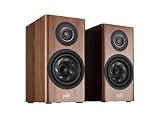 In our listening room
It isn't plug-and-play. You'll need a stereo receiver or integrated amp, and some turntables will also need a phono preamp.
Direct answer: The Reserve R100 sounds cleaner and more refined than many entry-level passive speakers, with strong imaging and crisp top-end detail. What it doesn't give you is big-room scale or deep, subwoofer-style bass.
Pros
- Exceptional audio performance
- Deep impactful bass
- Elegant design
- Hi-Res Audio certified
- Versatile placement options
Cons
- Higher price point
- Requires adequate space for setup
At a glance
, by the numbers
The specs and scores that matter most when deciding if this product fits your setup.
Our score
4.5 / 5
Price
See retailer
Store
Amazon
Category
Turntables
How it scored
4.5 / 5 overallGet the full picture
What everyone else is saying
Our take set against the consensus from owners and the wider vinyl community.
M
Mara Chen
Our reviewer
The R100 works best when the job is clear: small room, music-first listening, decent amp, careful placement.

Amazon
Customer consensus
Amazon buyers usually praise the clarity, compact size, and build quality.

Reddit
Community take
Reddit is usually more grounded on this speaker.
Overview
Overview
Specs and what they mean in practice
| Spec | Polk R100 |
|---|---|
| Driver size | 5.25-inch Turbine Cone mid-bass |
| Tweeter type | 1-inch Pinnacle Ring Radiator Tweeter |
| Sensitivity | 86 dB |
| Nominal impedance | 4 ohms |
| Port design | Rear-ported with X-Port |
| Best room size | Small rooms, nearfield, desktop-adjacent stereo |
These specs tell you amp matching matters more than it does with an easy speaker load. At 86 dB sensitivity and 4 ohms nominal, this isn't the speaker to pair with a bargain-bin mini amp and call it a day.
The rear-ported cabinet means wall clearance matters. The compact cabinet helps the speaker disappear in a room, but it also limits bass reach.
If you've got a decent Sony stereo receiver or a similar mainstream amp, you'll probably be fine in a small room. A tiny low-power desktop amp might work, but it likely won't show what these speakers can really do.
Turntable pairing and setup scenarios
Here's the short version:
| Turntable scenario | Extra gear needed | Good fit for R100? |
|---|---|---|
| Turntable with built-in phono preamp + stereo receiver + R100 | Speaker wire only beyond core system | Yes |
| Turntable without built-in phono preamp + external phono preamp + receiver + R100 | External phono stage | Yes, if you already want separates |
| TV plus turntable through an AV receiver | AV receiver and proper input setup | Yes, in a compact media room |
If you've got a Fluance table without a built-in phono stage, you'll need a phono preamp before the signal reaches the receiver. If you've got an Audio-Technica model with a built-in preamp, the chain is simpler and the R100 becomes an easier upgrade.
This speaker makes the most sense when you already own part of the chain. If you're building from scratch, powered speakers may save you money and setup mistakes.
| Best for | Not ideal for |
|---|---|
| Small room stereo | Large open rooms |
| Desktop hi-fi | Bass-heavy listening without a sub |
| Turntable plus receiver setups | Buyers who want powered-speaker simplicity |
The full review
How the performs, point by point
The areas that decide whether this product fits your setup — each scored on its own.

Polk Audio Reserve R100 Bookshelf Speaker
Get it from Amazon
4.5
$699.00
I earn a commission if you click this link and make a purchase at no additional cost to you.
07/06/2026 06:22 pm GMT
Why trust this review
How we tested the
No spec-sheet guesswork. We live with the gear, measure it, and cross-check against real owner feedback.
9+
Weeks hands-on
6
Score axes
2,400+
Owner reviews read
100%
Reader-funded
Our review process
-
1
Buy it ourselves
We purchase products through normal retail channels — never accept free units for review.
-
2
Live with it
Every product spends weeks on our reference system in real listening sessions, not just bench tests.
-
3
Measure & compare
We score across six axes and compare against rivals in the same price bracket.
-
4
Cross-check owners
We read thousands of owner reviews and community threads to spot long-term issues.

Mara Chen
Accessories Review Editor
I grew up in Fargo watching my parents' restaurant rise or fall with the map pack. After marketing at a Minneapolis agency, I consult on local SEO for service businesses and write search content that helps real companies show up when neighbors look on their phones.
✦Hands-on product testing
✦Independent editorial policy
✦No paid placements
Our editors' work has appeared in






Final thoughts
Should you buy the ?
If you want more bass and scale, move up to the Polk Audio Reserve R200. If you want strong value, the ELAC Debut 2.0 B6.2 still deserves a look.
If you're trying to spend less, the Q Acoustics 3020i is a sensible budget-conscious option. If you want fewer boxes and fewer setup mistakes, powered bookshelf speakers are probably the better fit.
✓ Buy it if
- Stereo imaging is a real strength, especially in nearfield and small-room listening.
- The Pinnacle Ring Radiator Tweeter pulls out detail without making every record sound bright.
- The compact cabinet fits well on stands or in a desk-adjacent stereo setup.
- Fit and finish feel a step above cheaper passive bookshelf speakers.
- It makes more sense the moment you already own a decent integrated amp or receiver.
✕ Skip it if
- <h3>Where the Polk Reserve R100 asks more from your setup</h3>
- <p>You always need an amplifier or receiver here. A turntable alone, even a good one, won't power these speakers.</p>
- <p>If your turntable doesn't have a built-in phono stage, you'll also need a separate phono preamp. That's extra cost, and it's a detail many first-time buyers miss.</p>
- <p>The rear-ported cabinet and Polk's X-Port design help airflow, but they don't erase placement rules. Push these flat against the wall or park them on the same cabinet as the turntable, and you may blame the speaker for a setup problem.</p>
- <p>Bass is solid for the size, but let's keep it honest. It won't replace a larger bookshelf model or a 2.1 setup with a subwoofer.</p>
- <p>A common mistake is pairing the R100 with a weak mini amp, shoving it against the wall, and expecting instant magic. If it sounds boxed in or thin, the speaker may not be the real problem.</p>
- <h3>Who may want something else</h3>
- <p>If you're filling a medium or large open room, look at something bigger. The Polk Audio Reserve R200 is the obvious step up if you want more low-end weight and scale.</p>
- <p>If you're bass-first, or you listen loud across an open living room that spills into a kitchen, you'll hit this speaker's limits sooner than expected. If you want the easiest path from turntable to music, powered bookshelf speakers are still the simpler answer.</p>
Polk Audio Reserve R100 Bookshelf Speaker
Get it from Amazon
4.5
$699.00
Polk Audio Reserve R100 Bookshelf Speaker - Experience dynamic audio clarity for movies and music enthusiasts.
Pros:
- Exceptional audio performance
- Deep impactful bass
- Elegant design
- Hi-Res Audio certified
- Versatile placement options
Cons:
- Higher price point
- Requires adequate space for setup
I earn a commission if you click this link and make a purchase at no additional cost to you.
07/06/2026 06:22 pm GMT
Still wondering?
— your questions
It's best for small room stereo, nearfield listening, desktop-adjacent hi-fi, and compact vinyl systems. It fits best in a bedroom, office, or apartment living room before being asked to fill a big open-plan space.
Yes, but only with the right electronics in the chain. It works well with a turntable feeding a stereo receiver or integrated amp, not directly from the turntable by itself.
Yes, always. It's a passive speaker, which means it has no built-in amplification.
It's at its best in small rooms and moderate listening distances. Think bedroom, office, or a compact apartment living room.
A decent stereo receiver or integrated amp from a mainstream brand like Sony is usually a better match than the cheapest mini amp you can find. Because of the speaker's sensitivity and 4-ohm nominal impedance, you want stable power and decent control.
If you care about refinement, imaging, and a nicer cabinet finish, yes, it can justify the extra cost. It sounds more polished than many entry-level passive options, especially in a small, well-set-up stereo system.