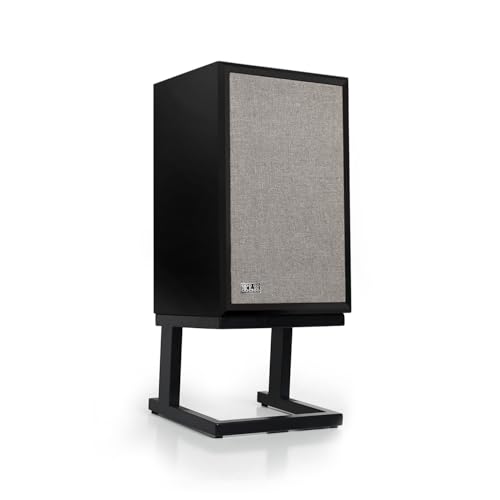
The first thing that struck me about the KLH Model Three was the scale of sound it delivers. Compared to many entry-level speakers, these have a fuller, more dynamic presence, especially when it comes to vocals and brass instruments. Listening to classic rock records felt immersive, as if the band was playing right in my living room rather than coming from a pair of tiny boxes.
The sealed cabinet design really shines in typical room setups, too. If you’ve ever dealt with rear-ported speakers getting boomy when placed close to walls or furniture, you’ll appreciate the acoustic suspension here. It allows for a cleaner and more controlled bass response, making it easy to enjoy your favorite vinyl without worrying about unwanted resonance.
The KLH Model Three is a real looker, with its vintage-inspired finishes like English Walnut and West African Mahogany. The Stone Wash Linen Grille adds a touch of class without making it scream “audiophile.” This speaker can blend seamlessly into a living room, looking like a stylish piece of furniture rather than an audio gadget.
But it’s not just about aesthetics; the build quality feels solid and reliable. I appreciate that KLH went for real wood veneer instead of the typical vinyl wrap you see in this price range. It gives the Model Three a warmth and authenticity that pairs nicely with the analog experience of vinyl.
Here’s where the KLH Model Three asks a bit more from you than a typical powered speaker. You’ll need a stereo receiver or integrated amplifier to get these babies going, and that’s a critical point for beginners to understand. If you’re coming from a powered turntable, you might be in for a surprise when you realize that passive speakers need a whole different setup.
In day-to-day listening, the KLH Model Three excels in providing a warm, inviting sound that makes you want to keep the records spinning. Whether I was jamming to some old-school jazz or cranking up rock anthems, they handled everything with an ease that made me forget about the gear and just enjoy the music. They’re not just a speaker; they become a part of your listening ritual.
However, I did notice that their size might not be ideal for everyone. These aren’t the compact bookshelf speakers you can easily tuck away; they have a presence that demands a bit more real estate. If you’ve got a smaller space, you might need to get creative with positioning to make them work, but for those with the room, they make a statement.
05Upgrade Path / Who It’s For
The flexibility of the KLH Model Three is a significant selling point. If you’re someone who enjoys tinkering with your audio setup, this passive speaker allows you to upgrade your integrated amp or swap out components over time without having to replace the entire system. It’s a great choice for vinyl lovers who want to build a more traditional hi-fi setup.
That said, if you’re looking for a plug-and-play solution, this might not be the right fit. The Model Three requires a bit more involvement, and for many, the path to a fully realized system might feel daunting. But if you’re patient and willing to invest in a more comprehensive audio experience, these speakers can be a rewarding addition to your vinyl setup.