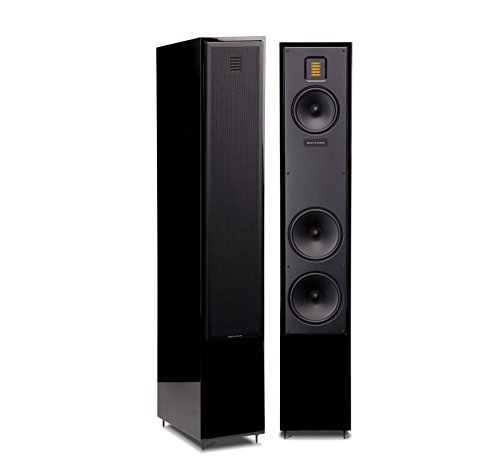
The first thing that struck me about the MartinLogan Motion 40 speakers was the clarity and separation in the sound. The Folded Motion Tweeter does wonders for the high frequencies, delivering speed and air without crossing into the realm of harshness. When I dropped a well-recorded jazz album on the turntable, the intricate details of the cymbals and the subtle reverb in the room became apparent, creating a soundstage that felt expansive and immersive.
Records with rich acoustic textures, like singer-songwriter pressings or classic rock albums, really shine with these speakers. I was particularly impressed by how layered vocals sat distinctly in their own spaces, rather than blending into a muddled mix. It’s the kind of upgrade that grabs your attention immediately and makes you want to revisit your entire vinyl collection.
The Motion 40s have a solid, floorstanding design that gives them a certain presence in the room. The cabinet feels sturdy, and the dual 5.5-inch aluminum cone woofers contribute to a fuller sound that smaller standmounts often struggle to deliver. In terms of aesthetics, they fit nicely into a modern living space without being overly flashy, which is a bonus for those of us who care about decor as much as sound.
However, the bass reflex cabinet design means that placement is crucial. If you push them too close to the wall, the sound can get a bit boomy, and that’s something to keep in mind when setting them up. They look great, but they also demand a bit of attention to how they interact with your space.
Setting up the Motion 40s revealed just how sensitive they are to their environment. These speakers need some room to breathe; if you shove them against the wall, you’ll lose that rich imaging and detail they’re capable of. I found that pulling them a couple of feet away from the back wall and playing around with the toe-in made a significant difference in how balanced the sound felt.
If you’re considering the Motion 40s, be prepared to think about your amplifier setup. With their 4-ohm load, these speakers require a bit more power and control than your average entry-level model. I’ve seen folks make the mistake of pairing them with lightweight receivers, thinking they’d get the same performance, only to end up with a flattened sound that lacks dynamics.
The ideal setup involves a solid integrated amplifier or a stereo receiver that can handle 4-ohm loads comfortably. If you don’t have the right power behind them, you’ll miss out on the lively sound these speakers can deliver. Trust me, a little extra investment in your amp can make a world of difference.
In my day-to-day listening, the Motion 40s have proven to be versatile performers. Whether I was spinning classic rock, jazz, or even some electronic music, they handled various genres with ease. The detail retrieval and imaging make every listening session feel engaging, and I often find myself lost in the music for hours on end.
That said, they do require a bit of care in terms of setup and matching, so they might not be the best fit for someone who just wants to plug and play. But for those willing to invest the time and effort, these speakers reward you with a sound that’s rich, detailed, and truly enjoyable.