01Sound Quality and Tuning
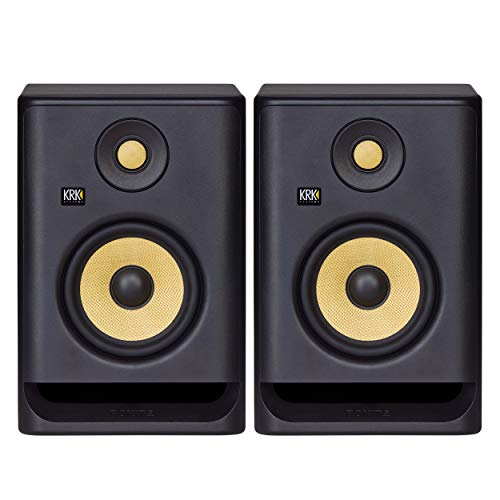
What I like most about the RP5 Rokit 5 G4 is that it doesn’t try to flatter everything you play through it. It has that familiar KRK personality, but this generation feels more controlled and less hyped than the older Rokits I’ve spent time with, which makes it easier to trust for day-to-day listening and basic mix work.
The low end is punchy for a 5-inch monitor, but I wouldn’t call it huge. In a small room it gives you enough bass to follow kick drums and bass lines without turning everything into a blur, though it still won’t replace a sub if you’re chasing the bottom octave.
Midrange detail is where I found these most useful. Vocals, guitars, and synth layers stay readable, and the top end has enough presence to show problems without getting painfully sharp in a normal setup.
These make the most sense in a small to medium room where you’re sitting fairly close to the speakers. On a desk or a compact stand setup, they feel right at home and don’t need a giant listening space to make sense.
I also appreciate that they’re forgiving enough to live in a real room without immediately falling apart if the placement isn’t perfect. You still want to give them some breathing room, but they’re not the kind of monitors that punish every tiny setup mistake.
If your room is untreated and a little lively, you’ll still hear the room talking back at you. That’s not really a flaw so much as the reality of using honest monitors, and these are honest enough to show you what’s going on.
03Build and Everyday Practicality
The cabinet feels solid and workmanlike, which is exactly what I want from a studio monitor. They don’t look fragile, and they have that no-nonsense studio gear vibe that makes sense on a desk or in a small production space.
I like the front-panel display and control layout because it makes adjustments much less annoying than digging around the back every time you want to tweak something. That matters more than people think when you’re actually living with a pair of monitors and not just unboxing them for a quick listen.
They’re not trying to be furniture, and I respect that. They’re built to sit there, get used, and keep doing the job without becoming a distraction.
04Controls and Room Tuning
The onboard EQ control is one of the more useful parts of the G4 design. It gives you enough flexibility to tame a boomy desk, brighten a dull room, or smooth out a setup that’s a little too reflective without needing extra gear.
I wouldn’t treat those controls like magic, though. They help shape the speaker to the room, but they don’t fix bad placement or a terrible listening environment, and I think that’s an important distinction.
For me, the value is in making the speakers easier to live with. A monitor that can be nudged toward your room instead of forcing your room to behave is always going to be the more practical choice.
Setup is straightforward, which is exactly how powered monitors should be. I like gear that gets out of the way, and these do that once you’ve got your source connected and the levels dialed in.
The connection options are broad enough for typical home-studio and hi-fi-adjacent use, so I never felt boxed in by the inputs. Whether I was feeding them from an interface or another source, they behaved like proper studio monitors rather than fussy little divas.
Once they’re on a stand or desk and set up properly, there’s not much drama. That’s a good thing, because the best powered monitors are the ones you stop thinking about and just start listening through.
I’d point these toward anyone building a compact production setup, a desktop listening station, or a small room where accuracy matters more than sheer scale. They make a lot of sense if you want a monitor that can handle music playback and basic mixing without taking over the room.
If you want huge bass or a big-room feel, I’d look elsewhere or plan on adding a sub later. But if your priority is a balanced, usable nearfield monitor with enough personality to stay engaging, these are a sensible pick.
For me, the RP5 Rokit 5 G4 lands in that sweet spot where it’s easy to live with, honest enough to work on, and flexible enough to fit a lot of small setups without much fuss.