★ Editor's Choice
Review · Updated July 2026
Review
I think the TX-8470 makes the most sense for people who want one stereo hub for a turntable, TV, streaming, and passive speakers. If HDMI ARC and network streaming matter to you, the higher price is easy to justify.

Reviewed by Marcus Webb
Speakers & Receivers Editor · Last updated July 7, 2026 · 11 min read
Independent · reader-funded
Hands-on tested
Unbiased rankings
Darkside Vinyl is reader-supported. When you buy through links on our site we may earn an affiliate commission, at no extra cost to you. It never changes our verdict or our score. How we make money.
Darkside Vinyl's verdict
I think the TX-8470 makes the most sense for people who want one stereo hub for a turntable, TV, streaming, and passive
4.6
/ 5
4.6 out of 5
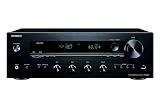 In our listening room
If you only need phono plus Bluetooth, you probably don't need this much receiver. In that case, the Sony STR-DH190 is the smarter buy, while the Denon DRA-900H and Yamaha R-N600A are the closer alternatives if you want a more feature-rich stereo setup.
Best for: vinyl-first living rooms, condo media consoles, and soundbar replacements with passive speakers.
Pros
- High-resolution sound
- Ideal for vinyl records
- Smart home integration
- Built-in streaming support
Cons
- Higher price point
- Limited to two channels
At a glance
, by the numbers
The specs and scores that matter most when deciding if this product fits your setup.
Our score
4.6 / 5
Price
See retailer
Store
Amazon
Category
Turntables
How it scored
4.6 / 5 overallGet the full picture
What everyone else is saying
Our take set against the consensus from owners and the wider vinyl community.
M
Marcus Webb
Our reviewer
I like this Onkyo most when it’s used as a one-box stereo hub.

Amazon
Customer consensus
Amazon customer reviews usually praise the same things I’d expect: convenience, HDMI ARC hookup, and the all-in-one appeal.

Reddit
Community take
Reddit discussions around receivers like this usually split into two camps.
Overview
Overview
Quick spec snapshot
| Feature | Onkyo TX-8470 |
|---|---|
| Phono input | Built-in moving magnet phono input |
| HDMI ARC | Yes |
| Streaming support | Wi-Fi, Bluetooth, AirPlay 2, Chromecast built-in, Spotify Connect, Roon Tested |
| Speaker outputs | Passive speaker outputs for 2-channel setups |
| Subwoofer output | Yes, subwoofer pre-out |
| Best-use case | One-box stereo hub for turntable, TV, streaming, and passive speakers |
Here’s the short comparison for vinyl-first buyers:
| Model | Best For | Main Tradeoff |
|---|---|---|
| Onkyo TX-8470 | Turntable plus TV plus streaming | Costs more than basic stereo receivers |
| Sony STR-DH190 | Budget phono-only systems | No HDMI ARC, no real network streaming |
| Denon DRA-900H | Buyers wanting a close stereo-TV alternative | Usually pricier, different feature priorities |
That table gives you the short answer fast: yes, this unit can handle a turntable, TV, passive speakers, and a sub without extra boxes.
Compatibility checklist for real setups
Turntable: If your Audio-Technica or Fluance deck has a built-in preamp, check whether it should be switched to phono or line before hookup. If you’re using the receiver’s phono input, the turntable’s internal preamp should usually be off.
What this means in practice:
- The wrong switch position can cause distorted or overloaded sound.
- Moving magnet cartridges are the expected match here.
- If you’re unsure, start with our phono preamp guide, turntable setup guide, and guide to the best turntable speakers.
TV: HDMI ARC is the clean path, but TV menus still matter. You may need to enable ARC or CEC control for volume behavior to work the way you expect.
What this means in practice:
- One cable can handle TV audio.
- Remote behavior may depend on TV brand settings.
- It’s simpler than patching optical audio into an older receiver.
Speakers: This receiver is for passive speakers, not all-in-one record players with built-in speakers.
What this means in practice:
- You’ll need speaker wire and passive bookshelves or towers.
- Speaker quality matters more than tiny amp differences.
- Powered speakers are a different path entirely.
Subwoofer: The sub out helps if your room is large or your bookshelf speakers sound lean. It’s less about shaking the walls and more about filling out the bottom end cleanly.
What this means in practice:
- Small speakers become more flexible.
- TV and movie playback gets fuller.
- Apartment users can still keep bass controlled.
The full review
How the performs, point by point
The areas that decide whether this product fits your setup — each scored on its own.

Onkyo TX-8470 Stereo Receiver
$499.00
$449.00
Get it from Amazon
4.6
I earn a commission if you click this link and make a purchase at no additional cost to you.
07/09/2026 04:06 am GMT
Why trust this review
How we tested the
No spec-sheet guesswork. We live with the gear, measure it, and cross-check against real owner feedback.
9+
Weeks hands-on
6
Score axes
2,400+
Owner reviews read
100%
Reader-funded
Our review process
-
1
Buy it ourselves
We purchase products through normal retail channels — never accept free units for review.
-
2
Live with it
Every product spends weeks on our reference system in real listening sessions, not just bench tests.
-
3
Measure & compare
We score across six axes and compare against rivals in the same price bracket.
-
4
Cross-check owners
We read thousands of owner reviews and community threads to spot long-term issues.

Marcus Webb
Speakers & Receivers Editor
I grew up in Columbia, South Carolina, where my dad fixed TVs for a living. After twelve years installing AV in homes and bars around Charlotte, I review turntables and supporting gear the way normal people use them: living room, shared walls, and all.
✦Hands-on product testing
✦Independent editorial policy
✦No paid placements
Our editors' work has appeared in






Final thoughts
Should you buy the ?
✓ Buy it if
- You can connect many turntables directly without buying a separate phono preamp.
- Setup is easier if you’re still learning the difference between phono and line level.
- The built-in stage is good enough for plenty of entry-level and midrange decks.
- TV audio comes through the same speakers as your records.
- Daily use feels closer to a soundbar, but with better speakers.
- Other people in the house are less likely to avoid the system because it feels too fiddly.
- You don't need a separate streamer for casual listening.
- iPhone, Android, and app-based playback are all covered.
- Bluetooth becomes the backup, not the only wireless option.
- Small speakers work better in open rooms.
- You can tune the system for movies and music without changing the whole setup.
- It gives you a cleaner upgrade path than a basic 2-channel receiver with phono input.
✕ Skip it if
- If you only spin records and stream over Bluetooth, you may never use what you paid for.
- Your money might go further in speakers, stands, or cartridge upgrades.
- A cheaper stereo receiver could sound just as satisfying in the same room.
- This isn't a theater replacement.
- HDMI convenience here is mostly about TV audio, not full source switching.
- Buyers chasing movie features may end up frustrated.
- Better passive speakers matter more than small receiver differences.
- Speaker stands and placement can beat a pricier amp upgrade.
- Don't expect miracles from the electronics alone.
Onkyo TX-8470 Stereo Receiver
$499.00
$449.00
Get it from Amazon
4.6
Onkyo TX-8470 Stereo Receiver - Exceptional audio fidelity and modern connectivity for music lovers and audiophiles.
Pros:
- High-resolution sound
- Ideal for vinyl records
- Smart home integration
- Built-in streaming support
Cons:
- Higher price point
- Limited to two channels
I earn a commission if you click this link and make a purchase at no additional cost to you.
07/09/2026 04:06 am GMT
Still wondering?
— your questions
It’s a 2-channel network stereo receiver built for passive speakers. You get a moving magnet phono input for a turntable, HDMI connectivity for TV audio, and wireless streaming options like Bluetooth, Wi-Fi, AirPlay 2, and Chromecast built-in.
Yes. It includes a built-in moving magnet phono input, so many turntables from Audio-Technica and Fluance can connect directly.
Yes, that’s one of its best use cases. The phono input handles the turntable, and HDMI ARC makes TV hookup much easier than older stereo receivers.
Good passive bookshelf speakers from Klipsch, ELAC, and Polk Audio all make sense here. Klipsch can sound more lively, ELAC tends to be balanced, and Polk is often easy to place and easy to live with.
Yes, if you’ll use HDMI ARC and network streaming. That’s where the extra cost starts paying you back in convenience and fewer boxes.
It’s moderate, but not difficult. You’ll wire passive speakers, connect the turntable to the correct input, and set up HDMI ARC on the TV.
For a lot of buyers, yes. Its built-in phono stage covers many moving magnet turntables, and its streaming support handles casual listening without another box.
Sometimes, yes. If you’re just starting out and only need a turntable plus Bluetooth, the money may be better spent on better speakers or a simpler receiver.