★ Editor's Choice
Review · Updated July 2026
Review
Yes, I think the Pioneer DJ PLX-CRSS12 Turntable is worth it for the right buyer. If you scratch, run DVS, or want one battle-style turntable that handles both real records and digital performance, this is one of the few decks that earns its premium.

Reviewed by Amber Mitchell
Senior Turntable Reviewer · Last updated July 7, 2026 · 11 min read
Independent · reader-funded
Hands-on tested
Unbiased rankings
Darkside Vinyl is reader-supported. When you buy through links on our site we may earn an affiliate commission, at no extra cost to you. It never changes our verdict or our score. How we make money.
Darkside Vinyl's verdict
Yes, I think the Pioneer DJ PLX-CRSS12 Turntable is worth it for the right buyer.
4.5
/ 5
4.5 out of 5
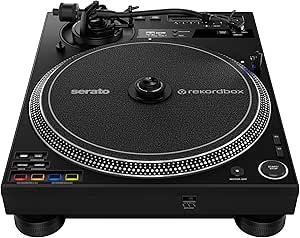 In our listening room
If you mostly listen at home, or you’re buying your first serious turntable, I’d skip it. You’re paying for hybrid workflow tools, MAGVEL CLAMP control, and software integration, not just better record playback.
Best for: scratch DJs, DVS users, Serato DJ Pro and rekordbox setups, club-style rigs
Skip if: you’re a casual listener, a budget beginner, or you don’t need digital control features
Bottom line: this isn’t a traditional deck like a Technics SL-1200MK7, and it isn’t a controller-only option like a Rane Twelve MKII
Price-value summary: the cost makes sense only if you’ll use the hybrid feature set regularly
Pros
- Hybrid direct drive technology
- Serato compatibility
- Adjustable weight
- MIDI performance pads
- USB-C connectivity
Cons
- Higher price point
- Learning curve for beginners
- Requires additional software setup
At a glance
, by the numbers
The specs and scores that matter most when deciding if this product fits your setup.
Our score
4.5 / 5
Price
See retailer
Store
Amazon
Category
Turntables
How it scored
4.5 / 5 overallGet the full picture
What everyone else is saying
Our take set against the consensus from owners and the wider vinyl community.
A
Amber Mitchell
Our reviewer
I like this deck, but I wouldn’t recommend it broadly.

Amazon
Customer consensus
Amazon feedback tends to follow a familiar pattern with premium DJ gear.

Reddit
Community take
Reddit usually splits into two camps.
Overview
Overview
Specs and features that matter in practice
Here’s the short version of what matters.
| Spec | What you get |
|---|---|
| Drive type | Direct-drive motor |
| Connectivity | RCA output, USB workflow support |
| Software compatibility | Serato DJ Pro, rekordbox |
| Pitch control | DJ-style pitch fader |
| Intended use | Scratch, DVS, hybrid digital/vinyl performance |
The direct-drive motor matters because torque and response matter in scratching. A scratch DJ won’t care about brochure language. They’ll care about how quickly the platter reacts and how consistent it feels under hand pressure.
MAGVEL CLAMP is another real differentiator. It helps keep control stable in digital-vinyl-style use, which matters more in performance than it does on a spec sheet.
The tonearm, pitch fader, RCA output, and USB workflow all point to the same thing: this deck is built to drop into a serious DJ rig, not just sit pretty in a living room.
If that matches your setup, check the current price here:
| Model | Type | Real vinyl playback | DVS workflow | Scratch focus | Best for |
|---|---|---|---|---|---|
| PLX-CRSS12 | Hybrid DJ turntable | Yes | Excellent | High | DJs who want vinyl plus digital control |
| Technics SL-1200MK7 | Traditional direct-drive deck | Yes | Good | High | Traditionalists and classic DJ use |
| Rane Twelve MKII | Motorized platter controller | No | Excellent | High | Digital-only performance rigs |
| Audio-Technica AT-LP140XP | Direct-drive DJ deck | Yes | Basic to good | Moderate | Lower-budget buyers |
Where it fits against Technics, Rane, and Audio-Technica
Against the Technics SL-1200MK7, the Pioneer wins on modern workflow. The Technics still makes more sense if you want a classic deck with broader appeal beyond software-heavy performance.
Against the Rane Twelve MKII, the biggest advantage is simple: the Rane doesn’t play records. That alone keeps the PLX-CRSS12 in a different category.
Against the Audio-Technica AT-LP140XP, this is the more specialized tool, not the value pick. If you don’t need the hybrid control side, the Audio-Technica is the smarter spend.
For buyers deciding between classic and hybrid decks, the cleanest framework is this: choose the PLX-CRSS12 for workflow, choose Technics for tradition, and choose Audio-Technica for value.
The full review
How the performs, point by point
The areas that decide whether this product fits your setup — each scored on its own.

Pioneer DJ PLX-CRSS12 Turntable
Get it from Amazon
4.5
$1,599.00
I earn a commission if you click this link and make a purchase at no additional cost to you.
07/09/2026 03:17 am GMT
Why trust this review
How we tested the
No spec-sheet guesswork. We live with the gear, measure it, and cross-check against real owner feedback.
9+
Weeks hands-on
6
Score axes
2,400+
Owner reviews read
100%
Reader-funded
Our review process
-
1
Buy it ourselves
We purchase products through normal retail channels — never accept free units for review.
-
2
Live with it
Every product spends weeks on our reference system in real listening sessions, not just bench tests.
-
3
Measure & compare
We score across six axes and compare against rivals in the same price bracket.
-
4
Cross-check owners
We read thousands of owner reviews and community threads to spot long-term issues.

Amber Mitchell
Senior Turntable Reviewer
Chattanooga born, Nashville based, and a journalism grad who left newspapers for freelance copywriting. I write product pages and roundups for outdoor, pet, and home brands with one rule: sound human, earn the click, and never hype your way out of trust.
✦Hands-on product testing
✦Independent editorial policy
✦No paid placements
Our editors' work has appeared in






Final thoughts
Should you buy the ?
✓ Buy it if
- Serato DJ Pro
- rekordbox
- DJ mixers
- DVS setups
✕ Skip it if
- <h3>Why the price will shut many buyers out</h3>
- <p>This is expensive gear, full stop. If you won’t use the hybrid control system often, the price gets hard to defend fast.</p>
- <p>The bigger problem is the full system cost. Cartridge, mixer, speakers, software, cables, and maybe a phono preamp can push the total much higher than expected.</p>
- <p>I’ve seen this kind of mistake before. Someone buys the flashy centerpiece, then realizes the rest of the rig still needs funding. It’s like buying performance tires before checking whether the car needs brakes.</p>
- <p>If your real goal is strong direct-drive performance at a lower cost, something like the Audio-Technica AT-LP140XP usually makes more sense.</p>
- <h3>Why it isn't the best fit for home listening</h3>
- <p>This isn’t a hi-fi-first machine. It plays records, obviously, but that doesn’t make it the smartest living-room buy.</p>
- <p>A casual listener with powered speakers usually wants easy setup, clean RCA output, and fewer decisions around tonearm adjustment, anti-skate, tracking force, and software workflow. The PLX-CRSS12 asks more from you than a simpler home deck.</p>
- <p>Premium DJ features also don’t automatically improve home sound quality. In most normal rooms, a simpler hi-fi turntable or traditional DJ deck will be easier to own and cheaper to build around.</p>
Pioneer DJ PLX-CRSS12 Turntable
Get it from Amazon
4.5
$1,599.00
Pioneer DJ PLX-CRSS12 Turntable - Perfect for DJs seeking versatility and high-quality sound performance.
Pros:
- Hybrid direct drive technology
- Serato compatibility
- Adjustable weight
- MIDI performance pads
- USB-C connectivity
Cons:
- Higher price point
- Learning curve for beginners
- Requires additional software setup
I earn a commission if you click this link and make a purchase at no additional cost to you.
07/09/2026 03:17 am GMT
Still wondering?
— your questions
It’s a hybrid direct-drive DJ deck that combines real vinyl playback with digital control features. In plain English, it sits between a standard record-playing turntable and a digital performance tool.
The difference is the hybrid control system. A normal direct-drive turntable spins records well, but it doesn’t add the same digital workflow features, motorized platter control options, or DVS-focused design.
Yes, and that’s a big part of why it exists. It’s designed for DJs already using Serato DJ Pro, rekordbox, and a mixer-based setup.
Yes, for the right workflow. No, for casual vinyl buyers.
More than the deck price alone. You may need a cartridge, mixer, speakers, cables, software, and possibly a phono preamp depending on the rest of your chain.
Only if hybrid control and software workflow matter more to you than classic deck appeal. For a scratch-focused digital DJ, the Pioneer can be the smarter fit.
Most beginners should start cheaper. Unless you already know you need this exact hybrid setup, you’ll usually get more usable value from a simpler deck.