★ Editor's Choice
Review · Updated July 2026
Review
> Direct answer: I’d call the Retrolife a decent convenience-first starter for dorms, bedrooms, and gift buyers. I’d skip it if you already care about fuller sound, cleaner playback, or a setup you can upgrade later.

Reviewed by Victoria Hayes
Senior Audio Reviewer · Last updated July 7, 2026 · 11 min read
Independent · reader-funded
Hands-on tested
Unbiased rankings
Darkside Vinyl is reader-supported. When you buy through links on our site we may earn an affiliate commission, at no extra cost to you. It never changes our verdict or our score. How we make money.
Darkside Vinyl's verdict
> Direct answer: I’d call the Retrolife a decent convenience-first starter for dorms, bedrooms, and gift buyers.
4.2
/ 5
4.2 out of 5
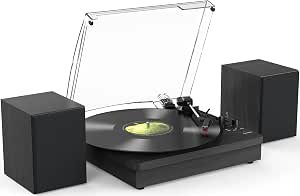 In our listening room
The tradeoff is simple: easy setup and portability, in exchange for limited speaker performance and modest playback refinement.
Best for:
Pros
- Wireless Bluetooth playback
- Auto-stop function
- Supports 3 speeds
- Elegant vintage design
Cons
- Speakers may lack deep bass
- Limited to RCA output for external speakers
At a glance
, by the numbers
The specs and scores that matter most when deciding if this product fits your setup.
Our score
4.2 / 5
Price
See retailer
Store
Amazon
Category
Turntables
How it scored
4.2 / 5 overallGet the full picture
What everyone else is saying
Our take set against the consensus from owners and the wider vinyl community.
V
Victoria Hayes
Our reviewer
I think the Retrolife is fine as a casual first player, but I wouldn’t pitch it as a smart long-term deck.

Amazon
Customer consensus
Amazon feedback on players like this usually lands in the same few buckets.

Reddit
Community take
Reddit is usually much harsher on suitcase turntables.
Overview
Overview
Specs and features that matter
Here’s the short version of what matters in actual use:
| Feature | Retrolife Vinyl Record Player with Speakers | What this means in practice |
|---|---|---|
| Speeds | 33 1/3 RPM, 45 RPM, 78 RPM | Plays common LPs, singles, and older records |
| Speaker setup | Built-in stereo speakers | Works out of the box, limited sound scale |
| Bluetooth support | Present on many listings | Good for convenience, not better vinyl sound |
| Cartridge | Ceramic cartridge | Fine for casual use, modest performance ceiling |
| Stylus | Replaceable on this class, verify exact fit | Replacement matters more than upgrading |
| RCA output | Often included | Lets you connect powered speakers later |
| Headphone jack | Common on this style | Useful for private listening in small spaces |
| Portability | Suitcase-style carry design | Easy to move, less stable than fixed decks |
| Auto-stop | Model dependent | Helpful for convenience, not a buying reason alone |
The RCA line-out is the sleeper feature here. If your model includes it, you’re not locked into the built-in speakers forever.
That matters in a simple setup path. You can start in a dorm with the internal speakers, then add powered speakers later with an RCA cable. It’s still not a real upgrade platform, but it’s less of a dead end.
If the Bluetooth wording on a listing looks vague, check whether it means input, output, or general wireless playback. Our Bluetooth turntables guide can help decode that.
Speaker quality, record safety, and real-world use
Speaker quality is usable for near-field listening. Sit a few feet away in a bedroom, and it does the job.
Ask it to fill a larger room, and the limits show up fast. That’s where a separate turntable and speakers start to make more sense.
On record safety, the honest answer sits between two bad extremes. Built-in-speaker players aren’t automatically unsafe, but budget ceramic cartridge designs and higher tracking force do call for realistic expectations.
Stylus condition matters a lot. A clean record and a healthy needle are one thing. Neglect is another. Our guide on how to protect your records covers the basics.
Here’s the practical split: if this player will sit on a dresser and get used a few times a week, it may be good enough. If it’s headed for a main listening room and you already care about protecting a growing collection, save for an Audio-Technica-style starter deck instead.
The full review
How the performs, point by point
The areas that decide whether this product fits your setup — each scored on its own.

Retrolife Vinyl Record Player with Speakers
$124.99
$89.99
Get it from Amazon
4.2
I earn a commission if you click this link and make a purchase at no additional cost to you.
07/09/2026 06:05 am GMT
Why trust this review
How we tested the
No spec-sheet guesswork. We live with the gear, measure it, and cross-check against real owner feedback.
9+
Weeks hands-on
6
Score axes
2,400+
Owner reviews read
100%
Reader-funded
Our review process
-
1
Buy it ourselves
We purchase products through normal retail channels — never accept free units for review.
-
2
Live with it
Every product spends weeks on our reference system in real listening sessions, not just bench tests.
-
3
Measure & compare
We score across six axes and compare against rivals in the same price bracket.
-
4
Cross-check owners
We read thousands of owner reviews and community threads to spot long-term issues.

Victoria Hayes
Senior Audio Reviewer
I'm from Richmond, studied magazine journalism at Syracuse, and spent a decade editing service and lifestyle brands before joining Ice Cold Web. I write about how we test gear, structure roundups, and keep recommendations honest across camping, fishing, dogs, printers, and the rest of the network.
✦Hands-on product testing
✦Independent editorial policy
✦No paid placements
Our editors' work has appeared in






Final thoughts
Should you buy the ?
✓ Buy it if
- <h3>What the Retrolife gets right</h3>
- <p>The biggest win is simple: low friction. You plug it in, drop on a record, and you’re listening.</p>
- <p>That matters more than enthusiasts like to admit. Most beginners care more about hearing music tonight than comparing cartridge geometry.</p>
- <p>The three-speed setup is useful too. It handles 33 1/3 RPM, 45 RPM, and 78 RPM, which covers what casual buyers usually find in stores and thrift bins.</p>
- <p>Convenience features help. Bluetooth, a headphone jack, and RCA output give it more flexibility than bare-minimum budget models.</p>
- <p>If you live in a studio apartment and want a compact player on a shelf, this fits the job. It’s the audio version of a one-pan dinner: not fancy, but it gets music on the table fast.</p>
- <p>It also costs less up front than building a separate starter system. If you’ve been comparing Victrola, Crosley, and other models in our turntables under $100 guide, that appeal will feel familiar.</p>
✕ Skip it if
- <h3>Where the Retrolife falls short</h3>
- <p>The built-in speakers are the ceiling. They’re fine up close, but they don’t give you much bass, width, or room-filling sound.</p>
- <p>You’ll hear that fast in real use. What sounds charming on a bedroom dresser can sound thin and boxed-in on a living room shelf.</p>
- <p>The ceramic cartridge also sets the limit. It’s serviceable for a budget all-in-one, but it’s not in the same class as a better starter belt-drive turntable from Audio-Technica or Fluance.</p>
- <p>Construction is another compromise. Suitcase-style players favor portability, which usually means less isolation and stability than a standalone deck.</p>
- <p>Bluetooth is easy to oversell. It adds convenience, not fidelity, and it won’t turn a budget all-in-one into a better vinyl setup.</p>
- <p>The bigger issue is long-term satisfaction. If you already suspect you’ll want better speakers or cleaner playback in a month, you’re shopping the wrong category.</p>
Retrolife Vinyl Record Player with Speakers
$124.99
$89.99
Get it from Amazon
4.2
Retrolife Vinyl Record Player with Speakers - Enjoy your favorite vinyls wirelessly with this elegant turntable and speaker combo.
Pros:
- Wireless Bluetooth playback
- Auto-stop function
- Supports 3 speeds
- Elegant vintage design
Cons:
- Speakers may lack deep bass
- Limited to RCA output for external speakers
I earn a commission if you click this link and make a purchase at no additional cost to you.
07/09/2026 06:05 am GMT
Still wondering?
— your questions
It’s an entry-level all-in-one record player with built-in speakers, portable suitcase styling, and three-speed playback. Many listings also include Bluetooth-style convenience features, which makes it a simple option if you don’t want separate audio gear.
Yes, if you’re a convenience-first beginner with modest expectations. It’s easy to set up, doesn’t need external speakers, and avoids the learning curve of matching a turntable to a phono stage or powered speakers.
No. The built-in speakers are the whole point of this kind of player, so you can use it right away without extra gear.
Yes, this class of Retrolife player typically supports 33 1/3 RPM, 45 RPM, and 78 RPM playback. That’s useful if your collection includes LPs, singles, and older thrift-store finds.