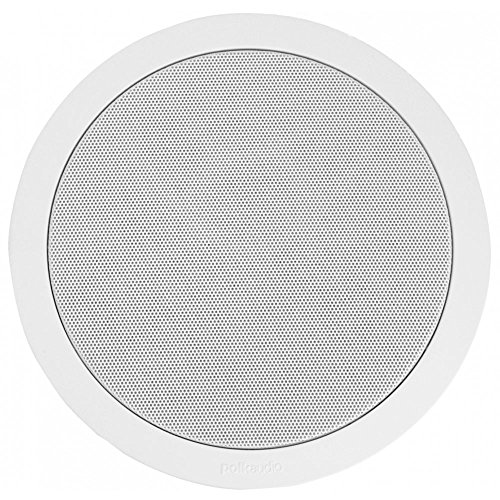
The Polk Audio MC60 In-Ceiling Speaker is a passive flush-mount speaker built for distributed home audio and room-fill sound. For vinyl, that means it can work well, but only as part of a full receiver-based setup.
The hardware is simple: a 6.5-inch woofer, a 0.75-inch tweeter, a paintable grille, and in-ceiling installation. The real question isn't whether the specs look fine on paper. It's whether they match how you actually listen.
Signal chain for records: turntable → phono preamp if needed → receiver or amplifier → speaker wire → MC60 pair. If you need help sorting that out, start with our phono preamp guide and turntable setup guide.
| Option |
Bass |
Stereo Imaging |
Installation Effort |
Best Use Case |
| Polk Audio MC60 |
Moderate |
Fair |
High |
Hidden whole-room music |
| Bookshelf speakers |
Better for the size |
Strong |
Low |
Focused vinyl listening |
| Larger in-ceiling alternative |
Better than MC60 |
Fair |
High |
Bigger rooms needing more output |
What the specs mean in practice
A 6.5-inch woofer usually means decent fill, not huge bass. The 0.75-inch tweeter helps clarity, but placement still decides how much detail you hear from the couch.
Dynamic Balance keeps the tonal balance friendly. It doesn't turn a ceiling speaker into a direct-fire stereo pair.
What you need for a vinyl setup
You'll need a turntable, a phono preamp if the turntable or receiver doesn't already include one, and a stereo receiver or amplifier. Then you need speaker wire and a realistic install plan.
If you own the home, have attic access, and already use a receiver, this can work cleanly. If you're renting and want a simple plug-in setup, look elsewhere.
Better alternatives for some buyers
If imaging matters most, go with bookshelf speakers. If you need more output for a larger room, the Polk Audio RC80i is the more natural comparison.
If budget is tight, Micca M-8C is worth a look. If you want another value pick in this category, Yamaha NS-IW280CWH is a practical option.