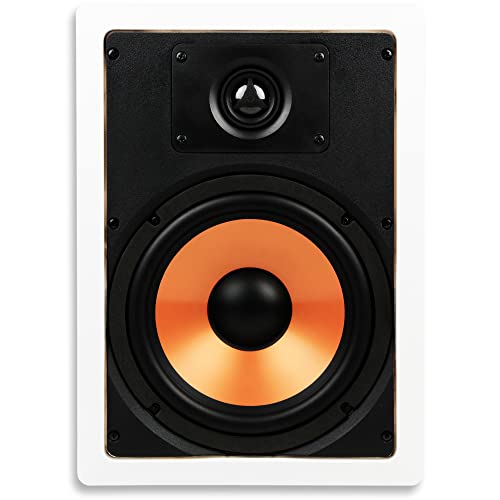
When it comes to sound quality, the Micca M-8S really holds its own for a budget in-wall speaker. The 8-inch woofer provides a surprising amount of bass weight, which is something I appreciate when playing vinyl. It won’t shake the walls like a dedicated subwoofer setup, but it offers a warm, full sound that fills the room nicely, making it a great option for casual listening sessions.
The passive design means you’ll want to pair these with a decent stereo receiver or amplifier, which adds a bit of complexity to the setup. But once you’ve got that sorted, the M-8S delivers a rich, engaging listening experience that’s perfect for enjoying your favorite records. Just keep in mind that if you’re an audiophile seeking pinpoint imaging and detail, you might find better options with traditional bookshelf speakers.
One of the standout features of the Micca M-8S is its build quality and design. The flush-mount grilles are sleek and unobtrusive, allowing the speakers to blend seamlessly into your walls. I love that they come with paintable grilles, so you can customize them to match your decor, making them practically invisible in a living space where aesthetics matter.
In-wall speakers like these really help to declutter a room. Since they’re mounted in the wall, you don’t have to worry about shelves or stands taking up valuable space. It’s a bit like having recessed lighting versus a floor lamp—both provide light, but one cleans up the whole room in a way that the other can’t.
Here’s where things can get a little tricky. While the Micca M-8S is designed for a clean installation, you need to be prepared for some serious planning. Cutting into drywall and routing speaker wire means you’re committing to a specific placement, and you won’t have the flexibility to nudge things around like you would with bookshelf speakers.
In practice, the Micca M-8S shines in mixed-use rooms where you might want to watch TV and listen to vinyl without visual clutter. They provide a solid audio experience without dominating the space. I found that they worked particularly well in my living room, where visible gear can create friction with my partner, who prefers a minimalist aesthetic.
They’re not plug-and-play, so you’ll need to work through the signal path from your turntable to your receiver, but once you get everything set up, the M-8S delivers a smooth, enjoyable listening experience. They do a commendable job of filling the room with sound, making them perfect for hosting friends or just enjoying a late-night listening session.
05Upgrade Path / Who It's For
The Micca M-8S is a fantastic option for anyone looking to upgrade from an all-in-one record player setup without breaking the bank. If you already own a stereo receiver or plan to buy one, these speakers can be a smart choice, especially if you want to keep your living space looking clean and uncluttered.
However, if you’re a serious music listener who prioritizes high-fidelity sound and imaging, you might want to consider investing in bookshelf speakers instead. The M-8S is great for casual listening, but if you’re looking to dive deep into your vinyl collection and experience every nuance, you may find yourself wanting more in terms of detail and separation. Just keep that in mind as you weigh your options.