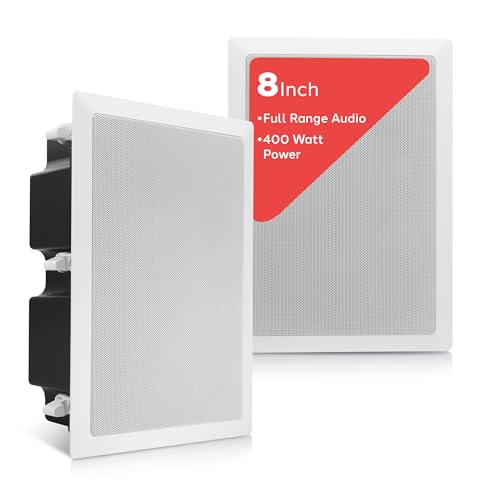
When it comes to sound quality, the Pyle PDIW87s are a mixed bag. They offer decent audio performance for background music and casual listening, but don’t expect them to compete with well-placed bookshelf speakers. The 8-inch woofer does a commendable job filling a room with sound, making them suitable for whole-room audio, but the stereo imaging can be quite weak, especially if they’re not installed in the best spots.
If you’re using these for a home theater setup, they can work well enough for movie nights, but serious audiophiles might find the sound lacking in depth and clarity. In my experience, sound quality really hinges on your receiver and how you position these speakers, which can be a bit of a gamble.
The Pyle PDIW87s feature a clean, flush-mount grille that keeps your ceiling looking uncluttered, which is a huge plus if you want to maintain a sleek aesthetic. They’re built to be unobtrusive, blending into your environment without taking up floor space. However, keep in mind that once these babies are installed, they’re there for the long haul, and you won’t have the flexibility to upgrade without some serious work.
Installing the Pyle PDIW87s isn’t exactly a walk in the park. You’ll need to cut holes in your ceiling and run speaker wire, which can quickly turn into a project if you’re not prepared. This isn’t a plug-and-play situation; you’ll want to make sure you have the right cutout size and enough mounting depth before you dive in.
For those who think they can just slap these speakers up and start jamming, be warned: it’s not that simple. I’ve seen plenty of folks trip up on the installation process, thinking they can directly connect them to a turntable. Remember, you’ll need a stereo receiver or amplifier in the mix, and possibly a phono preamp, which adds more layers to your setup.
04Connectivity & Features
The Pyle PDIW87s are passive speakers, meaning they need to be connected to a stereo receiver or amplifier to work, which is fine if you already have one. This makes them a good fit for those looking to create an audio setup without visible speakers cluttering the room. However, if you’re starting fresh with a turntable and don’t already own a receiver, you’re going to need to budget for that as well.
One downside here is that once you’ve installed these in your ceiling, upgrading your system can become a hassle. You’re not going to be swapping these out for a better model without some serious effort, so think carefully about your long-term plans before deciding to go this route.
In everyday use, the Pyle PDIW87s shine as a solution for casual listening and filling a space with sound. If you’re hosting a gathering or just want some background music while you’re working, they do the job. However, if you’re looking for a more immersive listening experience, especially for vinyl, you might find yourself disappointed.
06Upgrade Path / Who It's For
The Pyle PDIW87s are best suited for homeowners looking to integrate sound into their space without the visual clutter of traditional speakers. They’re perfect for those who already have a stereo receiver and want to add some hidden audio options. If you’re someone who values a clean aesthetic and casual listening, these might be just what you need.