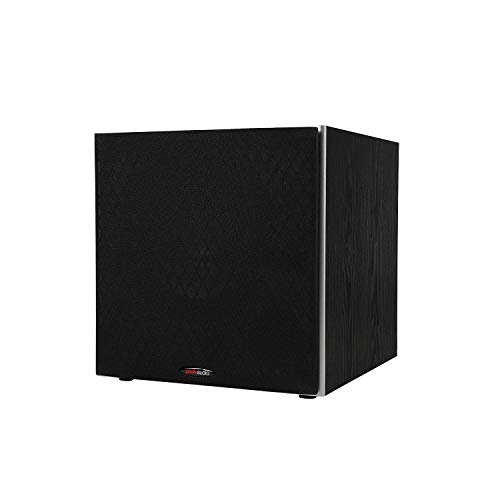
When it comes to sound, the Polk Audio PSW10 has its strengths and weaknesses. It definitely adds some much-needed weight to bass-heavy tracks, making kick drums and bass guitars resonate in a way that smaller speakers just can’t manage. However, if you’re looking for tight, refined bass for music-first listening, you might find the PSW10 a bit lacking; it can get boomy and muddy if you’re not careful with placement and settings.
In my experience, the sub shines when paired with compact bookshelf speakers that sound clear but can feel thin on their own. It’s like giving your music a little extra foundation, which is especially noticeable on vinyl records where the warmth of analog can really benefit from that low-end support.
The PSW10 sports a classic, front-firing design that’s simple and straightforward. It doesn’t win any awards for aesthetics, but it’s built solidly enough for what it is. The older design does mean it lacks some of the modern flair you might find in newer budget subs, but honestly, I’m more interested in how it performs in my space than how it looks.
That said, it’s not the most compact sub out there. If you’re working with a small room, you’ll need to be mindful of where you place it. I found it best to avoid the corners if possible—otherwise, the bass can quickly overwhelm the overall sound signature.
Setting up the PSW10 is a breeze, which is a huge plus for beginners. You have both line-level RCA and speaker-level inputs, making it versatile enough to work with older gear. Just connect it to your receiver or amplifier, and you’re good to go; it’s a straightforward path that takes the guesswork out of the equation.
The built-in crossover control and phase switch are nice touches that help you blend the sub with your main speakers. However, I found that if you set the crossover too high or neglect to fine-tune the phase, things can get messy in terms of clarity. It’s a small learning curve, but worth it for the sound you can achieve.
04Connectivity & Features
This subwoofer is equipped with the necessary inputs to fit into a variety of setups, which is great for someone just starting out. That said, it’s important to remember that most turntables won’t connect directly to the PSW10. You’ll typically route your turntable through a phono preamp or receiver first, then out to the sub, which can add a few extra steps for those new to vinyl.
In daily use, the PSW10 does its job of enhancing your listening experience, especially when diving into genres like rock or electronic music. I found it particularly satisfying when cranking up some classic vinyl records; it really brings that low-end punch that smaller speakers lack. However, I did notice it can get a bit overwhelming if not placed correctly or if the crossover settings are neglected.
For casual listening sessions, it’s a solid performer, but if you’re an audiophile or someone who craves precision, you might find yourself wanting something a bit more refined. It’s best suited for those who want an easy, affordable way to add bass to their setup without getting too deep into the weeds of audio gear.
06Upgrade Path / Who It's For
The PSW10 is a fantastic entry point for those dipping their toes into the world of home audio, particularly for vinyl lovers looking to enhance their sound. It pairs well with a variety of compact speakers, making it a good match for small to mid-sized rooms. However, if you’re planning to expand your system or upgrade down the line, you might want to keep an eye on newer options from brands like Dayton Audio or Sony, which could offer better value and performance.
Ultimately, if you’re just starting out and want to add some low-end support without breaking the bank, the PSW10 is worth considering. Just be mindful of its limitations in larger spaces and keep an ear out for that booming bass; with a little tweaking, it can really bring your records to life.