★ Editor's Choice
Review · Updated July 2026
Review
I’d buy the XT20 for a first passive vinyl system if you want a fuller, smoother sound and already plan to use a stereo receiver or amp.

Reviewed by Derek Holt
Lead Buying Guide Editor · Last updated July 7, 2026 · 11 min read
Independent · reader-funded
Hands-on tested
Unbiased rankings
Darkside Vinyl is reader-supported. When you buy through links on our site we may earn an affiliate commission, at no extra cost to you. It never changes our verdict or our score. How we make money.
Darkside Vinyl's verdict
I’d buy the XT20 for a first passive vinyl system if you want a fuller, smoother sound and already plan to use a stereo
4.5
/ 5
4.5 out of 5
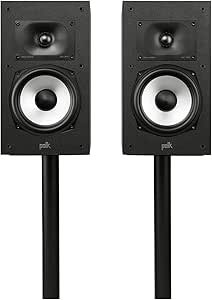 In our listening room
It fits best in small to medium rooms. I think it makes the most sense for people who listen for hours and don’t want bright treble wearing them out.
Best for:
Pros
- Rich
- clear audio
- Modern design
- Versatile placement options
- Dolby Atmos compatible
Cons
- Limited bass without subwoofer
- Requires speaker stands for optimal placement
At a glance
, by the numbers
The specs and scores that matter most when deciding if this product fits your setup.
Our score
4.5 / 5
Price
See retailer
Store
Amazon
Category
Turntables
How it scored
4.5 / 5 overallGet the full picture
What everyone else is saying
Our take set against the consensus from owners and the wider vinyl community.
D
Derek Holt
Our reviewer
I like the XT20 because it doesn’t fake excitement with boosted treble.

Amazon
Customer consensus
Amazon reviews usually land in the same place.

Reddit
Community take
Reddit is usually more blunt, and that’s useful.
Overview
Overview
Specs that matter for a vinyl setup
Here’s the short version of the numbers that actually affect setup:
| Spec | Polk Monitor XT20 |
|---|---|
| Driver size | 5.25-inch woofer |
| Tweeter type | Terylene dome tweeter |
| Impedance | 4 and 8 ohm compatible |
| Sensitivity | 87 dB |
| Frequency response | 38 Hz to 40 kHz |
| Best-use room size | Small to medium rooms |
Sensitivity tells you how easily the speaker gets loud with a given amount of power. At 87 dB, the XT20 isn’t unusually demanding, but it still likes a decent stereo receiver more than a tiny bargain amp.
Impedance matters for receiver matching, and this one is manageable for mainstream stereo and AV receiver gear. The frequency response number looks nice on the box, but the real takeaway is simple: these have enough bass extension to sound fuller than many compact entry-level options.
Setup and compatibility notes
The signal chain is simple: turntable, then phono preamp if needed, then receiver or amp, then the speakers.
If you’re using a Fluance table without a built-in phono stage, you’ll need that phono preamp somewhere in the chain. If you’ve got an Audio-Technica with a built-in preamp, you can usually run into a standard receiver input and keep moving.
The binding posts are straightforward, and basic speaker wire works fine. Banana plugs aren’t required, but they do make setup cleaner if you move gear around much.
These won’t connect directly to most turntables. If you need help sorting out that chain, start with our turntable setup guide and our guide on what a phono preamp does.
Polk Monitor XT20 vs Sony SS-CS5 vs Klipsch R-51M
| Speaker | Sound character | Best fit |
|---|---|---|
| Polk XT20 | Smooth, fuller, relaxed | Long vinyl sessions, small to medium rooms |
| Sony SS-CS5 | Airy, lighter, budget-friendly | Lower-cost systems, lighter presentation |
| Klipsch R-51M | Brighter, forward, energetic | Buyers who want more bite and attack |
If you want a softer edge and more body, I’d take the Polk over the Sony SS-CS5.
If you want more sparkle and a more in-your-face presentation, the Klipsch R-51M is the obvious alternative.
If you’ve got more budget, the ELAC Debut 2.0 B5.2 is a real step up. For a first passive setup, though, I think the XT20 stays in the sweet spot for value.
Best for / Not for
Best for:
- First passive turntable system
- Bedroom, office, apartment, or small living room
- Long listening sessions with smoother treble
- Buyers who already own, or plan to buy, a receiver
Not for:
- Direct turntable-to-speaker buyers
- Large open rooms
- People who want extra-bright highs or hard-hitting punch
- Anyone chasing the simplest all-in-one setup
If you’ve got a decent deck and you’re ready to move past basic powered desktop speakers, I think this Polk pair is a smart next step.
The specs matter here. Impedance, sensitivity, and the rear port all affect receiver matching and placement.
If the XT20 sounds close to what you want, the next step is figuring out whether its strengths match your room and receiver.
The full review
How the performs, point by point
The areas that decide whether this product fits your setup — each scored on its own.

Polk Monitor XT20 Bookshelf Speakers
Get it from Amazon
4.5
$279.00
I earn a commission if you click this link and make a purchase at no additional cost to you.
07/08/2026 10:04 pm GMT
Why trust this review
How we tested the
No spec-sheet guesswork. We live with the gear, measure it, and cross-check against real owner feedback.
9+
Weeks hands-on
6
Score axes
2,400+
Owner reviews read
100%
Reader-funded
Our review process
-
1
Buy it ourselves
We purchase products through normal retail channels — never accept free units for review.
-
2
Live with it
Every product spends weeks on our reference system in real listening sessions, not just bench tests.
-
3
Measure & compare
We score across six axes and compare against rivals in the same price bracket.
-
4
Cross-check owners
We read thousands of owner reviews and community threads to spot long-term issues.

Derek Holt
Lead Buying Guide Editor
I started in crawl spaces as an HVAC tech outside Columbus after growing up in Zanesville, Ohio. Fifteen years in the field taught me how tradespeople talk; marketing taught me what actually makes a homeowner call. I write copy that sounds like both.
✦Hands-on product testing
✦Independent editorial policy
✦No paid placements
Our editors' work has appeared in






Final thoughts
Should you buy the ?
The XT20 is worth it if you want a first real passive setup and don’t mind adding a stereo receiver.
If you’re building a modest apartment or bedroom system and want room to upgrade later, I think this is a smart starting point. If you want one-box simplicity and fewer cables, powered speakers are still the better fit.
✓ Buy it if
- <h3>What the Polk XT20 does well</h3>
- <p>The first thing I like is the tuning. The Terylene tweeter stays smooth, so cymbals, vocals, and older pressings don’t get sharp at normal volume.</p>
- <p>That matters with vinyl because a lot of entry-level systems already lean thin. A softer top end makes long sessions easier to enjoy.</p>
- <p>The 5.25-inch woofer gives you respectable bass weight for the size. You won’t get floorstander depth, but you do get enough body for soul, classic rock, jazz, and indie in a bedroom or office.</p>
- <p>Midrange is another win. Vocals and guitars sit where they should, and imaging is solid if you give the pair some space on stands or a sturdy shelf.</p>
- <p>Compared with something like the Klipsch R-51M, I find the XT20 less aggressive and less likely to turn bright records into a chore.</p>
✕ Skip it if
- <h3>Where the Polk XT20 falls short</h3>
- <p>The big catch is simple: these are passive speakers. You need a receiver or amp, plus speaker wire, and maybe banana plugs if you want cleaner connections.</p>
- <p>That raises the real system cost. If you want plug-and-play, powered bookshelf speakers still win on convenience.</p>
- <p>The rear port also makes placement less forgiving. If you shove them tight against a wall or into a crowded bookcase, bass can get thick and loose.</p>
- <p>I see this a lot in small apartments. Someone buys a “bookshelf” speaker, puts it on an actual bookshelf with no breathing room, then blames the speaker when the low end gets muddy.</p>
- <p>The cabinet is also bigger than some buyers expect. That extra size helps bass, but it can be a problem if your shelf space is already tight.</p>
- <p>Last, the XT20 isn’t a detail monster. If you want a lively, forward sound with more sparkle and attack, it may feel a little too polite.</p>
Polk Monitor XT20 Bookshelf Speakers
Get it from Amazon
4.5
$279.00
Polk Monitor XT20 Bookshelf Speakers - Experience immersive sound with these compact, stylish bookshelf speakers for music and movies.
Pros:
- Rich
- clear audio
- Modern design
- Versatile placement options
- Dolby Atmos compatible
- Affordable home theater setup
Cons:
- Limited bass without subwoofer
- Requires speaker stands for optimal placement
I earn a commission if you click this link and make a purchase at no additional cost to you.
07/08/2026 10:04 pm GMT
Still wondering?
— your questions
They’re passive bookshelf speakers from Polk Audio with a 5.25-inch woofer and a Terylene tweeter.
Yes, if you pair them with the right stereo receiver or amp. Their smoother sound works well for long record sessions, especially in small to medium rooms.
Yes, they need an amplifier or receiver because they’re passive. Most turntables can’t power speakers directly, so plugging RCA cables straight from the turntable into the XT20 won’t do anything.
They usually sound very good in a small room if you give them some breathing room from the wall.
Plan for more than just the speaker pair. You may need a stereo receiver or amp, speaker wire, and possibly a phono preamp if your turntable doesn’t have one built in.
You always need amp power somewhere because the speakers are passive. That can come from a stereo receiver, an integrated amplifier, or even an AV receiver.
That depends on what you care about more. If you like the idea of upgrading piece by piece later, the XT20 route usually gives you more long-term value.
Yes, for a lot of people they are. They fit small to medium spaces well, and they don’t need huge volume to sound full.