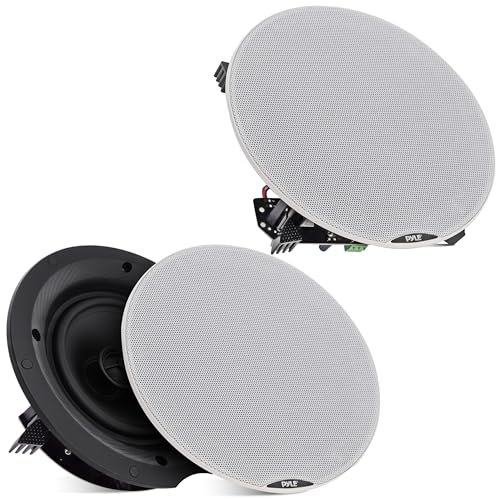
Quick specs and what they mean in practice
| Spec |
What you're getting |
| Speaker type |
Bluetooth-enabled in-wall speaker pair |
| Power source |
One powered side with built-in amplifier |
| Inputs |
RCA input and 3.5mm auxiliary input |
| Bluetooth support |
Yes |
| Installation type |
Flush-mount, in-wall install |
| Best use case |
Casual room audio, not a main vinyl listening rig |
On paper, that looks flexible. In practice, it only helps if your source is sending the right signal.
A turntable with a built-in preamp can usually feed the RCA input just fine. A phono-only deck can't do that without extra help.
Turntable compatibility, the part most buyers miss
Yes, this speaker system can work with a turntable. No, it doesn't replace every other piece of gear.
If your turntable has a built-in phono preamp, like many entry-level Audio-Technica or Sony models, you can usually run RCA straight into the powered side. If your deck only outputs phono level, you'll need an external preamp first or the sound will be weak and thin.
Bluetooth turntables are a separate case. They may pair, but wired is usually simpler and more reliable if the turntable already has proper line output.
A good real-world example is the Audio-Technica AT-LP60X. Turn its built-in preamp on, and this setup gets much easier. A more traditional Fluance deck set to phono output needs more planning. If you need help sorting that out, start with the turntable setup guide.
Installation reality check
Before you buy, think through the install:
- You need to cut the wall to fit the speakers
- You need a clean wiring path between both sides
- You need power access for the active side
- You need to check stud spacing and cutout dimensions
- If you rent, this may be a non-starter
This is why the sticker price can fool people. Installed audio is like built-in shelving: clean when it's done, but a lot less forgiving once the holes are cut.
A homeowner doing a remodel may think that's a fair trade. A renter in an apartment probably won't.