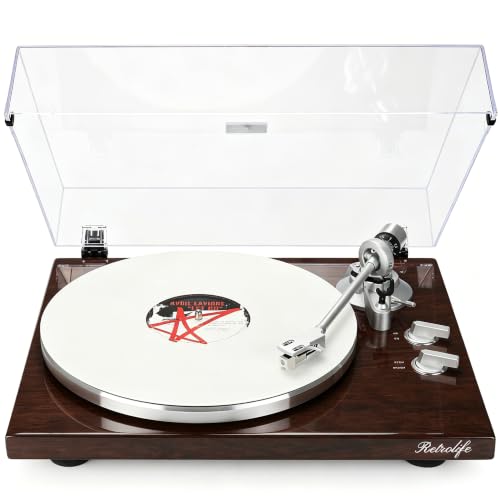
When it comes to sound quality, the Retrolife AT-3600L is a step up from the usual suitcase models that flood the market. The Audio-Technica AT-3600L cartridge is a big deal here; it gives you a much more credible audio experience compared to those ceramic cartridges that sound like they’re scraping the bottom of the barrel. In practice, this means your records will start playing from a better place, and you have a wider range of replacement stylus options if you ever need to swap it out.
However, while the cartridge is a solid choice, speed stability can be a mixed bag. The belt-drive layout is a good sign that you’re dealing with a real starter turntable rather than a toy, but it doesn’t guarantee perfect speed. I’ve noticed that if the build quality isn’t up to par, you might still experience some wobbliness or noise that detracts from the listening experience.
The overall build of the Retrolife is where the budget compromises start to show themselves. The plinth feels a bit flimsy, which can lead to unwanted vibrations that affect sound quality. While it aims to mimic the entry-level component decks, it doesn’t quite match the sturdiness of more established brands like Audio-Technica.
This isn’t to say the design is a total flop, but I’d definitely recommend being cautious. If the deck feels off or not as solid as you’d hoped, you might spend more time figuring out if that’s just how it is or if it’s a quality-control issue. It’s worth keeping in mind that a good cartridge can’t make up for a weak foundation.
Setting up the Retrolife is a breeze, making it a great option for beginners who want to avoid the complexities of a full-fledged audio system. The RCA output gives you the flexibility to connect to powered speakers or a receiver without too much fuss. Plus, Bluetooth capability is a nice touch for those who want to test out wireless options later on.
04Connectivity & Features
The connectivity options on the Retrolife are solid for a beginner setup. You can easily hook it up to powered speakers with RCA inputs, which is usually the simplest way to get going. If you decide to connect it to a receiver, just make sure you’re using the line-level output if it has a built-in preamp.
Bluetooth is another feature that adds some flexibility, but it’s not without its quirks. Pairing can be hit or miss, and you might run into latency issues that could make the wireless experience less convenient than expected. I’ve found that RCA often ends up being the cleaner, more reliable path for sound quality, especially if you’re serious about getting the best audio experience.
In day-to-day use, the Retrolife can be a great companion for casual listening sessions. It’s designed for those who want a simple living-room starter setup without the hassle of a full receiver. It’s perfect for anyone who wants to enjoy vinyl without diving too deep into the audiophile rabbit hole.
However, keep in mind that while it’s user-friendly, you might still encounter some quirks that can be a bit frustrating. If you’re someone who values consistency and reliability, you may find yourself wishing for the kind of long-term confidence that comes with more established brands. Just be prepared for the occasional hiccup as you get to know your new turntable.