The Sonos Five sounds like a speaker that was built to fill a real room, not just impress you for thirty seconds in a demo. I found the low end to be the big story here: it digs deep, stays controlled, and gives records a solid foundation without turning everything into a bloated mess.
What I like most is how easy it is to live with its sound. It has enough warmth to make older pressings feel forgiving, but it still keeps vocals and guitars clear enough that I never felt like I was losing detail just to get that fuller presentation.
It also gets properly loud without sounding strained in the way a lot of wireless speakers do when you push them. For vinyl, that matters, because I want something that can keep the energy up when the volume climbs, not collapse into a harsh, boxy blur.
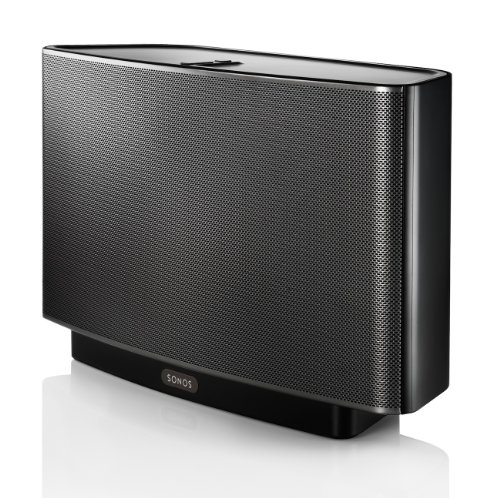
The Five looks and feels like a serious piece of kit, not a portable speaker pretending to be hi-fi. It has that clean Sonos styling that disappears visually in a room, but the weight and solidity remind you it’s meant to stay put and do one job well.
I also appreciate that it doesn’t try to be cute or overdesigned. It’s the kind of speaker you can drop on a shelf, credenza, or stand and just let it blend into the space without becoming the center of attention.
Physically, it gives off the impression that it can take daily use without fuss. Nothing about it feels flimsy or overly delicate, which is exactly what I want from gear that’s going to sit in a listening room and get used every day.
Sonos still has one of the least annoying setup experiences in consumer audio, and the Five benefits from that. I didn’t have to wrestle with a bunch of confusing menus or old-school pairing headaches just to get music playing.
Once it’s in the system, living with it is pretty frictionless. I like that it just becomes part of the room’s routine, whether I’m throwing on a record, streaming a playlist, or using it for casual background listening while doing something else.
The app-driven approach won’t be for everyone, especially if you prefer a more traditional hi-fi workflow, but I found it reliable. For a lot of people, that simplicity is the whole point, and the Five makes a strong case for it.
04Connectivity and System Fit
This is where the Five makes its identity pretty clear: it’s built around the Sonos ecosystem first. If you already live in that world, it slots in beautifully and gives you a very polished multiroom setup with almost no drama.
For vinyl listeners, the line-level input is the key feature, because it lets you hook up a turntable setup without turning the whole thing into a science project. I like that it can serve as a serious playback speaker for records while still remaining useful for streaming and whole-home audio.
The tradeoff is obvious: if you want a speaker that plays nicely with every random source and every old-school audio habit, this is not the most open-ended option. It rewards people who are happy to work inside the Sonos system, and that’s a pretty specific kind of buyer.
The Sonos Five makes the most sense for someone who wants one speaker to do a lot of things well, especially in a living room, den, or secondary listening space. If your record collection lives alongside streaming and you don’t want a pile of separate boxes and cables, it fits that lifestyle really well.
I’d also point it toward people who care more about easy, dependable use than about tweaking every little part of the signal chain. It’s not the most romantic or old-school hi-fi experience, but it is one of the least frustrating ways to get strong sound into a room.
If you’re chasing a fully traditional stereo setup with lots of inputs and upgrade paths, I’d look elsewhere. But if you want a powerful, polished speaker that can handle vinyl and everyday listening without becoming a hobby in itself, the Five is very easy to recommend.