01Sound and overall character
What I like most about the Yamaha A-S701SL is that it gets out of the way and lets the music do the talking. It has that clean, controlled Yamaha thing going on, but it doesn’t feel sterile in my room. With vinyl, it gives me a nice sense of grip and separation without smearing the midrange into a soft blob.
I found it especially good when I wanted bass to stay tight and organized instead of bloomy. Kick drums have real shape, electric bass lines are easy to follow, and the whole presentation feels composed even when the record gets busy. It’s not trying to add romance or extra warmth for the sake of it, which I actually appreciate more often than not.
On brighter or more aggressive pressings, it doesn’t hide flaws, so I wouldn’t call it forgiving. But that honesty is part of the appeal if you care about hearing what your cartridge and speakers are really doing. It’s the kind of amp that rewards a decent front end and a little system matching.
02Power and speaker control
The A-S701SL feels happiest when it’s asked to do real work. I never got the sense that it was straining or losing composure, even with speakers that like a firm hand. It has that reassuring “this thing can keep going” quality that makes long listening sessions easier to relax into.
What stands out to me is the way it controls woofers and keeps the bottom end from wandering. Some integrated amps sound fine at moderate levels but get a little loose when the volume climbs; this one stays planted. That makes it a strong fit if your speakers are not the easiest load or if you like listening with some authority.
I also think it suits people who don’t want to wonder whether they’ll need to upgrade again just to get more drive. It has enough muscle for a lot of real-world setups, and that makes it feel more serious than a lot of “starter” integrated amps. You can build around it without immediately feeling boxed in.
03Build quality and day-to-day feel
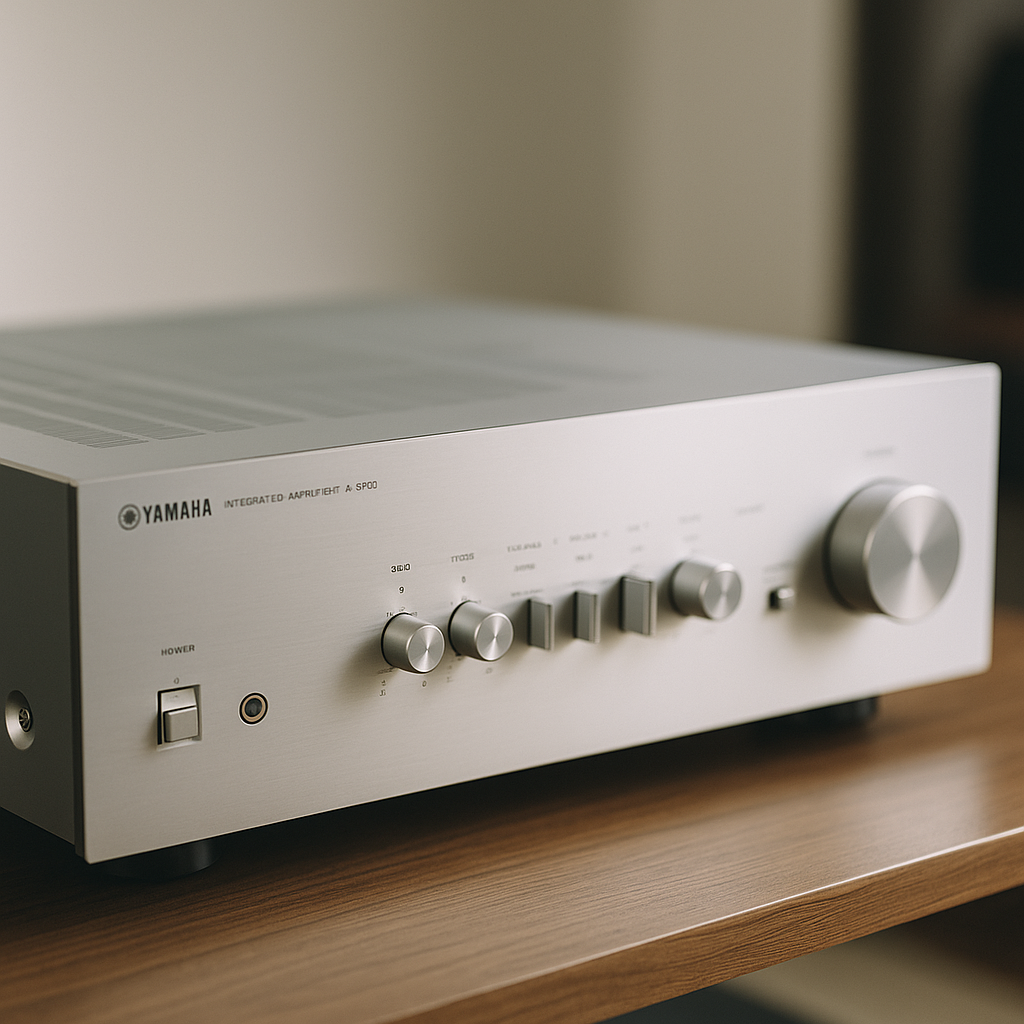
The first thing I notice with the A-S701SL is that it feels properly made, not flimsy or overdesigned. The front panel layout is straightforward, the controls have a solid feel, and the whole unit gives off that old-school integrated amp confidence. It looks like a piece of gear meant to live in a room and be used, not just photographed.
In everyday use, that matters more than people admit. The knobs and switches feel predictable, and I never had that annoying sense of fighting the interface just to change a source or adjust the volume. It’s the kind of amp that disappears into routine, which is exactly what I want from a workhorse integrated.
I also like that it doesn’t try to be clever in a way that ages badly. There’s no gimmicky “look at me” styling here, just a practical design that should still make sense years from now. For a vinyl system, that kind of no-nonsense build is a genuine plus.
04Connectivity and system flexibility
The A-S701SL makes a lot of sense if you’re building a system around a turntable but still want room to grow. It gives you the sort of connectivity that covers the basics without turning the back panel into a mess of stuff you’ll never use. I like that balance because it keeps the amp focused on being an amp.
For me, the useful part is that it can sit at the center of a simple analog setup and still leave room for other sources. That makes it easy to live with if you’ve got a turntable, maybe a streamer, and one or two other pieces you actually use. It feels flexible without becoming complicated.
I also think this is the kind of amp that works well when you don’t want a bunch of extra boxes in the chain. If your goal is to keep the system tidy and still have a proper foundation, it fits that brief nicely. It’s practical in the way good hi-fi should be.
I’d point the A-S701SL toward someone who wants a serious integrated amp that can anchor a vinyl system without drama. If you care about control, clarity, and the ability to drive a real pair of speakers, it makes a lot of sense. It feels like a sensible long-term choice rather than a temporary stepping stone.
It’s less obviously for people chasing a lush, syrupy, “tube-like” presentation. This amp is more about clean power, stability, and letting the rest of the system define the flavor. If your cartridge and speakers already lean warm, that can be a very good thing.
My takeaway is simple: if I wanted an integrated amp to do the heavy lifting in a straightforward stereo setup, I’d take this seriously. It’s not flashy, but it’s dependable, capable, and easy to trust once it’s in the rack. That counts for a lot in the real world.