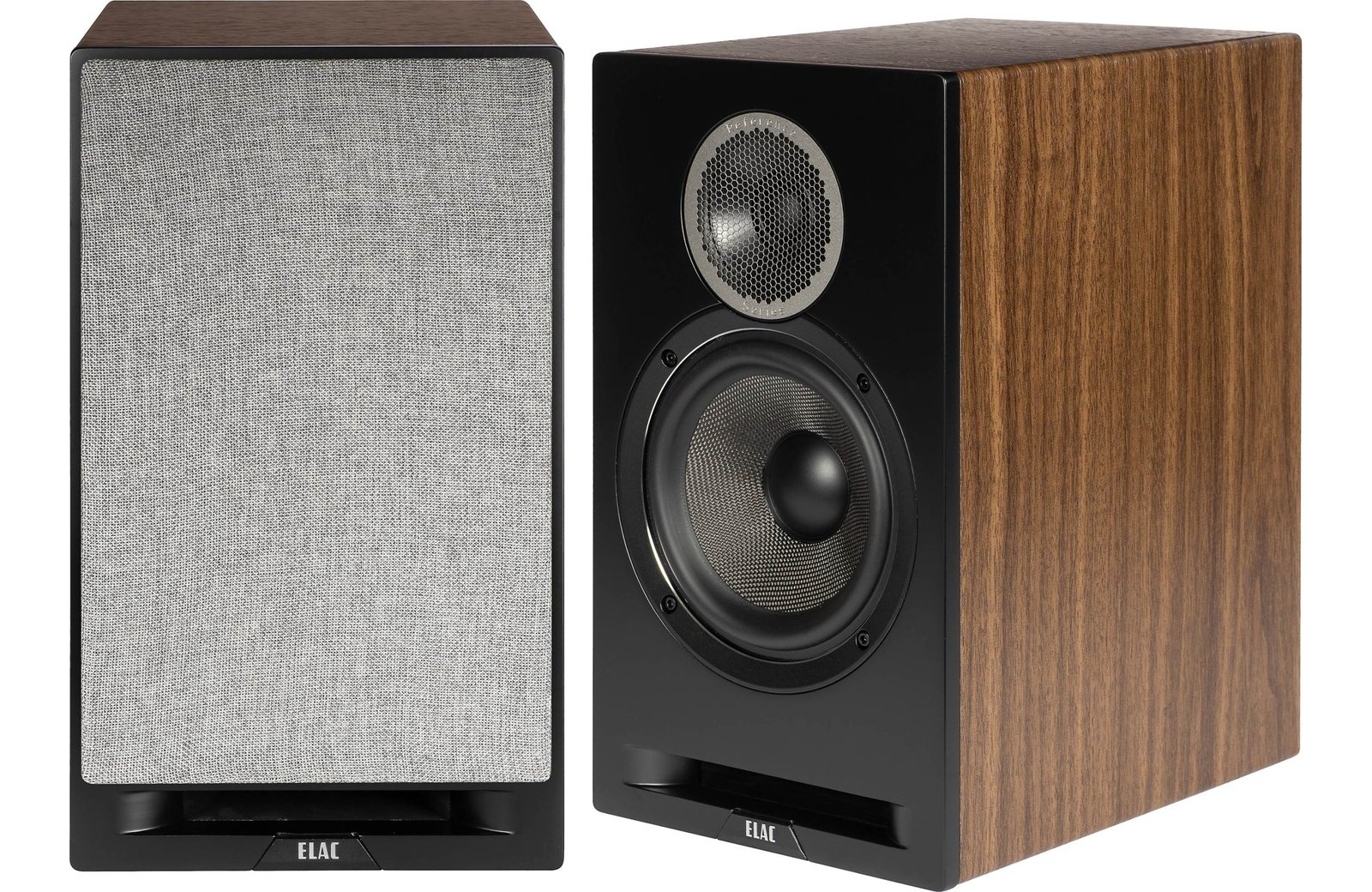
The first thing I noticed with the Elac Debut Reference DBR62 is how easy it is to listen to for long stretches without getting tired. I’ve had plenty of speakers that try to impress right away with a bright top end or a hyped midbass, but these don’t play that game. They sound balanced, controlled, and a little more grown-up than the usual “fun” bookshelf speaker.
What really stands out to me is the way they handle vocals and instruments in the middle of the mix. Voices come through with good body and a natural shape, and guitars, pianos, and snare hits all feel like they belong in the same space instead of being shoved forward separately. They don’t flatter bad recordings, but they also don’t turn decent records into a forensic exercise.
The bass is probably the area where people will judge these most, and in my room they were solid without getting sloppy. They won’t fake the kind of deep, room-shaking low end you get from a subwoofer, but for a bookshelf speaker they have enough weight to keep rock, jazz, and most vinyl pressings feeling complete. If you want tight, clean bass that stays out of the way of the rest of the music, they do that very well.
02Imaging and Stereo Presentation
These speakers do a nice job of disappearing when they’re set up properly, which is really what I want from a stereo pair. I got a stable center image and a believable spread across the room, and that made records feel more organized and less like sound was just coming from two boxes. They’re not flashy about it, but they lock in nicely.
I also liked how they handled depth. On good recordings, I could hear layers instead of a flat wall of sound, and that made the whole presentation feel more expensive than the speaker’s size suggests. They’re the kind of speakers that reward careful placement, but they’re not so fussy that you need to spend all afternoon moving them around by inches.
03Build and Cabinet Design
The DBR62 looks like a serious piece of hi-fi gear without trying too hard. The cabinet feels well put together, and the overall design is clean enough to work in a living room without screaming for attention. I appreciate that kind of restraint, especially with a speaker that’s meant to live in plain sight.
They also have that solid, reassuring feel when you handle them. Nothing about the cabinet gave me the sense of a lightweight, hollow box trying to pass itself off as premium. That matters more than people think, because a well-damped cabinet usually shows up later as cleaner sound and less of that boxy coloration that can ruin a good record.
I found the DBR62 pretty straightforward to live with, which is exactly what I want from a passive bookshelf speaker. They’re easy enough to position on stands or a shelf, and they don’t demand some impossible amount of breathing room before they start sounding right. Give them a little care with toe-in and spacing, and they settle in quickly.
They’re also forgiving enough that I wouldn’t call them a diva speaker. I’ve heard designs that collapse if you move them a foot in either direction, but these stayed composed as I adjusted them for different rooms and listening positions. That makes them a lot easier to recommend to people who don’t want setup to become a hobby of its own.
To me, the DBR62 makes the most sense for someone who wants a serious step up from entry-level bookshelf speakers without jumping into something overly analytical or demanding. They’re a good fit for listeners who care about tone, balance, and long-term comfort more than raw excitement. If your system is built around vinyl, they make a very convincing case for themselves.
I’d especially point them toward people building a modest but thoughtful stereo setup with a decent amp and a turntable they actually use often. They have enough refinement to expose better gear upstream, but they’re not so picky that they become annoying. That’s a sweet spot, and Elac nailed it here.