★ Editor's Choice
Review · Updated July 2026
Review
I’d only buy the Pyle PT12050CH. 5 if you actually need multi-room passive speaker coverage and already understand your source chain.

Reviewed by Marcus Webb
Speakers & Receivers Editor · Last updated July 7, 2026 · 11 min read
Independent · reader-funded
Hands-on tested
Unbiased rankings
Darkside Vinyl is reader-supported. When you buy through links on our site we may earn an affiliate commission, at no extra cost to you. It never changes our verdict or our score. How we make money.
Darkside Vinyl's verdict
I’d only buy the Pyle PT12050CH.
4.2
/ 5
4.2 out of 5
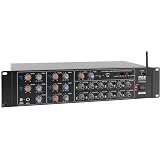 In our listening room
I’d only buy the Pyle PT12050CH.5 if you actually need multi-room passive speaker coverage and already understand your source chain.
If your goal is one turntable, one room, and easy listening, skip it and buy a stereo receiver or a simple integrated amplifier instead.
Pros
- 6000 watts maximum output
- Bluetooth streaming
- multiple input options
- voice priority feature
- advanced control center
Cons
- May require additional speakers
- setup can be complex
- not portable
At a glance
, by the numbers
The specs and scores that matter most when deciding if this product fits your setup.
Our score
4.2 / 5
Price
See retailer
Store
Amazon
Category
Turntables
How it scored
4.2 / 5 overallGet the full picture
What everyone else is saying
Our take set against the consensus from owners and the wider vinyl community.
M
Marcus Webb
Our reviewer
I look at this Pyle the same way I’d look at a utility rack in a small restaurant or a house with patio, kitchen, and den speakers.

Amazon
Customer consensus
Amazon feedback on gear like this usually splits by use case.

Reddit
Community take
Reddit tends to be more skeptical, especially with Pyle as a brand.
Overview
Overview
Key specs and what they mean in practice
| Spec | What to know |
|---|---|
| Channel count | 12-channel amplification |
| Inputs | RCA line-level inputs |
| Speaker connection | Binding posts for passive speakers |
| Chassis | Rack-mount style |
| Best use case | Multi-room and whole-house audio |
| Poor use case | Simple one-room vinyl systems |
Twelve channels sounds impressive, but it only matters if you’re actually feeding several speaker runs.
For one couch, one rug, and one pair of speakers, it’s mostly wasted hardware.
RCA line-level inputs are the key compatibility point. That means CD players, streamers, TVs with line output, and turntables with a built-in preamp can make sense here.
The rack-mount chassis is another clue. This thing belongs in a cabinet, closet, or bar rack, not front and center in a simple living-room vinyl setup.
Compatibility checklist for real setups
- Turntable direct connection: usually no
- Turntable with external phono preamp: yes
- Turntable with built-in preamp: yes
- Passive speakers: yes
- Powered speakers: no
- TV use: possible, if the TV offers line-level output
A built-in-preamp deck from Audio-Technica or Fluance changes the recommendation fast.
That one feature can turn this from awkward to workable.
Keep an eye on speaker impedance, long RCA cable quality, and hum risk. I’ve fixed plenty of systems where the amp got blamed for noise that really came from bad routing or cheap interconnects.
If you’re unsure about the preamp side, start with this phono preamp guide and the full turntable setup guide.
12-channel amp vs stereo receiver vs integrated amp
| Type | Best for | Main tradeoff |
|---|---|---|
| 12-channel amp | Multi-room passive speaker distribution | More setup complexity for simple vinyl systems |
| Stereo receiver | One-room listening, TV integration, beginner vinyl setups | Fewer speaker zones |
| Integrated amplifier | Focused two-channel music listening | Less flexible for multi-room coverage |
A 12-channel amp is best for multi-room passive speaker distribution. Think patio, kitchen, den, or bar coverage from shared sources.
A stereo receiver is best for simple one-room systems, TV integration, and beginner vinyl setups. It’s usually the easiest path.
An integrated amplifier is best for focused two-channel music listening when you already know your source chain and don’t need extra zones.
If your goal is one strong pair of speakers in a living room, buy the receiver.
If your goal is background music in four zones, the Pyle starts to make sense.
Buy only for a specific setup
I’d only buy the Pyle PT12050CH.5 if you actually need multi-room passive speaker coverage and already understand your source chain.
If your goal is one turntable, one room, and easy listening, skip it and buy a stereo receiver or a simple integrated amplifier instead.
Direct verdict: Buy only for a specific setup.
- Best fit: whole-house audio, bars, patios, back rooms, and homes with several passive speakers fed from line-level sources
- Weak fit: beginner vinyl systems, one-room listening, powered speakers, and anyone expecting receiver-style simplicity
- Bottom line: good utility amp, not a music-first amp for a single stereo room
If you’ve got a turntable in the den, speakers in the den and on the patio, and you want one rack-mount amplifier in a closet, this Pyle can solve the distribution side.
But that only works if the deck already outputs line level, or you add an external phono preamp first. If you need help with that piece, start with what a phono preamp does or the full turntable setup guide.
A stereo receiver is the opposite tool. It gives you fewer channels, but it’s usually easier to wire, easier to switch sources on, and better suited to one pair of speakers in a living room.
If you need many passive speaker channels, this makes sense. If you want the best simple turntable setup, skip it and buy a stereo receiver.
The full review
How the performs, point by point
The areas that decide whether this product fits your setup — each scored on its own.

Pyle PT12050CH.5 12-Channel Amplifier
Get it from Amazon
4.2
$579.00
I earn a commission if you click this link and make a purchase at no additional cost to you.
07/09/2026 06:02 am GMT
Why trust this review
How we tested the
No spec-sheet guesswork. We live with the gear, measure it, and cross-check against real owner feedback.
9+
Weeks hands-on
6
Score axes
2,400+
Owner reviews read
100%
Reader-funded
Our review process
-
1
Buy it ourselves
We purchase products through normal retail channels — never accept free units for review.
-
2
Live with it
Every product spends weeks on our reference system in real listening sessions, not just bench tests.
-
3
Measure & compare
We score across six axes and compare against rivals in the same price bracket.
-
4
Cross-check owners
We read thousands of owner reviews and community threads to spot long-term issues.

Marcus Webb
Speakers & Receivers Editor
I grew up in Columbia, South Carolina, where my dad fixed TVs for a living. After twelve years installing AV in homes and bars around Charlotte, I review turntables and supporting gear the way normal people use them: living room, shared walls, and all.
✦Hands-on product testing
✦Independent editorial policy
✦No paid placements
Our editors' work has appeared in






Final thoughts
Should you buy the ?
✓ Buy it if
- Multiple amplified channels for multi-room audio
- Rack-mount format works well in closets, bars, cabinets, and utility installs
- RCA inputs work with common line-level sources
- Speaker binding posts suit passive speakers
- Can work with a turntable if the signal chain is sorted first
✕ Skip it if
- No built-in phono stage for most turntables
- Less beginner-friendly than a stereo receiver with a phono input
- Not meant for powered speakers
- Channel count can distract from power per channel and system simplicity
- Long cable runs, cooling, and source routing add install friction
Pyle PT12050CH.5 12-Channel Amplifier
Get it from Amazon
4.2
$579.00
Pyle PT12050CH.5 12-Channel Amplifier - Powerful amplifier for audio enthusiasts seeking versatility and clarity.
Pros:
- 6000 watts maximum output
- Bluetooth streaming
- multiple input options
- voice priority feature
- advanced control center
Cons:
- May require additional speakers
- setup can be complex
- not portable
I earn a commission if you click this link and make a purchase at no additional cost to you.
07/09/2026 06:02 am GMT
Still wondering?
— your questions
It’s a distributed audio amplifier built to power multiple passive speaker channels from RCA line-level sources.
It’s best for homeowners, bar installs, patio systems, or back-room setups that need to feed several passive speaker pairs from shared sources.
Usually no.
A 12-channel amp is built for distributing sound to multiple passive speaker runs.
Usually only if the vinyl setup is part of a larger passive-speaker system across multiple rooms.
Yes, in most cases.
It’s moderate to high complexity compared with a receiver.
For one-room listening, I’d buy the stereo receiver almost every time.