★ Editor's Choice
Review · Updated July 2026
Review
If you need one box to run passive PA speakers, microphones, and simple music playback, I think the Rockville RPM48S is a solid budget buy. If your main goal is spinning records in a quiet living room, I’d skip it and buy a stereo receiver instead.

Reviewed by Calvin Reese
Vinyl & Gear Editor · Last updated July 7, 2026 · 11 min read
Independent · reader-funded
Hands-on tested
Unbiased rankings
Darkside Vinyl is reader-supported. When you buy through links on our site we may earn an affiliate commission, at no extra cost to you. It never changes our verdict or our score. How we make money.
Darkside Vinyl's verdict
If you need one box to run passive PA speakers, microphones, and simple music playback, I think the Rockville RPM48S is
4.4
/ 5
4.4 out of 5
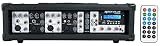 In our listening room
This unit makes more sense in karaoke nights, rehearsal rooms, church events, and community spaces than in a vinyl setup. Rockville built it like a small live sound hub, not a music-first receiver.
Buy it if you need to power passive speakers directly and want multiple mic inputs with easy playback options.
Pros
- 2000W peak power
- Bluetooth and USB/SD connectivity
- compact and portable design
- precise 3-band EQ
Cons
- Limited to 4 channels
- may require additional cables for extensive setups
At a glance
, by the numbers
The specs and scores that matter most when deciding if this product fits your setup.
Our score
4.4 / 5
Price
See retailer
Store
Amazon
Category
Turntables
How it scored
4.4 / 5 overallGet the full picture
What everyone else is saying
Our take set against the consensus from owners and the wider vinyl community.
C
Calvin Reese
Our reviewer
I look at gear the same way I used to look at install jobs: check the use case first, then judge the box.

Amazon
Customer consensus
Amazon feedback is usually positive when buyers use it as a budget PA mixer amp.

Reddit
Community take
Reddit is usually tougher on budget PA gear, and Rockville doesn’t get a pass.
Overview
Overview
Here’s the plain-English snapshot.
| Spec | What It Means |
|---|---|
| Channels | 8-channel powered mixer class |
| Amplification role | Built-in amplifier for passive speakers |
| Speaker compatibility | Best with passive PA speakers |
| Bluetooth | Yes, for casual playback |
| USB playback | Yes |
| SD card input | Yes |
| Effects | Basic DSP effects for vocals |
| EQ controls | Graphic equalizer and channel shaping |
| Best for | Karaoke, rehearsals, small events, portable PA use |
What the Rockville RPM48S actually does
This unit combines source routing and speaker power in one chassis. You plug in mics and playback sources, then it drives passive PA speakers directly.
That makes it a small live sound control center. It doesn’t make it a home stereo centerpiece.
Can you use it with passive speakers or powered speakers?
Passive speakers are the right match here. The built-in amplifier is one of the main reasons to buy it.
Powered speakers already have their own amplification, so this usually means paying for power you won’t use. Verify your speaker type before you buy, because that one check prevents a lot of bad purchases.
Can you use it with a turntable?
Yes, but only in limited cases, and often only with a phono preamp in the chain. A turntable sends a phono-level signal, while standard RCA inputs on mixers expect line level.
So the chain often looks like this: turntable, phono preamp, mixer. It can work, but for everyday vinyl listening, I’d still point you to a receiver and our turntable setup guide.
Powered mixer vs stereo receiver vs standalone mixer
| Gear Type | Best Use | Why It Fits |
|---|---|---|
| Powered mixer | Small events, karaoke, passive PA speakers | Mixer plus amplifier in one box |
| Stereo receiver | Home listening, TV and music, turntables | Better source switching and home-audio behavior |
| Standalone mixer | Powered speakers or separate amp setups | More flexible if you already have amplification |
More channels only help if you’ll actually use them. If you’re wiring a church meeting room with passive speakers, this can simplify the rack.
If you’re wiring a turntable beside a media console, it usually solves the wrong problem.
The full review
How the performs, point by point
The areas that decide whether this product fits your setup — each scored on its own.

Rockville RPM48S Powered Mixer
Get it from Amazon
4.4
$164.95
I earn a commission if you click this link and make a purchase at no additional cost to you.
07/08/2026 11:04 pm GMT
Why trust this review
How we tested the
No spec-sheet guesswork. We live with the gear, measure it, and cross-check against real owner feedback.
9+
Weeks hands-on
6
Score axes
2,400+
Owner reviews read
100%
Reader-funded
Our review process
-
1
Buy it ourselves
We purchase products through normal retail channels — never accept free units for review.
-
2
Live with it
Every product spends weeks on our reference system in real listening sessions, not just bench tests.
-
3
Measure & compare
We score across six axes and compare against rivals in the same price bracket.
-
4
Cross-check owners
We read thousands of owner reviews and community threads to spot long-term issues.

Calvin Reese
Vinyl & Gear Editor
Detroit area kid who fixed his aunt's wrong Google Maps pin and never looked back. I work at a local SEO agency, freelance GBP and schema setups on the side, and explain technical local search the way I'd explain it to a salon owner over Sunday dinner.
✦Hands-on product testing
✦Independent editorial policy
✦No paid placements
Our editors' work has appeared in






Final thoughts
Should you buy the ?
I’d buy the Rockville RPM48S for a small PA, karaoke system, rehearsal setup, or any room where passive PA speakers need simple control and built-in power. In that role, the value is real.
I’d skip it for vinyl-first home listening. For records, a stereo receiver or integrated amp is usually the cleaner answer, with less noise and less setup friction.
If your weekend use case is two mics, backing tracks, and passive speakers, this mixer is easy to justify. If your nightly use case is spinning records, look at a receiver, a phono stage, or one of our turntable picks.
✓ Buy it if
- <p>The built-in amplifier is the main reason to buy this. If you’re using passive PA speakers, you don’t need a separate amp.</p>
- <p>That matters in places like school events or church rooms, where nobody wants three boxes and a pile of cables just to run two mics and music.</p>
- <p>Multiple channels make it more useful than a plain stereo amp. You can plug in microphones, playback sources, and basic event audio without adding extra gear.</p>
- <p>Bluetooth, USB playback, and SD card input are genuinely useful for casual events. If someone wants to stream tracks from a phone or run files from a thumb drive, this covers it.</p>
- <p>DSP effects and onboard EQ give you basic control over vocals and room sound. You won’t get studio-grade processing, but you do get enough to tame a harsh mic or clean up muddy speech.</p>
- <p>The graphic EQ and simple speaker outputs also make it practical for small venue duty. For the right buyer, it fits better than trying to force a home amp into a live sound job.</p>
✕ Skip it if
- <p>I wouldn’t buy this for hi-fi vinyl playback. It’s not built around low-noise, music-first listening, and that shows.</p>
- <p>If all you want is a simple two-speaker home setup, this is usually too much box for the job. A home audio receiver is cleaner, easier to live with, and better matched to record listening.</p>
- <p>The built-in amplification is wasted if you already own powered speakers. In that case, a standalone mixer or direct source setup makes more sense.</p>
- <p>The PA-style controls can also feel clunky in a living room. You’re more likely to deal with cable checks, speaker matching, and possible fan noise.</p>
- <p>A turntable can add another layer of hassle. Many turntables need a phono preamp before they can feed a mixer like this, so functional doesn’t always mean ideal. If you need a refresher, start with what a phono preamp does and then check our turntable setup guide.</p>
- <p>A vinyl beginner might see Bluetooth and RCA inputs and assume this can replace a stereo receiver. Once you add a turntable, maybe a phono preamp, and PA-style passive speakers, the whole setup gets awkward fast.</p>
Rockville RPM48S Powered Mixer
Get it from Amazon
4.4
$164.95
Rockville RPM48S Powered Mixer - Ideal for DJs and live events, delivering powerful sound and versatile connectivity.
Pros:
- 2000W peak power
- Bluetooth and USB/SD connectivity
- compact and portable design
- precise 3-band EQ
Cons:
- Limited to 4 channels
- may require additional cables for extensive setups
I earn a commission if you click this link and make a purchase at no additional cost to you.
07/08/2026 11:04 pm GMT
Still wondering?
— your questions
The Rockville RPM48S is a powered mixer. It combines an audio mixer and built-in amplifier in one unit.
Yes, if the beginner is using passive speakers and wants fewer boxes to manage. It’s simpler than building a chain with an unpowered mixer and separate amp.
Yes. That’s one of its main jobs.
A powered mixer has a built-in amplifier, so it can drive passive speakers directly. A regular mixer handles source routing and level control, but it needs powered speakers or a separate power amp for passive speakers.
The exact output depends on how Rockville lists it in the current manual and product page, so I’d verify the latest spec before you buy.
Usually no, at least not for vinyl-first home use. A stereo receiver is better suited to turntables, quieter rooms, and everyday music playback.
At minimum, you’ll need passive speakers, speaker cables, and at least one source, like microphones, a phone over Bluetooth, or a USB drive.
It includes Bluetooth, USB playback, SD card input, and basic DSP-style vocal effects. That means many casual karaoke or small event setups can run without extra playback gear.